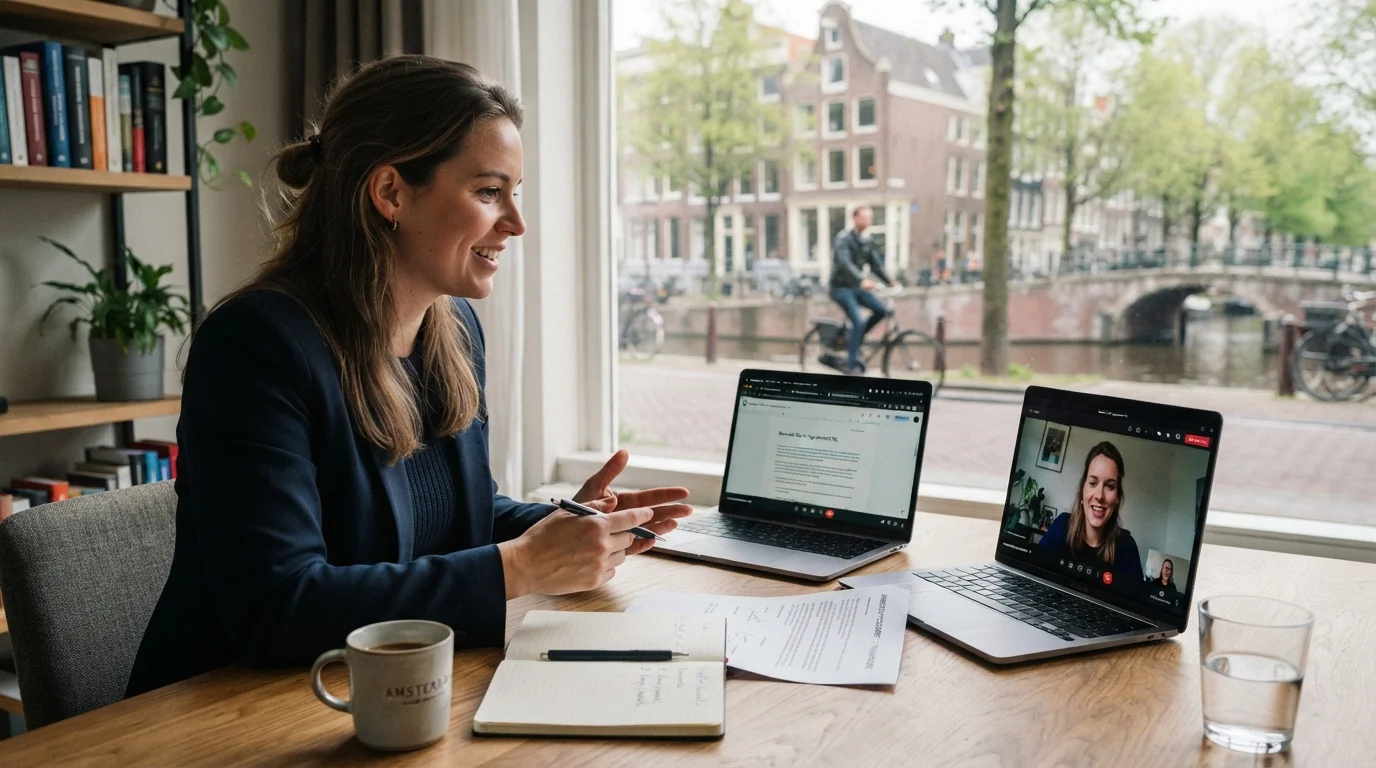
High-Paying English Jobs in Amsterdam: 2026 Expat Guide
Amsterdam continues to rank among Europe's most vibrant, lucrative, and international economic hubs. In 2026, the city's cosmopolitan atmosphere,...
Read more
Imagine starting a new job in the Netherlands. You are adjusting to the famous Dutch directness, enjoying your weekly borrel (after-work drinks), and figuring out the transport system. Then, during an all-hands meeting, the CEO mentions that a major organizational change is currently awaiting approval from the Ondernemingsraad (often abbreviated as OR). Everyone nods knowingly, but you are left wondering: What on earth is an Ondernemingsraad, and why does it have the power to put the CEO's plans on hold?
In the Netherlands, workplace democracy is not just a polite suggestion—it is enshrined in law. The Ondernemingsraad (literally translated as "Enterprise Council" or "Works Council") is a powerful, elected body of employees that represents the interests of the workforce to company management. Understanding how the OR operates is crucial for any expat, international worker, or integration exam candidate. It shapes everything from your daily working hours to major corporate restructuring.
In this comprehensive guide, we will break down the legal rights of the Works Council, explain why it matters to you as an international employee, provide essential Dutch vocabulary to help you navigate corporate discussions, and show you how to get involved. Along the way, we will also look at how mastering the Dutch language can empower you to play an active role in your company's decision-making process.
Under the Dutch Works Councils Act (Wet op de ondernemingsraden, or WOR), any company operating in the Netherlands with 50 or more employees is legally obligated to establish a Works Council. If a company has between 10 and 50 employees, they are not strictly required to have an OR, but they must establish an alternative representative body (a personeelsvertegenwoordiging or PVT) if the majority of employees or a collective labor agreement (CAO) demands it.
The OR is made up entirely of employees elected by their peers. The number of seats on the council depends on the size of the company. For example, a company with 50 to 100 employees will typically have a council of 5 members, while massive corporations can have councils with over 20 members. These representatives meet regularly with management to discuss company policy, financial performance, and employee well-being.
Unlike trade unions, which operate outside the company at an industry-wide level, the OR operates entirely within the company. Its primary goal is to ensure the smooth running of the business while safeguarding the rights, safety, and happiness of the workforce. To understand how this fits into the broader landscape of Dutch employment law, you can read our detailed guide on understanding Dutch employee rights and labor laws.
The Dutch OR is one of the most powerful works councils in Europe. Its authority is built on four distinct legal pillars granted by the WOR. Management cannot simply ignore the OR; doing so can lead to legal action and court-ordered reversals of corporate decisions. Let's explore these four key rights:
Management must seek the formal advice of the OR before making major financial, economic, or organizational decisions. This includes actions such as:
The OR must be consulted early enough in the process that their advice can actually influence the final outcome. If management decides to go against the OR's advice, they must explain their reasoning in writing. The OR then has the right to appeal the decision in the Enterprise Chamber of the Amsterdam Court (Ondernemingskamer), which can legally block the company's plans.
While the right to advisory covers high-level strategic decisions, the right of consent covers internal social and human resources policies. Management cannot implement, change, or withdraw policies in these areas without the explicit approval of the OR. These policies include:
If management attempts to change these rules without the OR's consent, the change is legally null and void. For a deeper look into how these rules apply to modern working arrangements, check out our guide on how to negotiate a remote work agreement in the Netherlands.
The OR does not have to wait around for management to propose changes. Under the right of initiative, the council can proactively make proposals regarding social, organizational, or financial matters. Management is legally required to discuss these proposals with the OR and provide a reasoned, written response.
To exercise their duties effectively, the OR needs data. Management is legally obliged to provide the OR with all the information they reasonably require. This includes annual financial statements, strategic plans, salary structures (to ensure gender pay equity, for instance), and organizational charts. At least twice a year, the management and the OR must meet to discuss the general state of the company.
If you are an expat working in a Dutch tech startup, a multinational in Amsterdam, or a logistics hub in Rotterdam, you might think the OR is only relevant for native Dutch speakers. This is a common misconception. The OR is there to protect all employees, regardless of nationality.
In fact, the unique makeup of the Dutch corporate world relies heavily on consensus and collaboration—a cultural phenomenon known as the "Polder Model." Understanding this mindset is key to integrating into your workplace. You can learn more about this in our article on Dutch business etiquette and communication styles.
Here is why you should pay attention to your company's OR:
Even if your company's primary working language is English, the legal framework of the OR is entirely Dutch. If you want to understand the emails sent by your OR, read company updates, or even run for a seat yourself, mastering key corporate Dutch terms is essential. Here are some of the most important terms to learn:
| Dutch Term | English Translation | Definition / Context |
|---|---|---|
| Ondernemingsraad (OR) | Works Council / Enterprise Council | The elected employee representative body. |
| Achterban | Constituency / Backing | The employees whom the OR represents. |
| Adviesaanvraag | Request for Advice | A formal document from management asking for the OR's input on a major decision. |
| Instemmingsaanvraag | Request for Consent | A formal request from management to change HR or social policies. |
| Arbeidsvoorwaarden | Terms of Employment | The conditions under which an employee works (hours, salary, holidays). |
| WOR (Wet op de ondernemingsraden) | Works Councils Act | The Dutch law that governs the powers and duties of the OR. |
| Poldermodel | Polder Model | The Dutch consensus-driven decision-making culture. |
Learning these terms might feel overwhelming at first, but with the right tools, you can build your professional vocabulary quickly. This is where the StroopTaal app can help. StroopTaal's customized, AI-powered learning plans are designed specifically for expats who want to master practical, real-world Dutch.
By using StroopTaal's vocabulary building with spaced repetition and practicing workplace scenarios with real-life Dutch conversation practice with AI, you will soon find yourself comfortable reading OR newsletters and participating in company-wide discussions. Whether you are aiming for A2 proficiency for your civic integration exam or targeting a C1 level to lead corporate negotiations, StroopTaal has targeted lessons to get you there.
As an international employee, you have the right to participate in the democratic processes of your company. Under the WOR, there are two primary ways to get involved:
Every employee who has been with the company for a certain period (typically three months, though individual OR regulations may vary) has the right to vote in the works council elections. Elections are usually held every three years. Take the time to read the candidates' manifestos and vote for representatives who understand the unique challenges faced by international workers.
If you have been with your employer for at least three months, you are eligible to run as a candidate in the OR elections. Do not let language barriers hold you back! Many multinational companies in the Netherlands run their OR meetings in English, or offer translation services. Even in Dutch-speaking environments, international representation is highly valued, and your unique perspective as an expat is incredibly beneficial to the council.
If you do decide to run, serving on the OR offers excellent legal protection. Under Dutch law, OR members cannot be disadvantaged or dismissed from their jobs because of their work on the council. This ensures you can speak honestly and challenge management without fear of retaliation.
The Ondernemingsraad is a shining example of the Dutch commitment to equality, consensus, and mutual respect in the workplace. It ensures that employees are not just cogwheels in a machine, but active partners in shaping the future of their companies. For expats, understanding and engaging with the OR is one of the fastest ways to feel truly integrated into Dutch corporate culture.
If you want to make your voice heard, build stronger connections with your colleagues, and take your career in the Netherlands to the next level, learning the language is your ultimate superpower. For more official guidelines on employee representation, you can consult Government.nl's official guide on Works Councils.
Ready to start your language learning journey? Download the StroopTaal app today to access interactive grammar lessons, article mastery games, and realistic dialogue exercises tailored to your professional life. Take control of your career and your integration journey—one Dutch word at a time!
Share this article:
Amsterdam continues to rank among Europe's most vibrant, lucrative, and international economic hubs. In 2026, the city's cosmopolitan atmosphere,...
Read moreThe Netherlands is globally renowned for its progressive approach to work-life balance. Boasting some of the shortest average working weeks in the...
Read moreEmbarking on Your Academic Journey in the Netherlands With its picturesque canals, historic cities, and world-class academic institutions, the...
Read more