
The Role of the Ondernemingsraad (Works Council) in Dutch Companies
Introduction: What is the Ondernemingsraad? Imagine starting a new job in the Netherlands. You are adjusting to the famous Dutch directness, enjoying...
Read more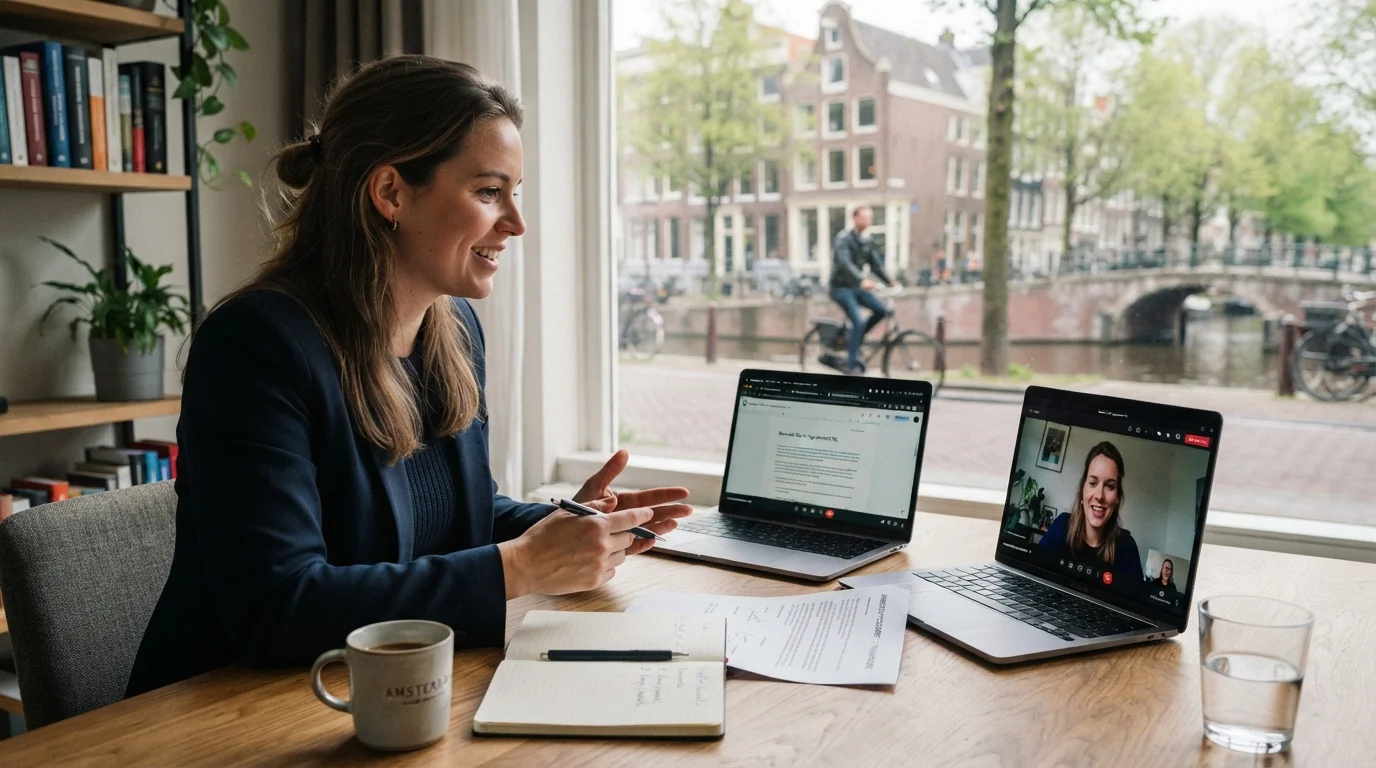
The Netherlands is globally renowned for its progressive approach to work-life balance. Boasting some of the shortest average working weeks in the world and a highly digitized infrastructure, it is no surprise that the Dutch have embraced remote and hybrid work with open arms. However, transitioning to a remote setup or securing a work-from-home agreement with a Dutch employer requires more than just a casual email to your manager. It involves navigating a unique landscape of legal rights, tax implications, and cultural communication styles.
Whether you are an expat working in a bustling tech hub or a professional transitioning to a new role, knowing how to approach this negotiation is crucial. In this comprehensive guide, we will break down the legal framework governing flexible work in the Netherlands, outline the key financial benefits you should ask for, and share practical strategies to align your request with Dutch business culture.
Before initiating any negotiation, it is vital to know where you stand legally. In the Netherlands, employees enjoy robust protections and rights. The primary legal framework governing remote work requests is the Flexible Working Act (Wet flexibel werken or Wfw).
Under this act, employees have the formal right to request a change in their workplace (such as working from home) or their working hours. However, to qualify for this right, you must meet a few basic conditions:
When you submit a formal request to work remotely, your employer is legally obligated to consider it seriously. They can only refuse your request if there are compelling business reasons to do so—such as severe scheduling conflicts, safety risks, or insurmountable operational problems. Understanding these legal boundaries is a key part of understanding Dutch employee rights, ensuring you can speak confidently when discussing contract adjustments.
For official, up-to-date legal guidelines, you can consult the official Dutch Government portal (government.nl), which outlines employee rights and employer obligations in detail.
To negotiate successfully with a Dutch employer, you must adapt your approach to the local business culture. The Dutch workplace is characterized by flat hierarchies, consensus-driven decision-making (often referred to as the poldermodel), and a high degree of directness.
When preparing for your negotiation, keep these cultural nuances in mind:
Mastering these interpersonal dynamics is just as important as knowing the law. For a deeper dive into navigating professional relationships in the Netherlands, read our guide on Dutch business etiquette.
A successful remote work negotiation goes beyond simply agreeing on the number of days you can work from home. To protect your well-being and your wallet, you need to establish a formal remote work agreement (often added as an addendum to your employment contract). Here are the essential elements you should negotiate:
Working from home inevitably increases your domestic utility bills. In the Netherlands, employers are allowed to pay a tax-free home office allowance (thuiswerkvergoeding) to cover expenses like electricity, water, heating, internet, and coffee. As of 2024, the government set this tax-free limit at €2.35 per day. Ensure this daily allowance is explicitly included in your agreement.
Under Dutch working conditions legislation (known as the Arbo-wet), employers are legally responsible for ensuring that their employees have a safe and ergonomically sound workplace, even when working from home. This means your employer should provide, or financially contribute to, necessary equipment such as:
Before signing your agreement, clarify whether the company will order this equipment for you or reimburse you for purchasing it yourself.
If you transition to a hybrid model, your commuting patterns will change. Ensure your agreement details how your travel expenses will be reimbursed on the days you are required to travel to the office. Many Dutch employers offer a fixed travel allowance based on distance, or provide an NS Business Card for free public transport access.
Now that you know your rights and what to ask for, it is time to put your plan into action. Follow these steps to secure your remote work agreement:
Many sectors in the Netherlands (such as IT, banking, and education) are governed by a Collective Labor Agreement (Collectieve Arbeidsovereenkomst or CAO). Your CAO may already contain standardized rules and allowances for remote work. Check your CAO first, as it sets the baseline for what you can expect.
Do not rely solely on a verbal discussion. Write a clear, structured proposal detailing your desired schedule, how you will manage your tasks, and how you will remain reachable. Submit this proposal to your manager in writing at least a few days before your scheduled meeting so they have time to review it.
Set up a formal meeting specifically to discuss your proposal. Approach the conversation as a collaborative problem-solving session rather than a confrontation. Be prepared to compromise—for example, if your employer is hesitant about you working from home four days a week, suggest a three-month trial period with two days a week.
Once you reach a verbal agreement, ensure that your HR department drafts a formal addendum to your contract. This document should outline the agreed schedule, allowances, and any conditions under which the agreement can be reviewed or terminated.
While many Dutch companies operate in English, negotiating a contract or discussing legal rights can still feel daunting if you do not speak the local language. Even in multinational environments, demonstrating an understanding of Dutch business terms shows respect, dedication, and cultural integration. It can significantly boost your credibility during a negotiation.
Using terms like thuiswerkvergoeding (home office allowance), arbeidsomstandigheden (working conditions), or overleg (consultation/meeting) correctly can completely change the tone of your conversation. This is where StroopTaal can be your secret weapon. With StroopTaal's AI-powered personalized learning plans and real-life Dutch conversation practice, you can practice professional dialogues and master business vocabulary in a pressure-free environment. Practicing your pitch with StroopTaal's interactive dialogue games will build the confidence you need to present your proposal clearly and professionally.
If you are still searching for the perfect flexible role, check out our guide on finding English-speaking jobs in Utrecht and Rotterdam to kickstart your career journey in the Netherlands.
Negotiating a remote work agreement with a Dutch employer is a highly structured but highly achievable process. By leveraging your legal rights under the Flexible Working Act, understanding the nuances of Dutch business etiquette, and clearly defining your financial and ergonomic needs, you can secure an agreement that supports both your career goals and your personal well-being.
Remember, communication is key to any successful negotiation. Elevating your professional Dutch language skills can give you the competitive edge you need to advocate for yourself. Download StroopTaal today to start practicing real-life business conversations with our interactive AI coach, and take the next step toward mastering your career in the Netherlands!
Share this article:
Introduction: What is the Ondernemingsraad? Imagine starting a new job in the Netherlands. You are adjusting to the famous Dutch directness, enjoying...
Read moreEmbarking on Your Academic Journey in the Netherlands With its picturesque canals, historic cities, and world-class academic institutions, the...
Read moreThe Netherlands remains one of Europe's premier destinations for international talent. While Amsterdam often dominates the headlines, the cities of...
Read more