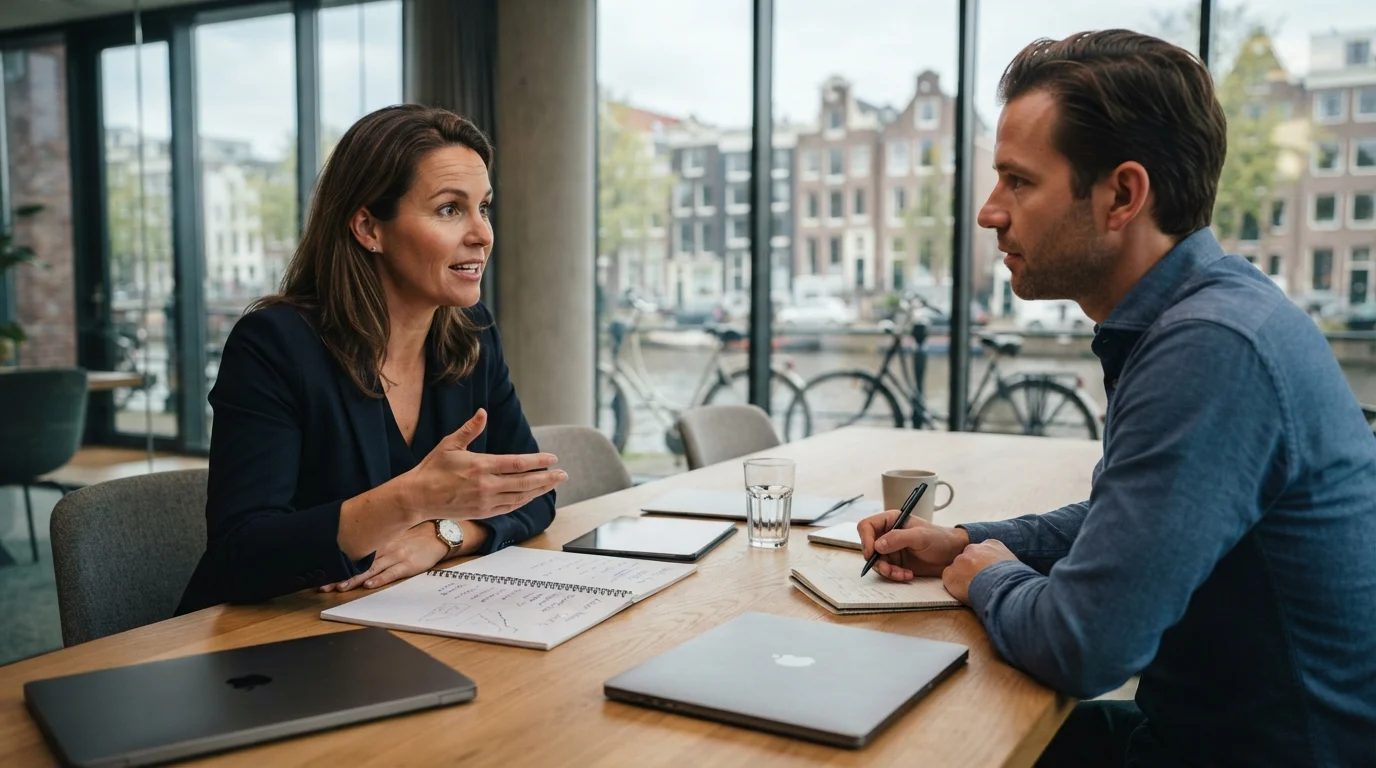
Dutch Business Etiquette: Master Direct Communication
Introduction: The Shock of "Dutch Directness" Picture this: You have just started your dream job in Amsterdam. During your first weekly team meeting,...
Read more
Are you an expat planning to take the next big step in your career within the Netherlands? The Dutch job market is vibrant, innovative, and highly receptive to international talent. However, landing your dream job in Amsterdam, Rotterdam, Utrecht, or Eindhoven requires more than just translating your existing resume into English or Dutch. You need to adapt your application to meet the unique, often unspoken expectations of Dutch recruiters.
In the Netherlands, a curriculum vitae (CV) is not just a list of your past roles; it is a structured, transparent, and direct reflection of who you are as a professional and a person. Dutch work culture highly values honesty, efficiency, and a down-to-earth attitude (known locally as doe maar gewoon). To help you stand out in 2026, this comprehensive guide will walk you through the essential elements of writing a Dutch-style CV, highlighting cultural nuances, formatting standards, and practical language tips.
Before you begin formatting your document, it is crucial to understand the mindset of the person reading it. Dutch recruiters appreciate directness and clarity. They do not want to wade through flowery language, exaggerated achievements, or overly corporate jargon. Instead, they prefer factual, concise, and easy-to-read summaries of your skills and experience.
While in some markets (like the US) it is customary to use strong, self-promotional verbs and bold claims, the Dutch approach is more measured. You should absolutely highlight your achievements, but back them up with concrete data and realistic descriptions. State what you did, the tools you used, and the measurable results you achieved. Humility combined with clear, undeniable facts is the golden rule here.
Additionally, keeping your CV concise is critical. A standard Dutch CV should be no longer than two pages. If you are a recent graduate, a single page is often sufficient. Recruiters spend only a few seconds on an initial scan, so a clean, structured layout is your best tool to make a lasting impression.
To ensure your CV aligns with local expectations, structure your document using the following standard sections:
This section sits at the very top of your CV. In the Netherlands, it is customary to provide a bit more personal information than is standard in the US or UK. Include the following details:
Should you include a photo? Yes. In the Netherlands, including a professional, friendly, and high-quality headshot is standard practice. Choose a photo with neutral lighting and a professional background where you look approachable. Avoid casual selfies or cropped holiday photos.
Directly below your contact details, write a short, punchy paragraph (3 to 5 sentences) introducing yourself. This is your "elevator pitch." Explain who you are, what your core strengths are, and what kind of role you are looking for. Keep it personal and authentic. Avoid generic phrases like "highly motivated team player" and instead focus on your specific expertise and what drives you professionally.
List your professional history in reverse chronological order (most recent job first). For each role, include:
When describing your experience, focus on results. Instead of writing "Responsible for managing social media accounts," write "Grew organic social media engagement by 25% over six months by implementing a targeted video content strategy." If you are targeting roles in specific sectors, such as technology, check out our Expat Guide: Dutch Tech Job Search Strategies (2026) for tailored industry insights.
Like your work history, your educational background should be listed in reverse chronological order. Include the degree title, the name of the institution, the location, and the years of attendance. If you graduated with honors (such as cum laude), be sure to mention it, as this is highly regarded in the Netherlands.
Dutch companies are highly international, but they deeply value language skills. Create a dedicated section for your languages, listing your proficiency level using the Common European Framework of Reference for Languages (CEFR) scale (A1 to C2), or terms like "Native," "Fluent," "Professional Working Proficiency," or "Intermediate."
If you are actively learning Dutch, be sure to list your current level (e.g., "Dutch: B1 (actively improving)"). This shows local employers your commitment to integrating into the company culture and the local community.
One of the most common questions expats ask is: "Should I write my CV in English or Dutch?"
The answer depends entirely on the job description and the company. If the job advertisement is written in Dutch, you should submit your CV and cover letter in Dutch. If the advertisement is in English, an English CV is perfectly acceptable. However, even in international environments, having a Dutch-language CV can give you a massive competitive advantage, signaling respect for the local culture and showing that you are planning for the long term.
To ensure your Dutch CV reads naturally and is completely free of grammatical errors, continuous language practice is essential. This is where the StroopTaal app can become your ultimate career companion. StroopTaal offers personalized learning plans and targeted grammar lessons from A0 to C1 level, helping you master professional Dutch vocabulary and sentence structures. By utilizing StroopTaal's vocabulary building with spaced repetition, you can quickly memorize industry-specific terms, business verbs, and professional jargon to make your CV stand out to Dutch hiring managers.
Once your polished CV lands you an interview, you can transition to practicing with StroopTaal's real-life Dutch conversation practice feature to build the speaking confidence you need to impress your future employers. Preparing ahead of time by mastering Dutch interview phrases will set you up for absolute success.
Modern applicant tracking systems (ATS) are widely used by medium-to-large employers in the Netherlands. To ensure your CV successfully passes through automated filters, keep your formatting clean and readable:
To avoid common pitfalls, keep these structural differences in mind when converting an international resume into a Dutch-style CV:
| Feature | US/UK Resume Style | Dutch CV Style |
|---|---|---|
| Length | Strictly 1 page (especially in the US) | Up to 2 pages is standard and expected |
| Photo | Strongly discouraged (due to bias laws) | Highly recommended and very common |
| Personal Details | Minimal (Name, contact info only) | More detailed (Birthdate, location, nationality) |
| Tone | Highly persuasive, self-promotional | Factual, direct, and balanced |
Writing a stellar CV is only the first part of the equation. To maximize your chances of success in the competitive Dutch market, you should also focus on building local connections. Networking is highly valued in the Netherlands; many jobs are filled through informal referrals before they are even advertised publicly. You can read our comprehensive guide on networking with Dutch professionals to learn how to navigate local industry events, leverage LinkedIn, and arrange informal coffee chats (koffie drinken).
Additionally, always accompany your CV with a tailored motivation letter (sollicitatiebrief). Use this letter to explain your personal connection to the company's mission and why you are excited about the specific role. Keep it to one page, maintain a professional yet warm tone, and ensure it complements—rather than simply repeats—the information on your CV.
Navigating a new job market can feel challenging, but adapting your CV to the local Dutch style is a powerful way to demonstrate your professionalism, cultural awareness, and readiness to contribute to the local workforce. By keeping your layout clean, your tone direct, and your language skills polished, you will quickly catch the attention of top employers in 2026.
Are you ready to take your Dutch professional communication to the next level? Download the StroopTaal app today to build your vocabulary, master Dutch grammar, and gain the linguistic confidence you need to land your dream job in the Netherlands. Success is just a few practice sessions away!
Share this article:
Introduction: The Shock of "Dutch Directness" Picture this: You have just started your dream job in Amsterdam. During your first weekly team meeting,...
Read moreEmbracing the ZZP Life: Freelancing in the Netherlands The Netherlands is one of the most entrepreneurial countries in Europe. With its world-class...
Read moreUnderstanding Dutch Employee Rights: Key Labor Laws for International Workers Moving to the Netherlands is exciting, but understanding your rights as...
Read more