Understanding CAO in the Netherlands: How CAOs Protect You
When starting a new job in the Netherlands, your employment contract might contain terms that seem familiar—salary, start date, and job title....
Read more
This article was written by AI and published by StroopTaal.
AI can get things wrong. For anything official, check the source it points to.
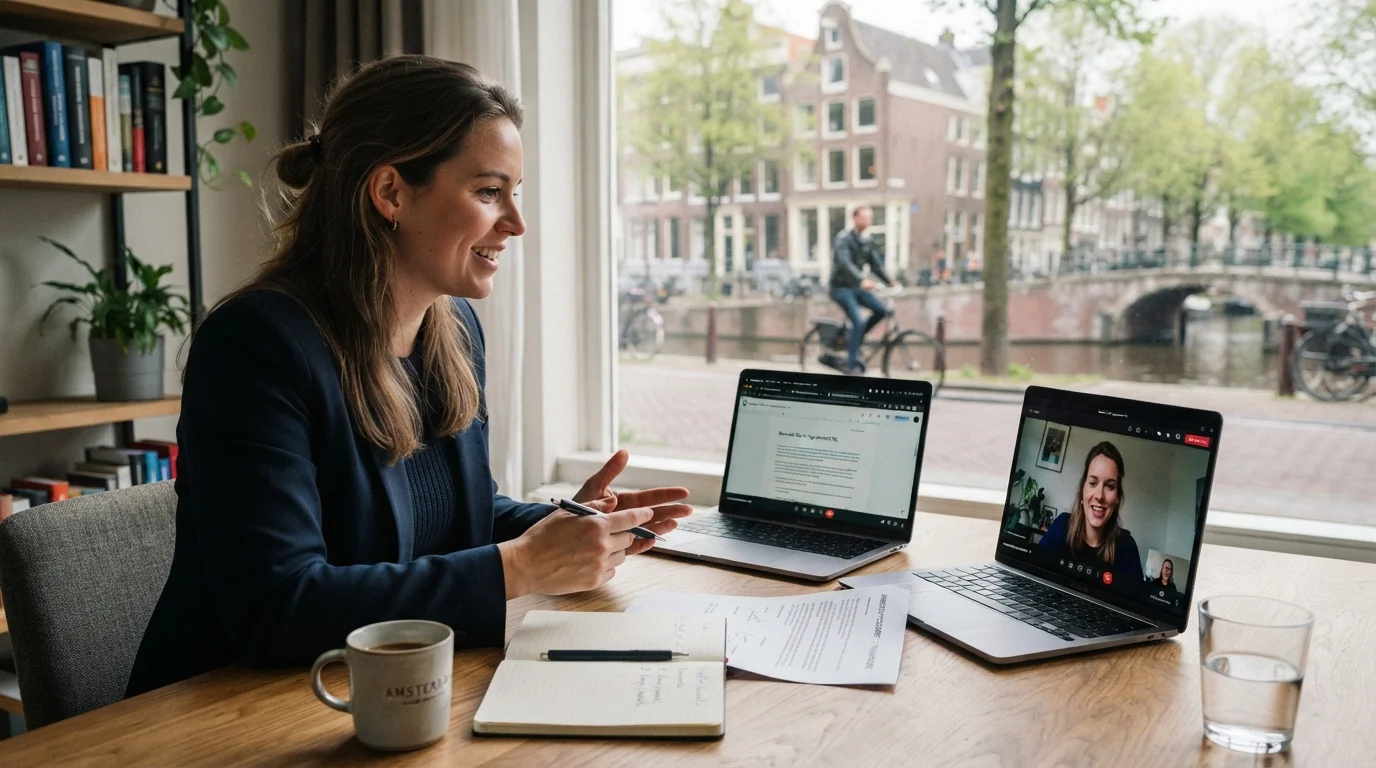
AI-generated image

Amsterdam continues to rank among Europe's most vibrant, lucrative, and international economic hubs. In 2026, the city's cosmopolitan atmosphere, combined with the Netherlands' astounding English proficiency rate (over 90%), makes it an irresistible destination for skilled international professionals. Whether you are a software engineer, financial analyst, marketing strategist, or product lead, securing a high-paying English-speaking job in Amsterdam is entirely achievable—if you know where to look and how to position yourself.
While the local working environment is famously accommodating to non-Dutch speakers, landing a premium salary requires a targeted approach. From understanding local hiring standards to navigating work permits and leveraging modern learning tools, this comprehensive guide walks you through everything you need to know to land a top-tier salary in Amsterdam in 2026.
While English job opportunities exist across various sectors, high-paying corporate and technical roles are heavily concentrated in specific industries in Amsterdam:
To qualify as a high-paying role in Amsterdam, gross salaries generally start around €70,000 per year for mid-level specialists and easily exceed €110,000 to €160,000+ for senior managers, staff engineers, and directors.
If you are relocating from outside the EU/EEA, you will need a work permit. Most high-paying positions are sponsored under the Highly Skilled Migrant (Kennismigrant) scheme. This streamlined visa pathway allows recognized sponsor companies to bring in global talent quickly. You can review official eligibility thresholds directly on the IND (Immigration and Naturalisation Service) website.
Historically, qualifying expats received a tax-free allowance of up to 30% of their gross salary to compensate for relocation expenses. While tax legislation has seen updates moving into 2026, eligible international hires coming to Amsterdam can still take advantage of significant tax incentives, drastically increasing net take-home pay compared to other European financial capitals.
Standing out in Amsterdam's competitive talent pool requires more than simply submitting a standard resume. Dutch recruiters prefer clear, concise, and structured presentations of your professional achievements.
When preparing your application documents, make sure to follow local standards. Reviewing our dedicated guide on crafting a Dutch-style CV will help you format your career history to match local expectations, keeping your summary direct, honest, and focused on quantifiable results.
Dutch corporate structure is distinctly egalitarian. Flat hierarchies, transparent communication, and consensus-driven decision-making (the famous polder model) dominate workplace dynamics. During interviews, showing humility while clearly detailing your contributions is far more effective than aggressive self-promotion.
Before interviewing with Dutch decision-makers, take time to study local business etiquette. Familiarizing yourself with mastering Dutch business etiquette will prepare you for the characteristic Dutch directness and help you handle candid interview questions with confidence.
Additionally, knowing your rights as a prospective worker provides strong negotiation leverage. Make sure you are informed on national employment protections by understanding Dutch employee rights, including vacation allowances, sick pay, and notice periods.
Can you earn a high salary in Amsterdam speaking only English? Absolutely. However, relying solely on English places an invisible ceiling on your career advancement over time.
While mid-level roles in tech and finance operate in English, executive positions, country-manager roles, and client-facing directorships frequently demand at least professional conversational Dutch (B2/C1 level). Speaking the local language allows you to build deeper trust with stakeholders, lead cross-functional local teams, and navigate high-level negotiations smoothly.
This is where modern language tools become invaluable for busy professionals. Using an interactive app like StroopTaal allows you to rapidly bridge the gap between basic phrases and professional fluency. With StroopTaal's real-life conversation practice with AI and tailored business vocabulary lessons, you can practice realistic workplace dialogues on your schedule, giving you a competitive edge over candidates who rely strictly on English.
Finding a high-paying English-speaking job in Amsterdam in 2026 is an incredible strategic move for your career and quality of life. By focusing on high-demand industries like fintech and tech, understanding local employment standards, and preparing structured applications, you can land a position that offers fantastic compensation in one of Europe's top cities.
Ready to stand out from other international candidates and supercharge your career growth in the Netherlands? Start building your Dutch language skills today with StroopTaal. Take advantage of personalized learning plans, daily gamified lessons, and AI conversation practice designed to get you speaking Dutch naturally from day one!
Share this article:
When starting a new job in the Netherlands, your employment contract might contain terms that seem familiar—salary, start date, and job title....
Read moreIntroduction: What is the Ondernemingsraad? Imagine starting a new job in the Netherlands. You are adjusting to the famous Dutch directness, enjoying...
Read moreThe Netherlands is globally renowned for its progressive approach to work-life balance. Boasting some of the shortest average working weeks in the...
Read more