How to Find English-Speaking Jobs in Utrecht and Rotterdam in 2026
The Netherlands remains one of Europe's premier destinations for international talent. While Amsterdam often dominates the headlines, the cities of...
Read more
This article was drafted by AI and edited by a person before it was published.
AI can get things wrong. For anything official, check the source it points to.
AI-generated image
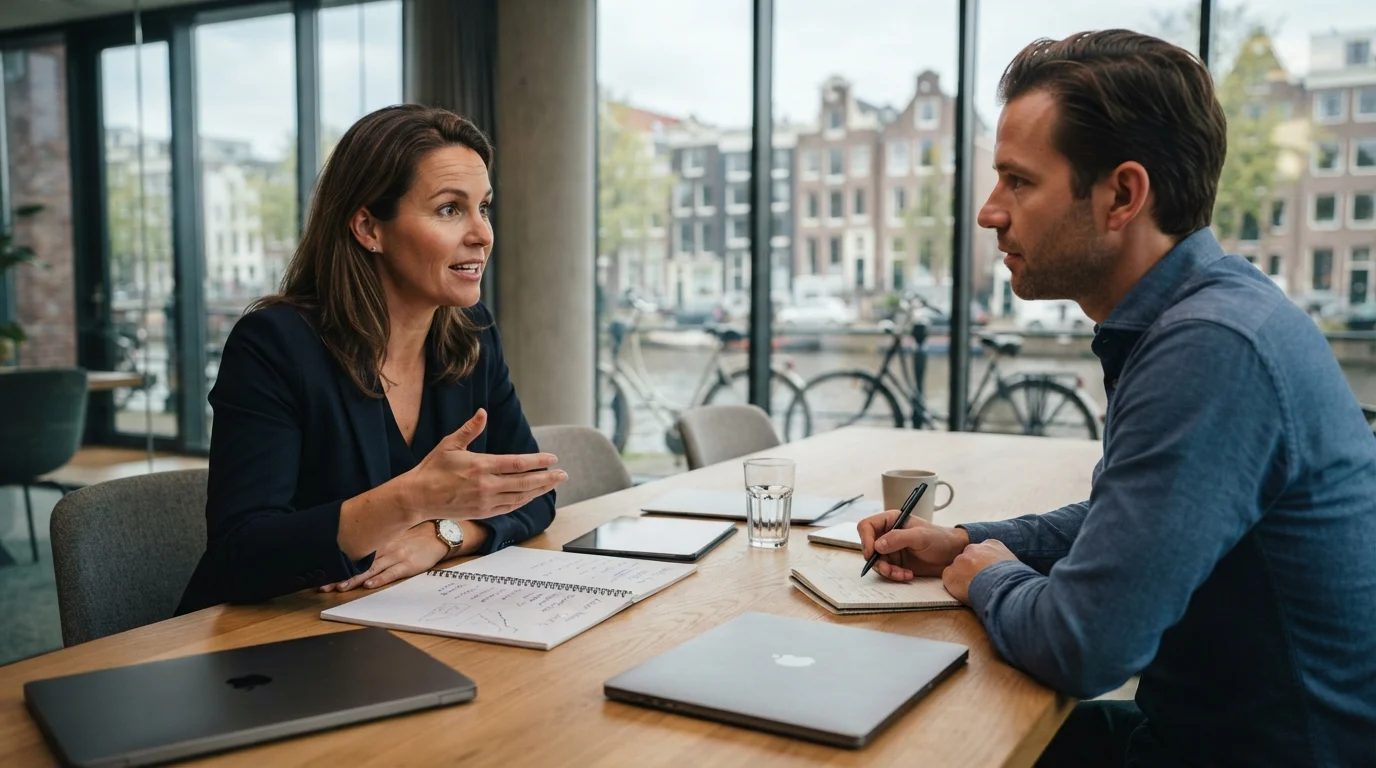
Picture this: You have just started your dream job in Amsterdam. During your first weekly team meeting, you pitch an idea you spent hours preparing. Before you can even finish your sentence, a colleague looks you dead in the eye and says, "I don't think that will work. It is too expensive and not practical." No polite preamble, no sugarcoating, no "compliment sandwich." Just raw, unvarnished feedback.
For many expats, this moment triggers a wave of panic. Is your colleague angry with you? Have you committed a career-ending blunder? In most cultures, this level of bluntness is considered rude, aggressive, or deeply unprofessional. But in the Netherlands, this is simply a standard Tuesday afternoon. It is the famous "Dutch directness" (known locally as directheid), and it is the absolute cornerstone of Dutch business etiquette.
Understanding how to navigate this communication style is not just about avoiding awkward office moments; it is essential for your professional survival and growth. Whether you are prepping for a job interview, launching a business, or settling into a new corporate role, mastering the rules of Dutch business communication will help you build trust, earn respect, and thrive. Let's dive deep into the mechanics of the Dutch workplace, explore the cultural roots of their directness, and look at practical ways to adapt without losing your own voice.
To survive in a Dutch office, you must first understand that Dutch directness does not come from a place of malice or superiority. Instead, it is rooted in deep cultural values of equality, honesty, and efficiency.
Historically, the Netherlands is a Calvinist country. This heritage has left a lasting legacy of modesty, practicality, and transparency. In the Dutch mind, being direct is a form of respect. It means you respect the other person's time and intelligence enough not to waste them with flowery language, hidden agendas, or false politeness. If a Dutch colleague disagrees with you, they tell you directly because they believe it is the fastest, most logical path to a solution.
Another crucial concept is the famous the historic Polder Model (poldermodel). Originating from the medieval need for farmers, nobles, and citizens to cooperate to keep the sea from flooding their shared land, the Polder Model is a consensus-driven decision-making process. In modern terms, it means that everyone—regardless of their rank or status—has a voice and is expected to use it. Silence in a meeting is often interpreted as having nothing to contribute, or worse, as silent disapproval. To participate in this consensus culture, you must be willing to speak up, share your honest opinion, and defend your ideas logically.
If you are used to hierarchical corporate cultures where the boss makes all the decisions and everyone else nods in agreement, Dutch meetings will be a major culture shock. Here are the unwritten rules of meeting etiquette in the Netherlands:
For expats looking to expand their professional network and get comfortable in these collaborative environments, understanding the social dynamics is key. You can read more about building these professional relationships in our guide on networking in the Netherlands as an expat.
The Dutch preference for efficiency extends heavily into written communication. If you are used to writing long, polite emails with soft openings and gentle requests, you will need to recalibrate your style.
A typical Anglo-American business email might look like this:
"Hi Jan, I hope you had a wonderful weekend! I was just wondering if you might have a spare moment sometime this week to take a quick look at the report I sent over last Tuesday? No rush at all, but your feedback would be incredibly helpful whenever you get a chance. Thanks so much!"
A Dutch colleague reading this might find it frustratingly vague and time-consuming. They would prefer:
"Beste Jan, Heb je tijd om naar het rapport van afgelopen dinsdag te kijken? Ik heb je feedback uiterlijk donderdag om 12:00 uur nodig. Alvast bedankt." (Dear Jan, Do you have time to look at last Tuesday's report? I need your feedback by Thursday at 12:00 PM. Thanks in advance.)
When writing emails in a Dutch context, keep these principles in mind:
If you are currently searching for a job and want to make sure your initial written materials match this direct, professional tone, check out our comprehensive advice on writing a Dutch-style CV.
In the Netherlands, work-life balance is not just a buzzword; it is a fundamental right. This cultural value heavily influences workplace relationships and social etiquette.
Dutch professionals maintain a healthy, distinct boundary between their professional and personal lives. While colleagues are friendly, supportive, and collaborative during work hours, they rarely socialize extensively outside of them. When the clock strikes 5:00 PM or 5:30 PM, the office empties rapidly as people head home to have dinner with their families or attend personal hobbies.
Here is what you need to know about navigating social interactions in a Dutch office:
Do not expect long, lavish business lunches. In most Dutch offices, lunch is a quick, functional 30-minute affair. It is incredibly common for everyone—from entry-level interns to the CEO—to sit together in the company canteen and eat a simple, cold meal, often a cheese sandwich (een broodje kaas) brought from home in a plastic container, accompanied by a glass of milk. It is a highly egalitarian ritual where work talk is temporarily shelved in favor of casual chat about weekend plans, sports, or news.
While weekday socialization is rare, there is one major exception: the Vrijmibo (short for Vrijdagmiddagborrel, or Friday afternoon drinks). Usually starting around 4:00 PM on Fridays, teams gather in the office kitchen or head to a local pub to wind down. This is the perfect opportunity to bond with your colleagues in a relaxed setting. Beer, wine, and deep-fried Dutch snacks like bitterballen are consumed. While the atmosphere is casual, remember that it is still a work-related event—keep your behavior professional and avoid over-drinking.
This strong boundary between personal time and work responsibilities is also reflected in the country's robust legal protections for employees. If you want to understand how these cultural boundaries translate into legal rights, read our guide on understanding Dutch employee rights and labor laws.
It is a well-known fact that the Dutch are among the best non-native English speakers in the world. Because of this, many expats assume they do not need to learn Dutch to succeed in business. While you can certainly get by in English, especially in multinational corporations or tech startups, relying solely on English limits your integration and career growth.
When you speak Dutch, you unlock a deeper level of connection with your colleagues. You can fully participate in the casual banter during lunch, understand the subtle nuances of office politics, and feel confident during the Friday afternoon borrel. Even showing that you are making an effort to learn goes a long way in earning the respect of your Dutch peers.
This is where StroopTaal becomes your ultimate career companion. StroopTaal is an AI-powered Dutch language learning app designed specifically for busy professionals and expats. Instead of memorizing irrelevant vocabulary, StroopTaal helps you master the language through practical, real-life scenarios:
With personalized learning plans tailored to your professional goals, StroopTaal takes you from basic conversational skills to professional fluency, helping you bridge the cultural and linguistic gap in the Dutch corporate world.
To help you successfully transition into your new professional environment, here is a quick-reference list of actionable tips for navigating Dutch business culture:
At first glance, Dutch business etiquette can feel intimidating, cold, or even harsh. But once you look past the surface level of bluntness, you will discover a workplace culture that is remarkably healthy, fair, and efficient. Because people say exactly what they mean, there is very little guesswork, passive-aggressive behavior, or hidden corporate drama. You always know exactly where you stand.
By embracing Dutch directness, participating actively in consensus-building, and respecting the boundaries between work and personal life, you can turn these cultural differences into your professional superpower. And by taking steps to learn the language, you show your team that you are fully committed to your new home.
Ready to accelerate your professional integration and speak Dutch with confidence? Download StroopTaal today and start practicing real-world business scenarios with our interactive AI tools. Your next successful meeting is just a lesson away!
Share this article:
The Netherlands remains one of Europe's premier destinations for international talent. While Amsterdam often dominates the headlines, the cities of...
Read moreAre you an expat planning to take the next big step in your career within the Netherlands? The Dutch job market is vibrant, innovative, and highly...
Read moreEmbracing the ZZP Life: Freelancing in the Netherlands The Netherlands is one of the most entrepreneurial countries in Europe. With its world-class...
Read more