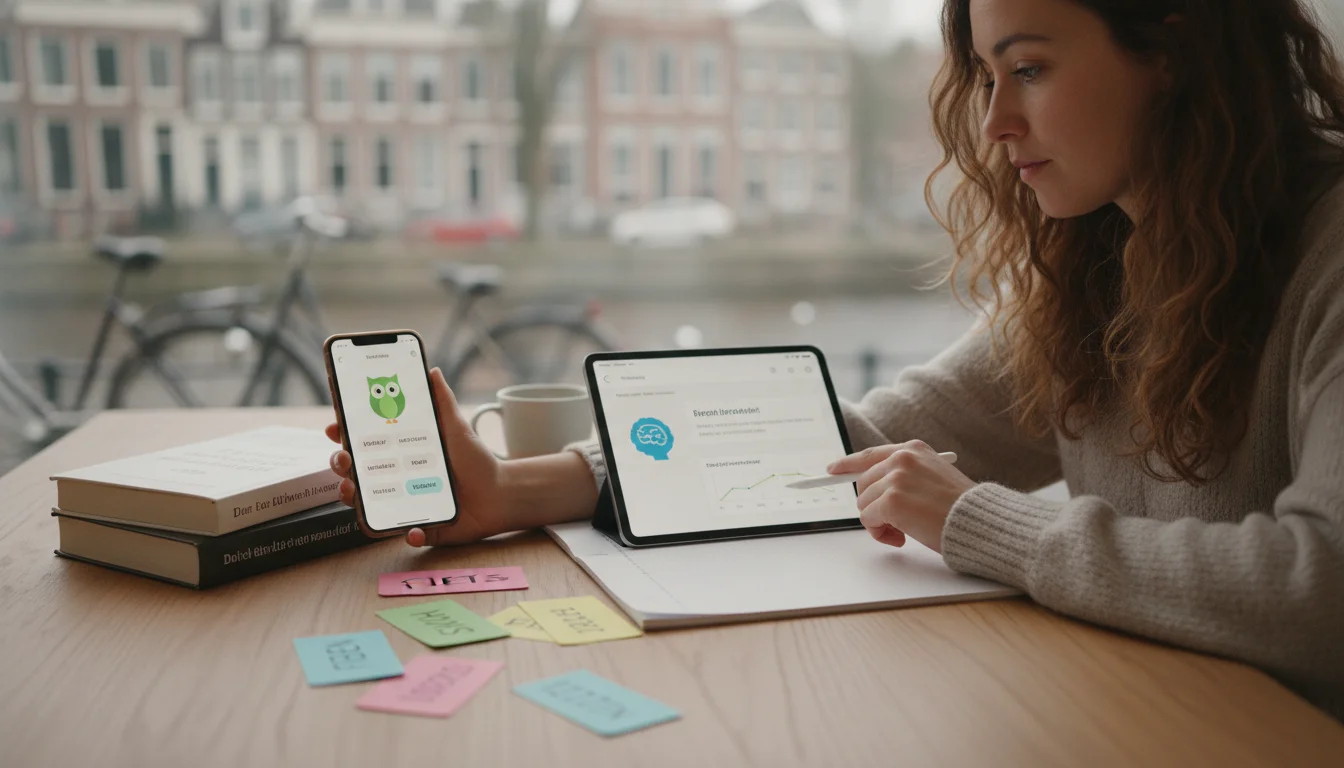
Duolingo vs Memrise for Dutch Vocab: Retention Techniques
Introduction: The Battle for Dutch Vocabulary Mastery Whether you are an expat settling into the cozy streets of Utrecht, a professional aiming to...
Read more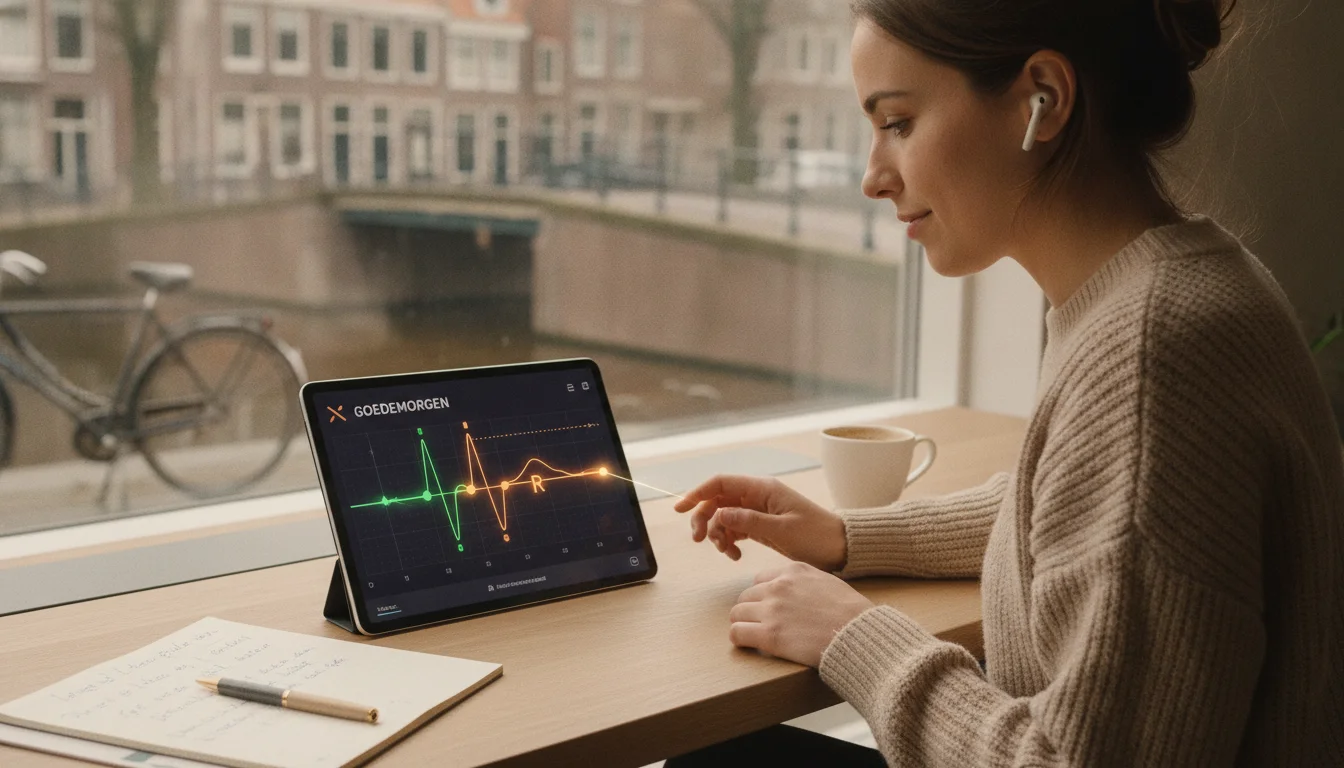
You have spent hours memorizing vocabulary lists. You finally understand the difference between de and het words, and you can structure a sentence with the verb at the very end without breaking a sweat. Yet, the moment you walk into a bakery in Amsterdam or Utrecht and order a hard broodje, the barista immediately smiles and replies in flawless English. It is a frustratingly common experience for expats and language learners in the Netherlands.
Why does this happen? The answer almost always lies in your pronunciation. The Dutch ear is highly sensitive to non-native phonemes, cadence, and word stress. Even a minor slip-up on a vowel sound can signal to a native speaker that it is easier to switch to English to save time. To truly integrate, feel confident in daily life, and pass the speaking components of your integration exams, you need to bridge the gap between knowing the language and speaking it naturally.
Fortunately, you do not need to hire an expensive personal tutor to perfect your accent. With the advent of advanced educational technology, apps like StroopTaal offer highly sophisticated, AI-powered tools designed to refine your spoken Dutch. In this guide, we will explore how you can use StroopTaal's instant pronunciation feedback to work on your accent, practice the most challenging Dutch sounds, and sound more natural.
To fix a pronunciation error, you first need to understand why it is happening. Dutch phonetics are notoriously challenging for English speakers and other expats. The language contains unique vowels, diphthongs, and consonant clusters that simply do not exist in other tongues. For a detailed breakdown of these sounds, you can consult Wikipedia's guide to Dutch phonology.
Here are the primary linguistic hurdles that keep learners from sounding native:
Standard language learning apps often ignore these nuances, focusing instead on passive reading and listening exercises. To truly master these sounds, you need interactive, real-time correction. This is where choosing the right platform is critical; you can read more about how different apps handle these challenges in our deep-dive comparison of the Babbel vs Duolingo vs StroopTaal comparison.
StroopTaal does not just tell you if you are "right" or "wrong." It uses cutting-edge speech recognition technology tailored specifically for the Dutch language. When you say a word or a sentence in the app, the AI scores your pronunciation and tells you what to improve.
The system evaluates your speech based on several key metrics:
The AI breaks down your spoken sentences into individual phonemes (the smallest units of sound). If you mispronounce the "ui" in kruispunt, the app highlights that sound and tells you what to improve, so you can try again.
Dutch has a distinct melodic rhythm. If your speech is too flat or if you place stress on the wrong syllable, you will sound robotic. StroopTaal's feedback helps you match the natural rise and fall of native Dutch sentences.
Through intuitive color-coding and visual waveforms, you get immediate guidance. Green means you nailed it; orange and red point out areas that need adjustments. This instant feedback loop allows you to make micro-adjustments to your mouth positioning and try again immediately, mimicking the natural way children learn to speak.
To understand where this technology fits in the broader landscape of language tools, check out our analysis of the AI pronunciation feedback apps available today.
To get the most out of StroopTaal's pronunciation training, you should approach your practice sessions systematically. Here is a highly effective routine to integrate into your daily learning schedule:
Before jumping into full conversations, spend five minutes focusing on isolated sounds. Use StroopTaal's vocabulary building exercises to target words containing difficult vowels like eu, oe, u, and y. Listen closely to the audio, say the word yourself, and check your pronunciation score. Pay attention to how long you hold the vowels.
Once your mouth muscles are warmed up, transition to StroopTaal's interactive dialogue games. These games simulate real-world scenarios—such as ordering a coffee, registering at the municipality (gemeente), or chatting with a neighbor. Speaking full sentences in context forces you to manage both pronunciation and conversational flow simultaneously. It is the closest thing to having a real conversation without the social anxiety of making mistakes.
When the AI flags a word as sub-optimal, do not just skip past it. Tap on the word to hear the correct pronunciation again. Try to exaggerate the sound on your next attempt. Did you open your mouth wide enough? Did you round your lips? Use StroopTaal's instant feedback to repeat the word until it turns green.
For a fully immersive experience, take advantage of the AI Dutch language tutor for conversation practice. This feature allows you to have free-flowing, unscripted conversations with an intelligent virtual partner. It will gently correct your pronunciation errors in real-time while keeping the conversation natural and engaging, building the muscle memory you need for real-life interactions.
While the AI provides excellent feedback, combining it with physical adjustments of your vocal tract will accelerate your progress. Here are some practical tips to help you conquer the trickiest sounds:
To produce the hard Dutch 'g', place the back of your tongue against the soft palate (the back of the roof of your mouth), similar to the position you use to make a 'k' sound. Instead of blocking the air completely as you would for 'k', let the air squeeze through, creating a gentle friction. Avoid over-exaggerating; a subtle, clear friction sound is much more natural than a harsh, scraping sound.
The 'ui' is a diphthong, meaning it starts as one vowel sound and glides into another. To make this sound, start with your mouth open in a position similar to the English "ah" (as in "father"), but with your lips slightly rounded. As you produce the sound, quickly move your tongue forward and raise it, ending with your lips tightly rounded—almost like the "ee" sound in "meet" but with rounded lips. Practice this slow glide, and let StroopTaal's visual feedback guide your transition speed.
The Dutch 'u' (as in nu or huren) does not exist in English. To make it, shape your mouth to say a long "ee" sound (as in "see"), but round your lips tightly as if you were going to whistle. Keep your tongue forward. If you pull your tongue back, you will accidentally say "oe" (which sounds like the "oo" in "cool"), completely changing the word from huren (to rent) to hoeren (prostitutes)—a mistake you definitely want to avoid!
If you are an expat living in the Netherlands, you may need to take the civic integration exam (Inburgeringsexamen) to secure permanent residency or citizenship. The speaking component (Spreken) is often the most nerve-wracking part of the exam. The examiners look for clarity, correct sentence structure, and understandable pronunciation.
By using StroopTaal's targeted exam preparation modules, you can practice answering typical exam questions under timed conditions. The app grades your spoken answers with AI and keeps your results, so you can work on making them clear for the examiners. For official guidelines on integration requirements, you can refer to the Immigration and Naturalisation Service (IND) website.
Accent reduction and pronunciation mastery are not overnight achievements. They require consistent physical training of your vocal muscles. Even just 10 to 15 minutes of daily practice can yield dramatic results over a few months.
StroopTaal's gamification features, including daily streaks and interactive rewards, are designed to keep you motivated. By building a daily habit of speaking Dutch aloud and acting on the AI's feedback, you can gradually make your Dutch pronunciation clearer and more natural.
The ultimate goal of improving your pronunciation is not to achieve absolute perfection, but to build the confidence to speak Dutch in your daily life. When you sound more native, local speakers will naturally stop switching to English, giving you the real-world practice you need to truly master the language.
With StroopTaal's personalized learning plans, real-time AI feedback, and engaging dialogue games, you have a powerful language lab right in your pocket. Stop letting pronunciation anxiety hold you back. Embrace the feedback, practice daily, and start speaking Dutch with the confidence of a native. Download StroopTaal today and take the first step toward effortless integration!
Share this article:
Introduction: The Battle for Dutch Vocabulary Mastery Whether you are an expat settling into the cozy streets of Utrecht, a professional aiming to...
Read moreThe Evolution of Language Learning: From Textbooks to Algorithms Imagine landing at Schiphol Airport, your mind buzzing with excitement and a resolve...
Read moreChoosing the Right Path to Dutch Fluency Moving to the Netherlands is an exciting adventure. Whether you are settling in the historic canals of...
Read more