AI for Dutch Speaking: Best Pronunciation Feedback Apps
Mastering the Sounds of Dutch with Modern Technology For many expats, language learners, and those preparing for the civic integration exam...
Read more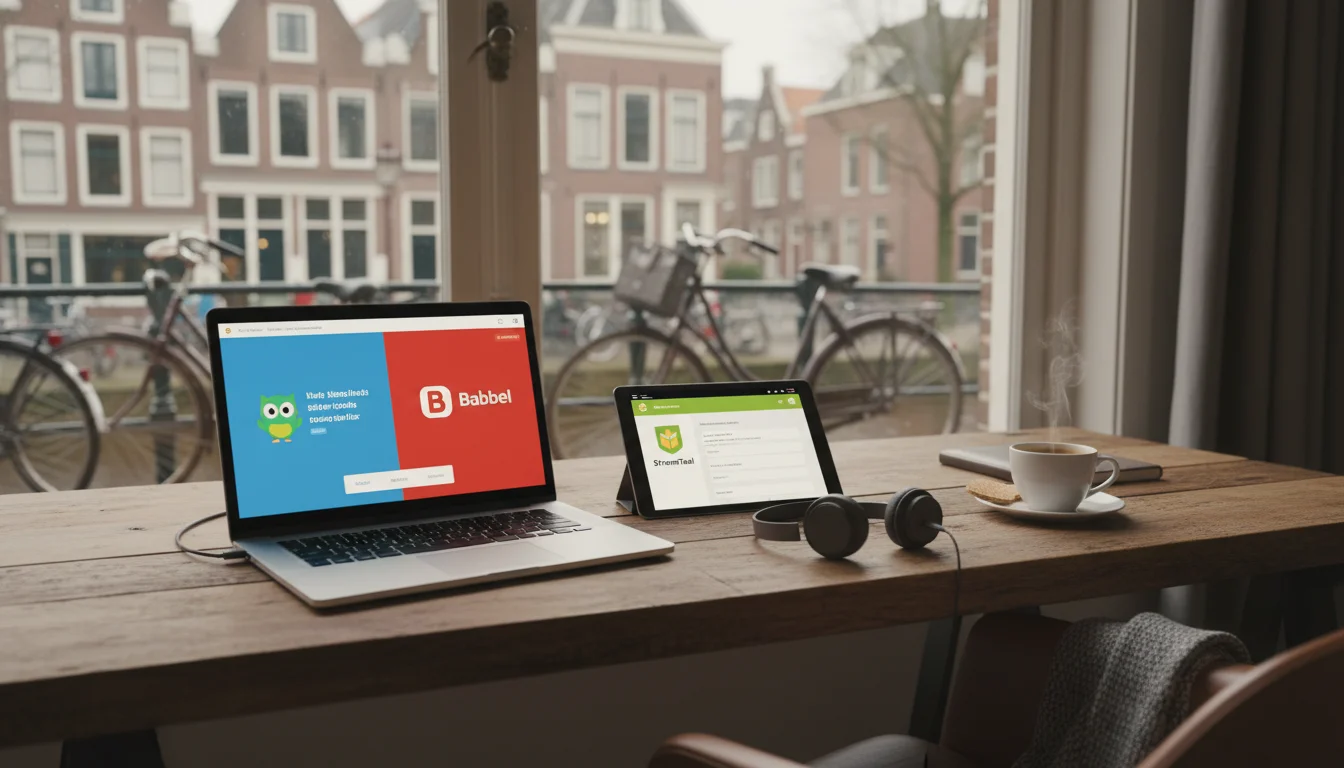
Gefeliciteerd! Congratulations on deciding to learn Dutch. Whether you're moving to the Netherlands for work, love, or simply a passion for the culture of canals and stroopwafels, you're starting an exciting journey. But as you stand at the starting line, you face your first hurdle: choosing the right learning tool. The app store is flooded with options, but two names always dominate the conversation: Duolingo and Babbel. They're the established giants. But what if there's a third option, one that leverages the power of AI to offer a more personalized and effective path to fluency?
In this comprehensive guide, we'll break down the pros and cons of Duolingo, Babbel, and the AI-powered newcomer, StroopTaal. We'll compare their teaching methods, features, and target audiences to help you decide which app is the perfect partner for your Dutch learning adventure.
Duolingo is often the first app people download when they start a new language, and for good reason. Its gamified approach, iconic green owl mascot, and free-to-start model make it incredibly accessible and, dare we say, addictive.
While fun, Duolingo's approach has its limits, especially for a language with tricky grammar like Dutch. Many serious learners find they hit a wall. The app often teaches sentences that are grammatically correct but sound unnatural or are unlikely to be used in real life (e.g., "The turtle is reading the newspaper"). Grammar explanations are often minimal, leaving you to figure out the rules behind 'de/het' articles or complex verb conjugations on your own. Most critically, it offers very little practice for what matters most: speaking and listening in real conversations.
Babbel positions itself as the more serious, curriculum-based alternative to Duolingo. It's designed by language experts and aims to get you conversational faster by focusing on practical, real-world dialogues from the very first lesson.
Babbel is a subscription-only service, which can be a deciding factor for some. While its structured approach is a strength, it can also feel a bit rigid and less engaging than Duolingo's game-like interface. The exercises, while practical, can become repetitive. Furthermore, while its speech recognition is a step up, it often provides simple pass/fail feedback rather than detailed guidance on how to improve specific sounds.
What if you could combine the structure of a curriculum with the personalization of a private tutor? That's the promise of AI-powered language apps like StroopTaal. Instead of a one-size-fits-all path, StroopTaal uses artificial intelligence to adapt to your unique learning style, pace, and weaknesses.
StroopTaal's core strength is its AI engine, which creates a personalized learning plan just for you. If you're struggling with Dutch prepositions, the app will serve you more exercises and lessons on that topic. If you master vocabulary quickly, it will move you ahead faster. This adaptive learning ensures your time is always spent on what's most impactful for your progress, eliminating the frustration of lessons that are too easy or too hard.
The biggest leap from beginner to intermediate is applying knowledge in actual conversation. This is where AI truly shines. The effectiveness of AI chatbots for developing Dutch fluency is a game-changer, allowing you to practice speaking in realistic scenarios without the fear of making mistakes in front of a real person. StroopTaal's AI conversation practice lets you chat about anything from booking a doctor's appointment to discussing your favorite Dutch film. You also get instant, detailed feedback on your pronunciation, going beyond a simple 'correct' or 'incorrect'. For those serious about their accent, learning how modern AI tools help you speak like a native can make all the difference.
Let's break down how the three apps stack up across key features for a beginner Dutch learner.
The "best" app is ultimately the one that aligns with your goals, learning style, and commitment level.
Choose Duolingo if:
Choose Babbel if:
Choose StroopTaal if:
Choosing between Duolingo, Babbel, and StroopTaal isn't about finding a single "winner." Duolingo is a fantastic gateway, Babbel is a reliable textbook, and StroopTaal is your personal tutor. For many learners, the ideal solution might even be a combination—using Duolingo for fun vocabulary drills while relying on a more advanced tool for deep learning and conversation practice.
However, if your goal is to move beyond basic phrases and truly communicate with confidence, investing in a tool designed for fluency is key. The ability to practice real conversations, receive personalized feedback, and follow an adaptive plan can dramatically accelerate your progress. Your journey to mastering Dutch is a marathon, not a sprint, and choosing the right companion app will make all the difference.
Ready to experience a truly personalized learning path? Download StroopTaal and start your first AI-powered Dutch conversation today.
Share this article:
Mastering the Sounds of Dutch with Modern Technology For many expats, language learners, and those preparing for the civic integration exam...
Read moreForgetting Dutch Words? Here's the Secret to Making Them Stick You’ve just spent an hour learning a list of 30 new Dutch words. You feel proud,...
Read moreBeyond Basic Flashcards: Advanced Vocabulary Building with Language AppsYou’ve diligently memorized your first 500 Dutch words. You can name the...
Read more