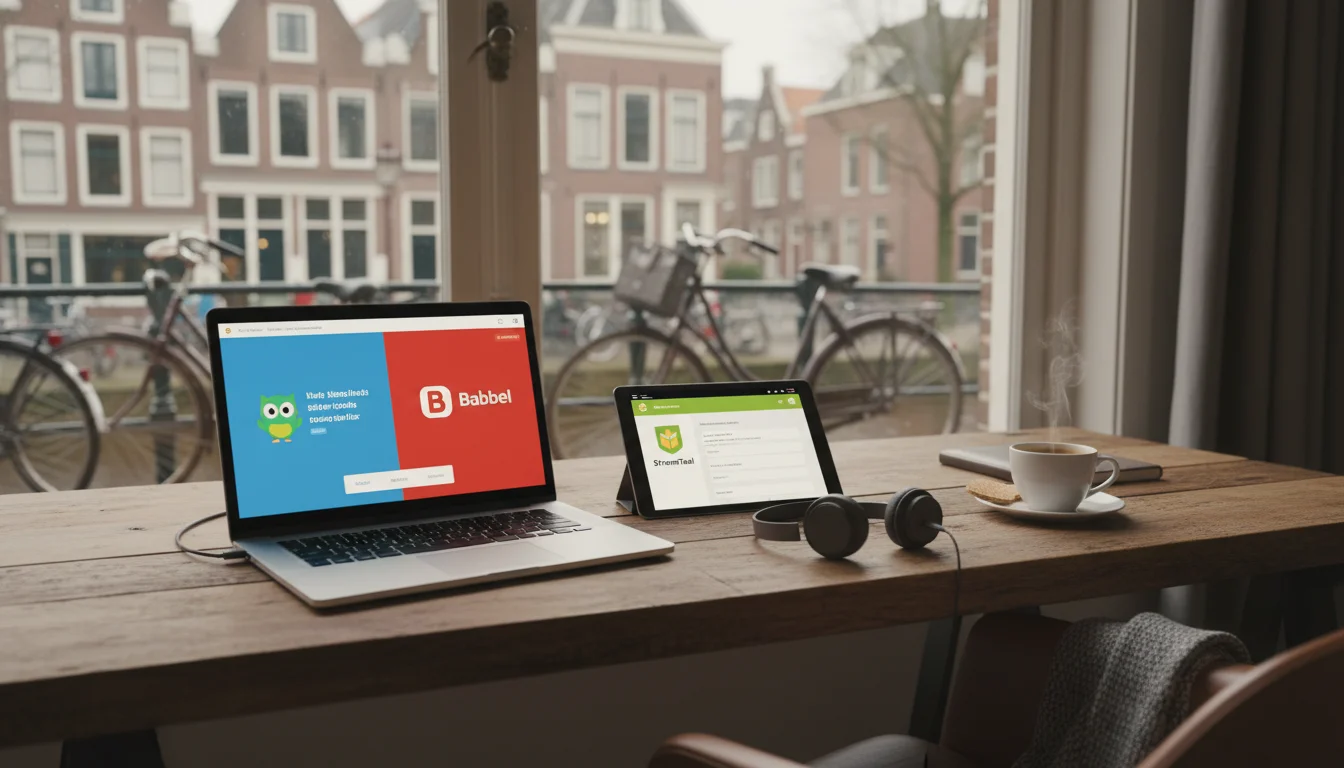
Gamification in Dutch Learning Apps: Does It Boost Motivation?
The Dutch Language Challenge: Why We Need Motivation Picture this: You have just moved to the Netherlands. You are surrounded by beautiful canals,...
Read more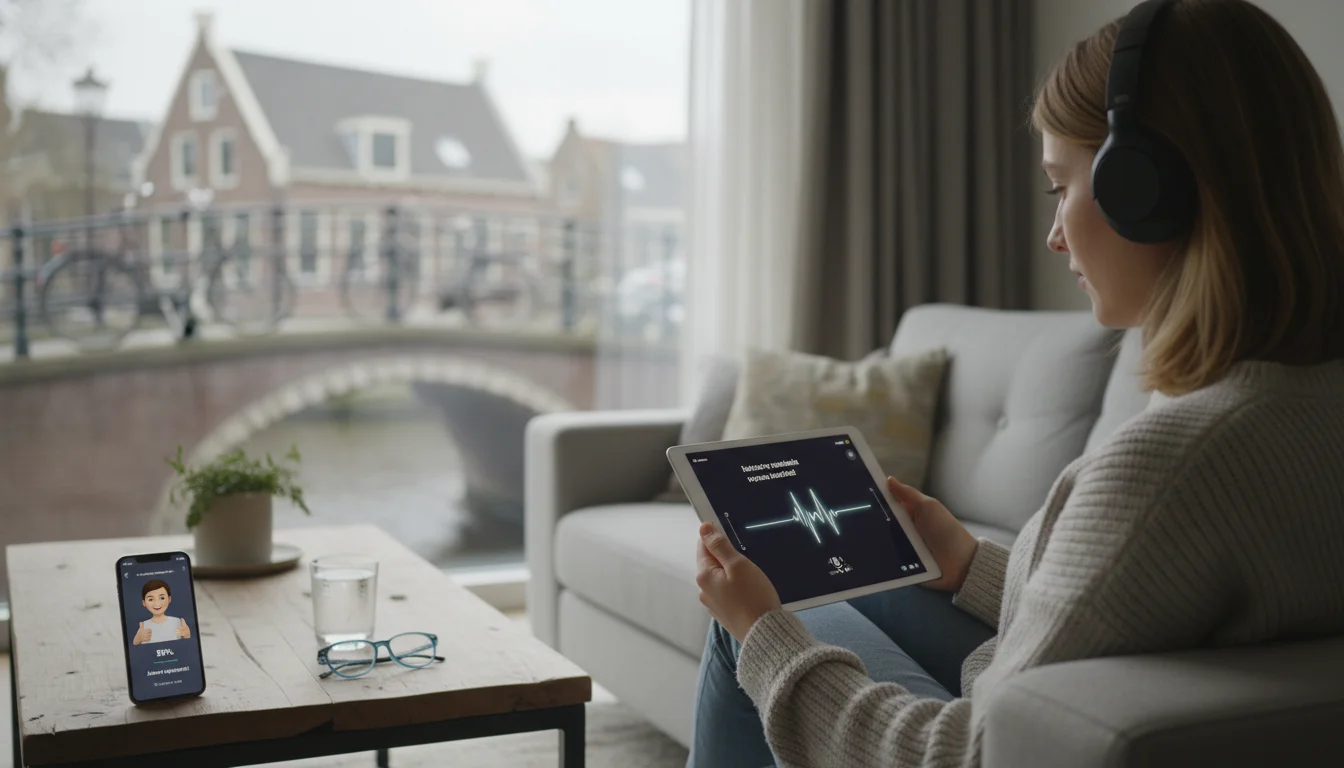
For many expats, language learners, and those preparing for the civic integration exam (Inburgeringsexamen), speaking Dutch is the ultimate hurdle. You might spend hours memorizing vocabulary lists or reading Dutch news, but the moment you open your mouth to order a broodje gezond or talk to your Dutch neighbors, a wave of self-consciousness hits. Why? Because Dutch pronunciation is notoriously tricky for non-native speakers.
From the deep, guttural 'G' that sounds like clearing your throat, to the confusing diphthongs like 'ui', 'eu', and 'oe', the Dutch phonetic landscape can feel like a minefield. Historically, the only way to perfect your accent was to hire an expensive private tutor or move to a remote village in Friesland where nobody speaks English. Fortunately, artificial intelligence has completely changed the game.
Today, you can practice speaking Dutch in a judgment-free environment using advanced AI-powered tools. In this comprehensive guide, we will explore how AI is transforming Dutch speech training, what features to look for in a speaking app, and how you can leverage these tools to build real-world confidence.
To understand how AI can help, we first need to look at why Dutch pronunciation poses such a unique challenge. Dutch is a Germanic language, which means it shares some roots with English and German. However, it has evolved several phonetic quirks that do not exist in other major languages.
For expats looking to integrate, mastering these nuances is not just about sounding polite; it is often a legal necessity. According to the Dutch Government integration guidelines, passing the speaking portion of the integration exams requires clear, intelligible pronunciation and the ability to hold basic conversations in everyday scenarios.
In the past, language learning apps relied on passive listening. You would listen to a native speaker say a phrase, repeat it to your empty room, and hope for the best. There was no loop of feedback, leaving you to guess whether your 'ui' sound was accurate or completely off-mark.
Artificial intelligence has bridged this gap through Automatic Speech Recognition (ASR) and Natural Language Processing (NLP). Modern AI tools do not just record your voice; they analyze it in real-time. Here is how it works:
AI compares the acoustic signature of your voice against thousands of hours of native Dutch speech recordings. It looks at pitch, duration, and frequency to pinpoint exactly where your pronunciation diverges from the standard Dutch accent (known as Algemeen Beschaafd Nederlands or ABN).
Instead of just telling you 'that was wrong', sophisticated AI engines break your speech down into individual phonemes (the smallest units of sound). The app can show you exactly which letter or syllable you mispronounced, giving you targeted feedback to correct your tongue or lip placement.
Pronunciation is not just about reading single words from a screen. It is about flow, intonation, and confidence. By using AI chatbots for Dutch fluency, learners can engage in dynamic, unscripted conversations. The AI understands your input, responds contextually, and gently corrects your spoken grammar and pronunciation along the way.
Not all language apps are created equal. When choosing the right Dutch learning app features, you should look for tools that prioritize active speaking and provide actionable, instant feedback rather than passive tapping exercises. Here are the must-have features for mastering your Dutch accent:
While there are many language learning tools on the market, only a few have successfully integrated advanced AI to tackle the unique challenges of the Dutch language. Let us look at the top contenders making waves in 2026.
If you want an app designed from the ground up specifically for Dutch learners, StroopTaal is built for exactly that. Unlike generic, multi-language apps that apply a one-size-fits-all model, StroopTaal is tailored entirely to the nuances of Dutch grammar, culture, and phonetics.
StroopTaal combines cutting-edge AI with highly engaging gamification features to create an immersive speaking environment. Key features include:
By offering daily streaks, vocabulary building with spaced repetition, and dedicated exam preparation modules, StroopTaal makes mastering spoken Dutch both efficient and highly addictive.
While StroopTaal offers a comprehensive, all-in-one ecosystem, other tools can complement your learning journey. For instance, generic speech-to-text engines built into your smartphone (like Google Assistant or Siri) can serve as a basic test of your clarity. If the assistant can understand your spoken Dutch, you are on the right track! However, these tools do not offer the structured, educational feedback or the targeted phonetic corrections that dedicated best Dutch pronunciation apps with AI tools provide.
Simply downloading an app is not enough; you need a strategic approach to get the most out of your AI-powered speech training. Here are several practical tips to accelerate your progress:
Shadowing is a language learning technique where you listen to a native speaker and repeat what they say with as little delay as possible. You act as their 'shadow', mimicking their intonation, rhythm, and pauses. Use the audio in StroopTaal's listening scenes and podcasts for shadowing, then use pronunciation practice to let the AI score the words and sentences you say.
When the AI flags a pronunciation error, do not just repeat the word louder. Think about the physical mechanics of your mouth. Are your lips rounded? Is your tongue flat or raised? For example, to pronounce the Dutch 'u' sound correctly, shape your lips as if you are going to whistle, but try to say 'ee'.
If you constantly stumble over specific words (like verschrikkelijk or angstaanjagend), add them to your custom vocabulary deck. Ensure your app uses spaced repetition so you are prompted to speak these challenging words right before your brain is about to forget them.
Consistency beats intensity every single time. Practicing for 10 minutes every day with an AI tutor is far more effective than a grueling 2-hour session once a week. Use gamified streaks to keep yourself accountable and build speaking Dutch into your daily routine.
Overcoming the fear of speaking Dutch is one of the most rewarding steps on your integration journey. While the unique sounds of the language can feel intimidating at first, you no longer have to practice in isolation. By leveraging AI-powered feedback tools, you can refine your accent, master complex grammar, and practice real-world conversations whenever and wherever you want.
Ready to take your Dutch speaking skills to the next level? Start practicing today with StroopTaal. With a personal study plan, interactive dialogue games, and instant pronunciation feedback, you can build the confidence to chat with your local baker, colleagues, and neighbors. Succes!
Share this article:
The Dutch Language Challenge: Why We Need Motivation Picture this: You have just moved to the Netherlands. You are surrounded by beautiful canals,...
Read moreSo, You Want to Learn Dutch? Choosing Your Digital Tutor Gefeliciteerd! Congratulations on deciding to learn Dutch. Whether you're moving to the...
Read moreForgetting Dutch Words? Here's the Secret to Making Them Stick You’ve just spent an hour learning a list of 30 new Dutch words. You feel proud,...
Read more