How to Register at the Municipality (Gemeente) in NL
Welcome to the Netherlands: Your First Bureaucratic Step Moving to a new country is an exhilarating adventure. You are likely dreaming of cycling...
Read more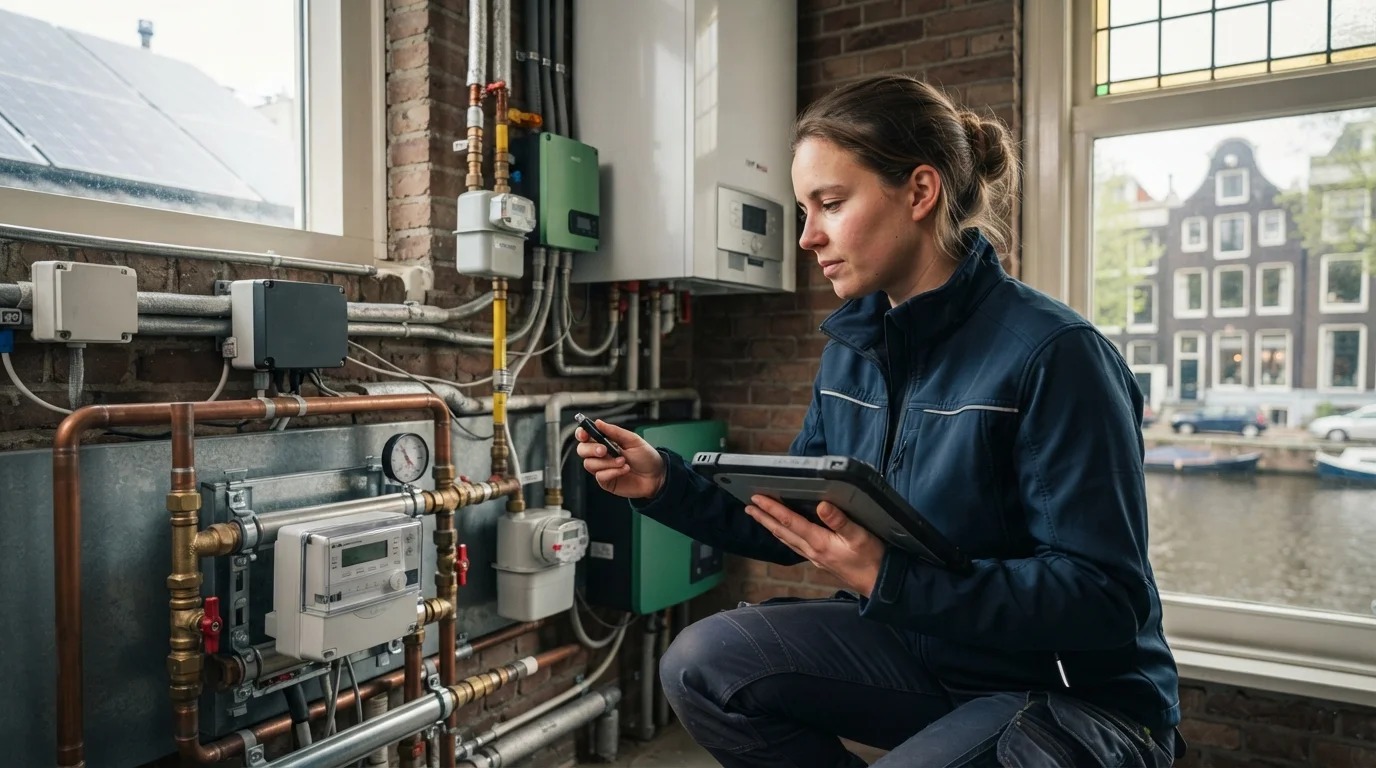
Moving to a new country is an exhilarating adventure, but it also comes with a mountain of administrative tasks. If you have recently succeeded in finding your new home in the Netherlands, congratulations! Once the keys are in your hand, your very next priority is setting up your basic utilities: water, gas, and electricity.
In 2026, the Dutch utility landscape is more sustainability-focused than ever. With the Netherlands rapidly transitioning away from fossil fuels toward a fully green grid, navigating energy contracts, smart meters, and regional water authorities can feel overwhelming—especially when all the correspondence arrives in Dutch. This comprehensive guide will walk you through everything you need to know to get connected, save money, and understand your bills, while picking up some essential Dutch vocabulary along the way.
To understand how utilities work in the Netherlands, you must first understand that they are split into two completely different systems:
Because of this split, you will need to set up your water and your energy contracts through two entirely separate processes. Let us look at how to handle each one step-by-step.
Dutch tap water is legendary for its quality. It is safe, clean, and delicious to drink straight from the tap. In fact, the Netherlands is one of the few countries in the world that does not use chlorine to purify its water supply.
Because water providers are regional monopolies, your provider is determined by your zip code. For example, if you live in Amsterdam, your water company is Waternet. If you live in Rotterdam or The Hague, it is Evides. In Utrecht, it is Vitens. You can easily find your regional provider by entering your new address on the official Dutch municipal registry or by searching online.
Your water bill in the Netherlands consists of two main components:
To register, simply visit your regional provider's website, enter your move-in date, your address, and your initial water meter reading. To pay your bills smoothly, you will find it highly beneficial to set up a Dutch bank account early on, enabling automatic monthly direct debits (automatische incasso) so you never miss a payment.
The energy landscape in the Netherlands has undergone a massive green revolution. By 2026, the Dutch government has accelerated its phase-out of traditional natural gas. Many modern Dutch apartments and houses are now completely gasloos (gas-free), relying instead on district heating (stadsverwarming) or electric heat pumps (warmtepompen).
When choosing an energy provider for electricity and gas, you will generally be offered three types of contracts:
When comparing energy providers, you will notice a heavy emphasis on groene stroom (green electricity). Most providers now offer contracts that guarantee their electricity is sourced from European wind, solar, or biomass. Look for providers that offer Dutch-generated green energy (Nederlandse windstroom) if you want to support local renewable energy production directly.
When managing your utilities, you will encounter a lot of specific Dutch terminology. Learning these words will make reading your contracts, bills, and emails much easier. Here are the most important terms to know:
| Dutch Term | English Meaning |
|---|---|
| Aansluiting | Connection / Utility hookup |
| Termijnbedrag | Monthly installment (estimated payment) |
| Jaaroverzicht / Jaarnota | Annual statement / Year-end reconciliation bill |
| Meterstanden | Meter readings |
| Slimme meter | Smart meter (automatically sends readings to providers) |
| Vastrecht | Fixed delivery and grid management costs |
| Netbeheerder | Grid operator (responsible for physical cables and pipes) |
Struggling to remember all these terms? This is where the StroopTaal app comes in! With StroopTaal's vocabulary building tools and spaced repetition system, you can easily master real-world Dutch terminology related to housing, administration, and daily life. You can even practice simulated conversations with our AI tutor to confidently discuss utility bills or call customer support in Dutch without the anxiety.
One of the most common points of confusion for expats is how Dutch energy billing works. The Netherlands uses an installment system called the termijnbedrag.
Instead of paying for exactly what you consumed each month, your provider estimates your annual usage based on the historical consumption of your property and current energy prices. They divide this total by 12, and you pay this fixed amount every month.
At the end of your contract year, you will receive your jaarnota (annual statement). Your provider will compare your actual consumption (tracked by your slimme meter) against the total installment payments you made.
This system prevents households from facing massive, unaffordable bills during the cold winter months, spreading the costs evenly throughout the year.
If you are renting or buying a house with solar panels (zonnepanelen), you will benefit from generating your own electricity. However, keep in mind that the Dutch rules surrounding solar energy feed-in tariffs (the salderingsregeling) are evolving rapidly.
In 2026, many energy providers have introduced feedback fees (terugleverkosten) for customers who feed excess solar power back into the grid during peak hours. To maximize your savings, it is highly recommended to use high-energy appliances (like dishwashers and heat pumps) during the middle of the day when your solar panels are actively producing power.
While you are adjusting to your new, eco-friendly Dutch household, make sure you also familiarize yourself with the local waste management and recycling rules. Proper waste separation is highly regulated in the Netherlands, and municipal taxes are often tied to how efficiently your neighborhood processes waste.
Ready to get started? Follow this simple checklist to ensure a seamless setup:
Setting up your utilities is a major milestone in making the Netherlands truly feel like home. By understanding the difference between regional water monopolies and the competitive green energy market, selecting the right contract type, and keeping an eye on your termijnbedrag, you can keep your living costs low and your environmental impact minimal in 2026.
Of course, dealing with administrative Dutch can still feel daunting. To make your integration journey smoother and build the confidence to handle any household situation, download the StroopTaal app today. From A0 to C1 grammar lessons to interactive dialogue games designed for practical, real-life scenarios, StroopTaal is your ultimate companion for mastering the Dutch language and thriving in your new life. Succes!
Share this article:
Welcome to the Netherlands: Your First Bureaucratic Step Moving to a new country is an exhilarating adventure. You are likely dreaming of cycling...
Read moreThe Expat Catch-22: Opening a Bank Account Without a BSN Moving to the Netherlands is an exciting adventure. You are likely dreaming of cycling along...
Read moreWelcome to the Dutch Healthcare Maze Moving to the Netherlands is an exciting adventure. From cycling along historic canals to tasting your first...
Read more