How to Write an Email Seeking Information for the Inburgering B1 Writing Test
Preparing for the Dutch civic integration exam (inburgeringsexamen) can feel daunting, especially as candidates transition to the higher B1 level....
Read more
This article was written by AI and published by StroopTaal.
AI can get things wrong. For anything official, check the source it points to.
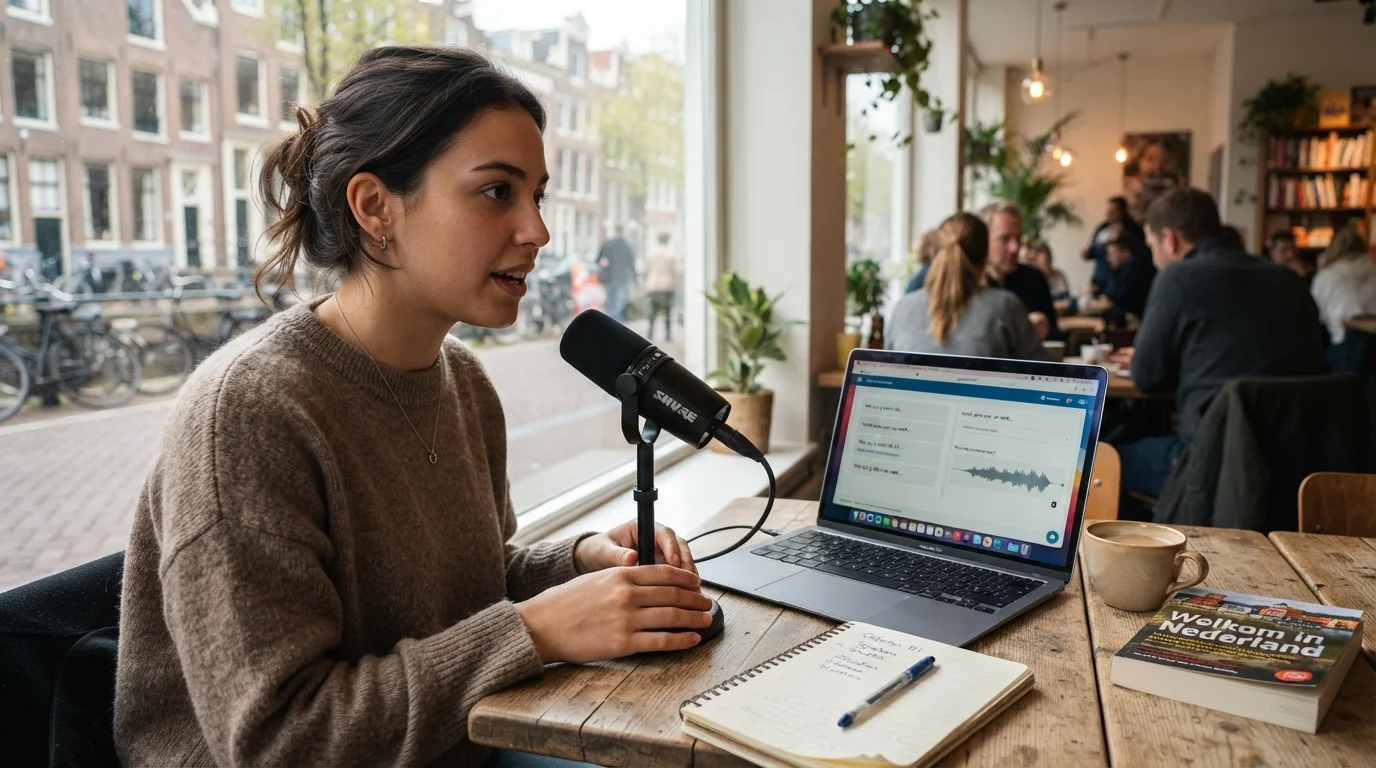
AI-generated image

Moving to the Netherlands comes with a long list of bureaucratic rites of passage: registering at the gemeente, setting up your DigiD, and opening a Dutch bank account. For many newcomers, however, the most critical piece of post arrives in a plain white envelope from DUO (Dienst Uitvoering Onderwijs). That letter states that you are inburgeringsplichtig—legally required to integrate.
From the moment that obligation begins, a strict timer starts ticking. Missing your civic integration deadline can lead to severe financial consequences, including thousands of euros in administrative fines, mandatory repayment of study loans, and serious complications with the Immigration and Naturalisation Service (IND) when renewing your residence permit. In this comprehensive guide, we will break down exactly how your inburgering deadline is calculated, what causes the clock to start, how to apply for legitimate extensions, and how to structure your preparation so you never have to face a DUO penalty.
Your integration period, legally referred to as the inburgeringstermijn, is the window of time granted by Dutch law to learn the language and demonstrate civic integration. Under Dutch legislation, the standard period is three years.
While three years sounds like a generous cushion, time slips away remarkably fast. Learning a new language up to CEFR A2 or B1, studying Dutch society, and passing multiple exams takes sustained effort. Crucially, the three-year clock does not wait for you to find an apartment, settle into a job, or choose a language school. It runs continuously from your official starting date.
Before calculating your exact date, you must identify which legal framework governs your obligation. The rules differ significantly depending on when you received your integration requirement:
Regardless of whether you fall under the 2013 or 2021 act, the core three-year deadline rule remains the baseline standard.
Miscalculating your deadline by even a couple of weeks can result in automated penalties. Follow these steps to find your official cut-off date.
Your integration clock does not begin on the day you land at Schiphol Airport, nor does it begin on the day you start learning Dutch. Legally, the period starts on the date specified in the initial notification letter from DUO (the kennisgeving inburgeringsplicht).
Typically, this date aligns closely with the date your permanent or temporary residence permit became active or when you registered in the Personal Records Database (BRP) as a resident with an integration requirement.
The standard formula is straightforward:
Official Start Date + 3 Years = Your Inburgering Deadline
For example, if DUO issued your formal obligation letter with an effective start date of 14 September 2023, your original inburgering deadline is 14 September 2026. Every component of your civic integration must be completed and graded before that date passes.
Never rely solely on mental math or personal notes. DUO maintains an official digital portal where your exact deadline is recorded down to the day. You can log into Mijn Inburgering using your DigiD. If you have not yet set up your account, you can review our guide on how to register for inburgering exams on Mijn Inburgering.
Inside the portal, look for the section titled Mijn inburgeringstermijn. Here, DUO displays:
The Dutch government treats the integration deadline seriously. If your deadline passes and you have not completed every required component, the DUO enforcement process triggers automatically. For a detailed breakdown of the legal consequences, read our article on what happens if you miss your inburgering exam deadline.
Here is an overview of the financial and legal ramifications of an expired deadline:
DUO will issue an administrative fine based on how many hours of classes you attended, how many exam parts you passed, and whether you made a demonstrable effort. These fines can range from a few hundred euros to a maximum statutory fine of up to €1,250 per assessment. Furthermore, DUO sets a new, shorter deadline (often one or two years). If you miss that second deadline, DUO can fine you again.
Many immigrants who fall under Wi2013 take out a social loan through DUO to cover language school fees and exam costs (up to €10,000). Under specific conditions, asylum status holders can have this loan forgiven upon timely completion, and certain other permit holders may access favorable repayment conditions. To explore these financial provisions, consult our guide on how to get financial support from DUO for inburgering. If you fail to finish before the deadline, you lose your right to any debt forgiveness and must repay the entire borrowed balance with interest.
Failing to fulfill your inburgering requirement has serious immigration repercussions. The IND will not approve applications for Dutch citizenship (naturalisatie) or an EU permanent residence permit (onbepaalde tijd) without proof of full integration. In some non-asylum visa categories, non-compliance can even prompt the IND to review the validity of your current residence status.
DUO does not expect miracles if you face extreme, unavoidable circumstances. Dutch law allows for an extension (verlenging) of your integration period, but it is never awarded automatically. You must submit a formal request with supporting documentation before your deadline expires.
If a severe illness or mental health condition prevented you from attending classes or taking exams for a prolonged period (typically at least three consecutive months), you can apply for an extension. You will need to provide medical documentation from an independent doctor or the official independent assessment body (ARG).
If you give birth during your integration period, DUO grants an automatic 16-week extension upon submission of an official birth certificate or a statement from your midwife/obstetrician, corresponding to standard Dutch maternity leave.
What if you studied hard, attended classes, took multiple exam sessions, but failed one tricky component like speaking or writing? DUO can grant an extension if you demonstrate sufficient effort. Under Wi2013 rules, this generally requires:
If you meet these rigorous conditions, DUO may extend your deadline by up to two additional years to help you finish.
Exam slots at DUO testing locations in cities like Amsterdam, Utrecht, Rotterdam, and Zwolle often fill up weeks or months in advance. However, DUO rarely accepts full exam centers as an excuse if you waited until the final three months of your three-year window to book your tests. Only system-wide delays acknowledged by DUO will lead to an administrative extension.
To avoid deadline panic and costly fines, pace your learning across your entire three-year term. Here is a proven roadmap for pacing your progress:
Your first year should focus on daily immersion and building a solid language routine. You do not need to sit exam papers immediately, but you must acquire essential vocabulary and grasp core Dutch sentence structure (word order, inversion, separable verbs).
During your second year, transition from general language learning to exam-specific readiness. Start working through Knowledge of Dutch Society (KNM) topics, covering Dutch labor laws, housing, education, and healthcare.
The final year should be reserved for your remaining exams (Speaking and Writing) and serving as a safety buffer for any necessary retakes.
Managing the ticking clock requires disciplined, consistent practice. Consistent daily study prevents the stressful cramming that leads to missed deadlines and retakes.
This is where StroopTaal can support your study schedule. StroopTaal is an independent Dutch learning app designed specifically around real life in the Netherlands, covering levels from complete beginner (A0) all the way to C1. Its structured lesson path guides you step-by-step through reading, listening, writing, and grammar explanations with conjugation tables and practical dialogues.
For learners working against the DUO clock, StroopTaal Premium offers dedicated exam practice for the inburgering exam at A2 and B1, covering reading, writing, listening, speaking, and KNM. You can practise each section independently under timed conditions to mirror real exam pressure. StroopTaal uses AI to grade your practice writing and speaking responses, providing tailored corrections and tracking a readiness score for each part so you know where you stand before booking an official exam slot.
Keep this actionable checklist close at hand throughout your integration journey:
By understanding how DUO calculates your deadline and systematically knocking out your exam components well before the cut-off date, you can navigate your integration requirements with confidence and avoid unexpected fines along the way.
Share this article:
Preparing for the Dutch civic integration exam (inburgeringsexamen) can feel daunting, especially as candidates transition to the higher B1 level....
Read morePreparing for the Dutch civic integration exam (inburgeringsexamen) can feel like a dual challenge: you are not just learning a language, you are...
Read morePreparing for the Dutch civic integration exam (inburgeringsexamen) can feel intimidating, particularly when stepping up to the CEFR B1 level. Unlike...
Read more