Best Dutch Banks for Expats: Bunq vs ING vs ABN AMRO (2026 Guide)
Landing in the Netherlands comes with an exciting to-do list: finding a flat, renting a bicycle, and grabbing your first warm stroopwafel at the...
Read more
This article was written by AI and published by StroopTaal.
AI can get things wrong. For anything official, check the source it points to.
AI-generated image
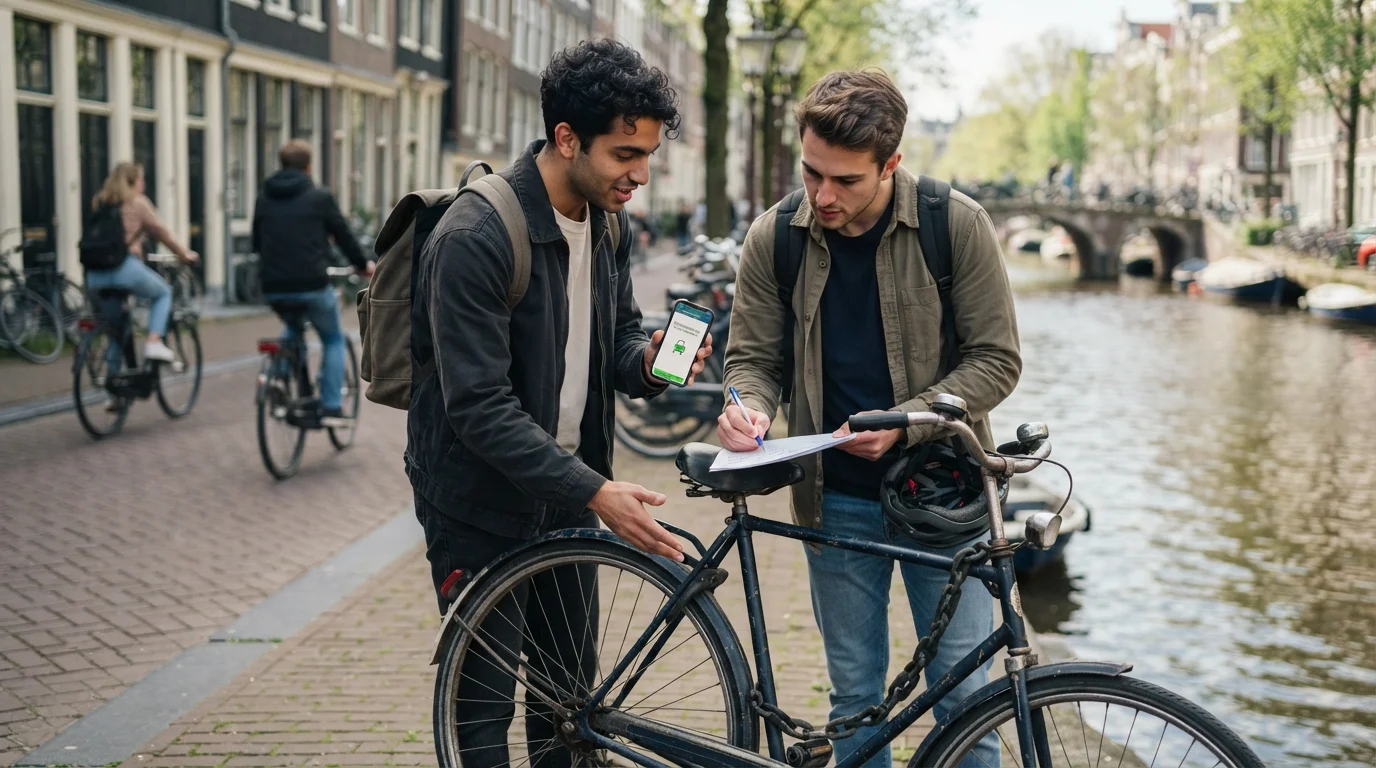
Arriving in Amsterdam and buying your first two-wheeled steed is practically a rite of passage. Cycling isn't merely a hobby or exercise in the Netherlands; it is the lifeblood of daily transit. But for newcomers, navigating the chaotic world of second-hand bicycles (tweedehands fietsen) can feel like walking into an urban minefield filled with stolen goods, bent frames, and slick scam artists.
Whether you have just completed your Dutch BRP registration as a new expat or are settling into your apartment after setting up your Dutch utilities, securing reliable transportation is likely at the top of your to-do list. In this comprehensive guide, we will break down the common scams, explain how to verify if a bicycle is stolen, explore the safest places to shop, provide a mechanical inspection checklist, and share the Dutch vocabulary you need to negotiate like a local.
With an estimated 900,000 bicycles in Amsterdam and tens of thousands reported stolen each year, the illicit market thrives on unsuspecting expats, international students, and tourists. Knowing the red flags before you hand over any cash is crucial.
If someone approaches you near Leidseplein, Amsterdam Centraal, or late at night outside a bar whispering, "Fiets kopen? Twee tientjes!" (Buy a bike? Twenty euros!), walk away immediately. Purchasing a bicycle from a random individual on the street without paperwork or legitimate ownership is almost guaranteed to involve a stolen bike.
In the Netherlands, buying stolen property—even unknowingly if the price was suspiciously low—is a criminal offense known as heling (fencing). Under the Dutch Penal Code, getting caught with a stolen bike can result in a hefty police fine starting at €250, a permanent confiscation of the bicycle, and even a criminal record that could jeopardize future immigration applications.
Marktplaats is the Dutch equivalent of Craigslist or eBay Classifieds. While it is a goldmine for bargains, it also harbors scammers. Common tactics include:
Some rogue dealers buy scrap bicycles, give them a fresh coat of cheap spray paint, wrap new bar tape around rusty handlebars, and market them as "vintage Dutch racers" or "restored classic omafietsen." Underneath the shiny paint, the bottom bracket might be rusted solid, or the frame alignment could be warped from a previous crash.
Every legitimate bicycle manufactured or registered in the Netherlands carries a unique frame number (framenummer), usually stamped underneath the bottom bracket (where the pedals meet the frame) or along the seat tube. Before you pay for any used bike, follow this mandatory verification procedure.
The Dutch Police (Politie) and the Ministry of Justice manage a national database of stolen items. You can verify frame numbers instantly using the official Stop Heling database or the RDW (National Vehicle Authority) register for electric bicycles.
Depending on your budget, timeframe, and tolerance for DIY maintenance, here are the safest avenues to find a reliable two-wheeler.
Visiting a neighborhood fietsenmaker is by far the safest option for expats. Shops throughout neighborhoods like De Pijp, Oud-West, and Oost recondition used bikes, replace worn chains and brake pads, and legally guarantee that the frame is clean.
If you are a student or budget-conscious newcomer, organizations like ASVA (the Amsterdam Student Association) organize regular student bike sales featuring safe, basic models at regulated prices. Additionally, social enterprises such as Pantheon or De Fietswerkplaats restore recycled municipal bikes collected from the central depot.
If you prefer hunting for deals directly from previous owners, Marktplaats and groups like "Bike Marketplace Amsterdam" remain popular. To stay safe:
Amsterdam roads, cobblestones, and tram tracks are notorious for battering bikes. Use this 5-minute pre-purchase checklist before finalizing any deal:
| Component | What to Check | Red Flags |
|---|---|---|
| Frame & Fork | Look down the top tube to ensure the frame is straight. Inspect weld joints near the headset. | Cracks, deep rust bubbles, bent front forks (indicates a head-on collision). |
| Wheels & Tires | Spin both wheels freely. Check if they wobble or rub against the brake pads/mudguards. | Missing spokes, major wheel bucking, cracked sidewalls (*droogtescheuren*). |
| Bottom Bracket | Grab one pedal crank and wiggle it laterally toward the frame. | Clicking, loose play, or grinding sensations inside the axle (costly to repair). |
| Brakes | Test the coaster brake (*terugtraprem*) or squeeze the hand levers firmly while rolling. | Sponge-like response, brake levers touching the handlebars, long stopping distance. |
| Chain & Cog | Check chain tension under the chain guard (*kettingkast*). | Extremely loose chain falling off, deep orange rust, missing teeth on the sprocket. |
Communicating directly in Dutch with the seller or mechanic gives you an immediate advantage. It shows you understand local customs and makes you less vulnerable to expat overpricing. Here are the most useful terms and phrases:
Want to feel completely comfortable chatting with your local Dutch mechanic or negotiating a fair price on Marktplaats? The StroopTaal app offers interactive dialogue games and real-life Dutch conversation practice powered by AI. You can roleplay everyday scenarios—from asking for a test ride to understanding maintenance quotes—ensuring you build authentic conversational confidence while expanding your practical vocabulary.
Once you hand over the cash and ride away, the challenge shifts to keeping your bicycle safe and obeying local traffic regulations.
A single lock is an open invitation for thieves. To safeguard your investment, always use two distinct locks:
Always weave your chain through both the front wheel and the main frame, anchoring it securely to a fixed municipal bike rack (fietsnietje) or designated railing. Never attach your bike to private fences, trees, or metro exit paths, as municipal parking wardens will swiftly remove it to the central bike depot.
Amsterdam police regularly conduct spot checks on cyclists, especially during dark winter mornings. If you break municipal traffic rules, expect immediate penalties delivered through the CJIB (Centraal Justitieel Incassobureau). Keep an eye out for potential fines—just as you would when navigating Dutch municipal mail and official letters.
Finding a trustworthy used bike in Amsterdam does not have to be stressful. By steering clear of suspiciously cheap street vendors, diligently verifying the serial number on Stop Heling, checking the mechanical essentials, and securing your bike with two solid locks, you will be pedaling along the canals with total peace of mind.
Mastering everyday Dutch tasks like bike buying is one of the quickest ways to integrate into your new community. With StroopTaal, you can master daily Dutch vocabulary with spaced repetition and cultural lessons that bring Dutch life to your fingertips. Download StroopTaal today, start practicing, and take your first confident ride through Amsterdam!
Share this article:
Landing in the Netherlands comes with an exciting to-do list: finding a flat, renting a bicycle, and grabbing your first warm stroopwafel at the...
Read moreMoving to the Netherlands is an exhilarating adventure. Between picturesque canals, cycling cultures, and delicious stroopwafels, there is plenty to...
Read moreIf you have recently moved to the Netherlands or are navigating Dutch administrative life for the first time, you have likely encountered the term...
Read more