Dutch Heating Season 2026: Expat Energy Guide
The first cold mornings of October are a clear signal: Dutch heating season is starting. For newcomers, switching on the central heating can raise...
Read more
This article was written by AI and published by StroopTaal.
AI can get things wrong. For anything official, check the source it points to.
AI-generated image
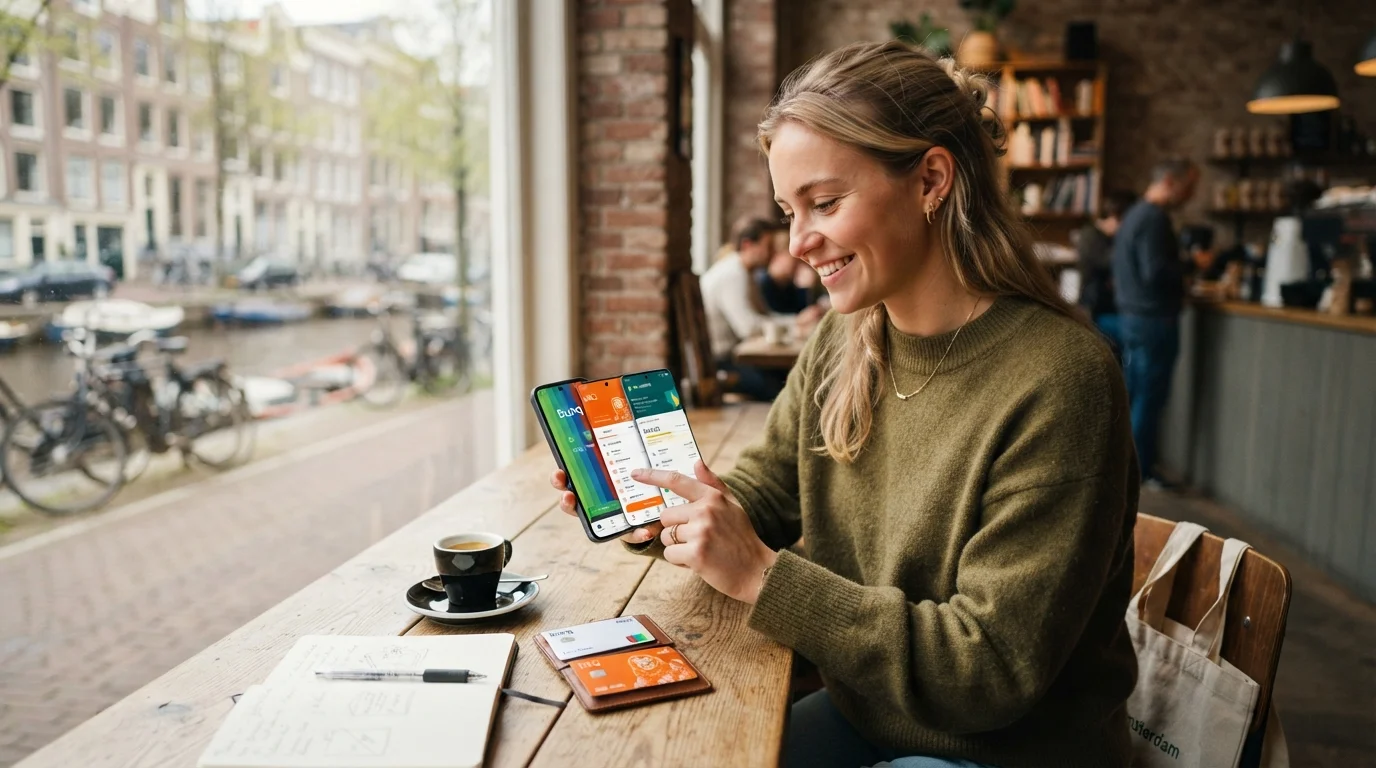
Landing in the Netherlands comes with an exciting to-do list: finding a flat, renting a bicycle, and grabbing your first warm stroopwafel at the street market. But very quickly, almost every newcomer hits an unexpected hurdle: trying to pay for groceries at Albert Heijn or set up an internet contract with an international Visa or Mastercard. In the Netherlands, cash is rare, foreign credit cards are often rejected at local shops, and having a local Dutch International Bank Account Number (IBAN) is virtually mandatory.
Whether you need to set up direct debits for rent, split a restaurant bill using Tikkie, or register for public services, choosing the right financial institution will make or break your first few months in the country. In this comprehensive guide, we compare the top three banking choices for expats—Bunq, ING, and ABN AMRO—so you can pick the account that fits your lifestyle, budget, and residency status.
While EU regulations theoretically require businesses across the bloc to accept any European IBAN (under SEPA non-discrimination rules), Dutch daily life heavily revolves around local systems. Here is why opening a Dutch account should sit near the top of your relocation checklist:
Founded in Amsterdam in 2012, Bunq (often styled "bunq") is a fully licensed European challenger bank designed entirely for smartphone users. It has become a dominant choice among international students, digital nomads, and freshly arrived expats.
Bunq's biggest competitive edge is its 90-day grace period. You can sign up with your foreign passport, receive an active Dutch IBAN within five minutes, and begin transferring funds or paying rent before you even step foot in the municipal office (gemeente). You simply upload your BSN in the app once your registration is finalized.
Bunq is not the cheapest option. While they offer a bare-bones free savings plan, full banking plans range from approximately €3.99/month (Easy Bank) to €9.99/month (Easy Bank Pro) and upwards of €18.99/month for premium tiers. If you prefer walking into a physical branch to speak with an advisor, Bunq will not suit you, as all customer support operates via in-app chat.
ABN AMRO is one of the "Big Three" legacy banks in the Netherlands and has spent decades building services tailored directly to foreign professionals. If you work for a multinational or are relocated through a corporate visa, your employer will likely point you toward ABN AMRO.
ABN AMRO offers an end-to-end English experience. Every contract, mortgage consultation, terms-and-conditions document, mobile notification, and customer service phone line is available in fluent English. They also run dedicated International Client Desks in major cities like Amsterdam, Rotterdam, and The Hague.
A basic payment package (Basis Betaalrekening) starts around €3.25 to €3.75 per month. While ABN AMRO now allows digital onboarding via their app for certain passport holders, individuals without an EU passport or those awaiting a BSN may need to visit an International Client Desk in person or wait until their municipal registration document is ready.
Known by its bright orange lion logo, ING is the largest consumer bank in the Netherlands. Practically everyone in the country holds an ING account at some point in their life. It combines a massive physical presence with one of the most awarded banking apps in Europe.
ING's mobile banking app consistently ranks highest for stability, speed, and intuitive design. Features like integrated budget insights (Kijk Vooruit), instant payment requests, and Apple Pay/Google Pay activation are exceptionally polished. Because ING is so widespread, peer-to-peer transfers between friends and colleagues are near-instant.
A standard ING account costs around €3.15 to €3.60 per month. Like ABN AMRO, ING's app and web banking are fully translated into English. However, opening an account online typically requires a valid BSN and an EU/EEA identity document or Dutch residence permit. Non-EU passport holders usually must book an in-person appointment at an ING branch to scan their physical residence card.
To help you decide at a glance, here is how the three banking providers stack up across essential expat criteria:
| Feature | Bunq | ABN AMRO | ING |
|---|---|---|---|
| Base Monthly Fee | €3.99 - €9.99 | ~€3.25 - €3.75 | ~€3.15 - €3.60 |
| BSN Requirement | 90-day grace period | Required upfront (mostly) | Required upfront |
| English Support | 100% In-App Chat | 100% Phone, App & Branch | 100% Phone, App & Branch |
| Card Types | Mastercard Debit / Credit | Debit Mastercard & ICS Visa | Debit Mastercard & Visa/Mastercard |
| Physical Branches | None (Pure digital) | Yes + Expat Desks | Yes + Service Points |
Regardless of which bank you select, regulatory standards set by the Dutch Central Bank (De Nederlandsche Bank) require strict "Know Your Customer" (KYC) identity checks. Prepare the following documents before submitting your application:
While Bunq, ING, and ABN AMRO provide apps in English, official letters from the Dutch Tax Authority (Belastingdienst), municipal notices, and checkout counters will always use Dutch financial terms. Learning a handful of key banking terms will save you from costly mistakes:
Mastering these everyday Dutch terms is much easier when you practice real-world scenarios. With StroopTaal, you can use interactive dialogue games and AI-powered conversation practice to simulate real-life interactions—such as asking a shopkeeper about payment methods, discussing contracts, or understanding Dutch bureaucratic letters with instant pronunciation and grammar feedback.
Your ideal banking partner depends on where you are in your relocation journey:
Setting up your Dutch bank account is one of the most empowering milestones of your integration journey. Once your IBAN is live, paying rent, tapping your card for a train ticket, and settling weekend café bills via Tikkie will feel second nature.
As you settle into Dutch life, take the next step toward feeling truly at home by learning the language. Explore StroopTaal today to build your vocabulary with spaced repetition, master everyday Dutch grammar, and build the confidence to handle Dutch life like a local.
Share this article:
The first cold mornings of October are a clear signal: Dutch heating season is starting. For newcomers, switching on the central heating can raise...
Read moreArriving in Amsterdam and buying your first two-wheeled steed is practically a rite of passage. Cycling isn't merely a hobby or exercise in the...
Read moreMoving to the Netherlands is an exhilarating adventure. Between picturesque canals, cycling cultures, and delicious stroopwafels, there is plenty to...
Read more