How to Register Your Foreign Car in the Netherlands: Expat Tax Guide
Relocating to the Netherlands is filled with milestones: finding a house, getting a BSN, picking out your commuter bicycle, and settling into Dutch...
Read more
This article was written by AI and published by StroopTaal.
AI can get things wrong. For anything official, check the source it points to.
AI-generated image
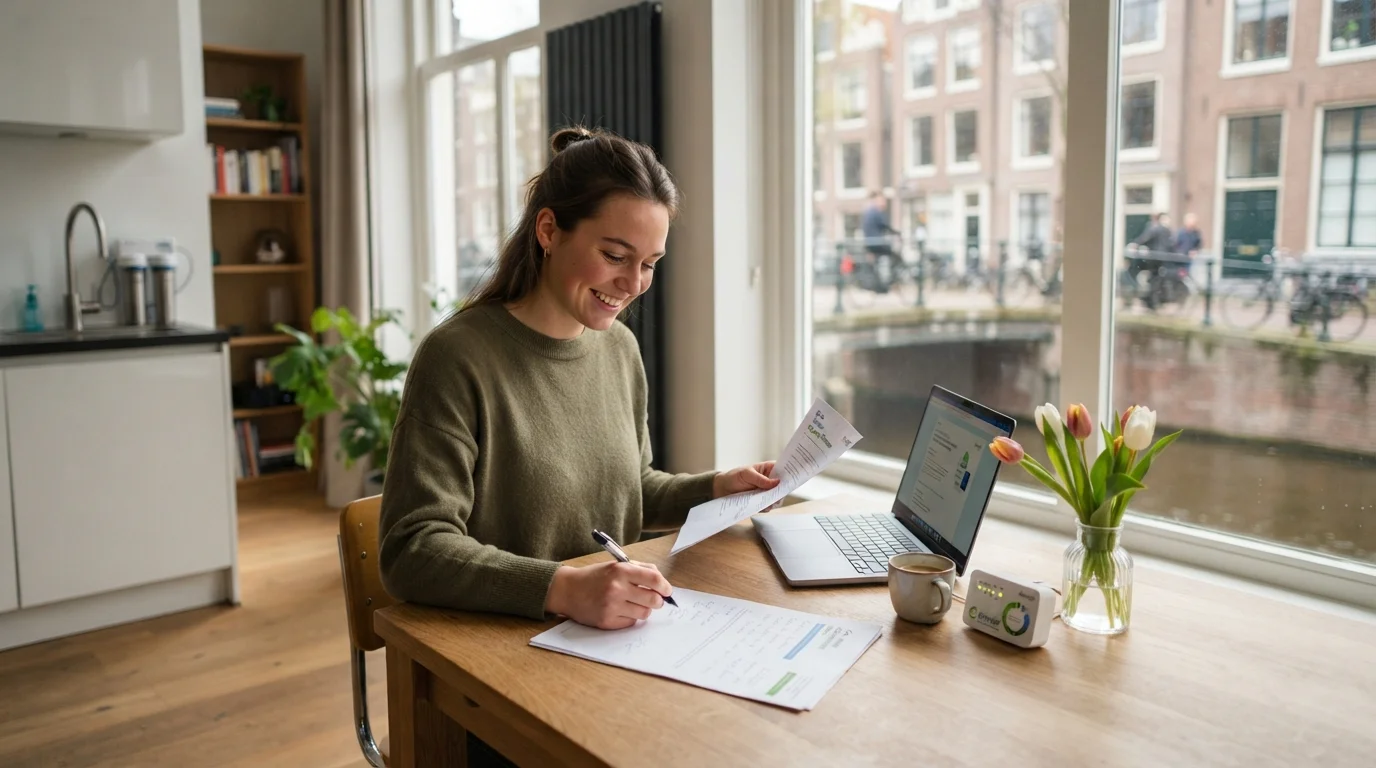
Moving into a new Dutch home is an exciting milestone, whether you have just signed a lease on a historic canal house or bought a modern apartment. However, once the keys are in your hand, you face your first real administrative challenge: setting up your essential utilities.
In the Netherlands, arranging electricity (stroom), natural gas (gas), or district heating (stadsverwarming), alongside tap water (drinkwater), requires navigating a split system of competitive private energy suppliers and strictly regulated municipal water boards. While the process is efficient, encountering Dutch contracts, technical jargon, and energy meters can feel overwhelming if you are new to the country.
This comprehensive guide walks you step-by-step through setting up your energy and water supplies, choosing between fixed, variable, and dynamic green energy tariffs, avoiding costly billing surprises, and mastering the essential Dutch vocabulary needed along the way.
Before contacting any suppliers, it is vital to understand how the Dutch utility market is structured:
While you organize your utility contracts, remember that you also need to coordinate with local authorities. Ensure you are familiar with reporting your address change to the municipality within five days of moving.
On the official handover day (opleverdatum), you and the previous tenant or landlord will fill out a utility transfer form (meteropnameformulier). You must record the exact meter readings (meterstanden) for:
Take clear photos of all meters with your smartphone on your move-in date. These photos protect you against being billed for energy consumed before your tenancy began.
When selecting an energy contract, Dutch energy providers offer three distinct structures:
To compare offers transparently, you can use independent comparison engines regulated by consumer watchdogs like ConsuWijzer (the consumer portal of the Netherlands Authority for Consumers and Markets).
You generally have a grace period of up to 15 days after receiving your keys to sign an energy contract. If you fail to register, your regional grid operator (netbeheerder, such as Liander, Enexis, or Stedin) will send warning letters and may eventually shut off supply, charging heavy reconnection fees.
Most registrations happen directly on the provider's website. You will need your full address, Dutch bank account (IBAN), and your meter readings. To log into customer portals and manage contract verifications later, having completed setting up your DigiD account makes identity verification across semi-governmental platforms smooth and straightforward.
The Netherlands is accelerating its green transition, making eco-conscious energy contracts widespread and accessible. When reviewing offers, look for these key distinctions:
Energy providers often advertise green electricity. However, look closely at where the green certificates—known as Guarantees of Origin (Garanties van Oorsprong or GvOs)—originate. Genuine local green energy comes from Dutch wind farms, domestic solar arrays, or local biomass. Some lower-cost plans purchase foreign green certificates while supplying fossil-fuel-generated electricity. For maximum environmental impact, look for certifications like Echte Groene Stroom from providers such as Greenchoice, Vandebron, or Pure Energie.
True groen gas is biogas produced from organic waste and injected into the national gas grid. Because true biogas supply is limited, many Dutch suppliers offer conventional natural gas paired with carbon compensation investments (gecompenseerd gas), such as reforestation programs.
If your home features solar panels (zonnepanelen), you will feed surplus daytime electricity back into the national grid. Under Dutch legislation, the salderingsregeling allows you to subtract the energy you feed into the grid from the energy you consume on an annual basis, drastically lowering your total invoice.
Tap water in the Netherlands is renowned for being among the purest in the world. It is strictly unchlorinated, drawn from deep underground aquifers or filtered dune water, and completely safe and delicious to drink straight from the tap.
Because tap water is a regional utility, you do not choose a provider. Instead, follow these steps:
As a Dutch resident, you will receive two separate water-related charges:
Understanding the standard terms found on Dutch utility contracts and bills will help you navigate your accounts with confidence:
If you feel nervous about calling utility customer support lines or navigating Dutch customer portals, practicing practical scenarios can make all the difference. With StroopTaal, you can use interactive dialogue games and AI-powered conversation practice to simulate calls with Dutch utility agents, ask about unexpected charges, and master essential home administration vocabulary using spaced repetition.
When you move in, your supplier sets a default voorschotbedrag based on prior occupants' consumption habits. If the previous residents were a family of four and you live alone, the estimate might be too high—or conversely, if the previous tenant rarely heated the home, it could be set unsustainably low. Log into your provider's app after two months, check your actual usage, and adjust the monthly advance slider to prevent a shocking deficit on your jaarafrekening.
If your rental agreement specifies rent inclusief g/w/l (gas, water, light), the landlord holds the primary accounts, and you pay a fixed or advance utility fee directly to them. If it is exclusief, you are legally responsible for registering your own contracts immediately upon moving in.
Always arrange your utility contracts within 15 calendar days of receiving your keys. If an address remains unassigned to a registered supplier, grid operators will initiate an automated disconnect procedure (afsluiting), which can cost hundreds of euros to reverse.
Setting up your water, electricity, and gas is one of the very first practical hurdles of making a home in the Netherlands. By documenting your meter readings accurately on day one, selecting the energy contract that matches your risk tolerance and sustainability values, and understanding how regional water boards operate, you can settle in without stress or billing surprises.
Learning the administrative and cultural language of daily life in the Netherlands empowers you to handle every household task independently. Whether you are deciphering your first jaarafrekening or discussing heating options with a technician, StroopTaal provides bite-sized grammar lessons, pronunciation feedback, and real-life dialogue modules designed to build your fluency from day one.
Share this article:
Relocating to the Netherlands is filled with milestones: finding a house, getting a BSN, picking out your commuter bicycle, and settling into Dutch...
Read moreRaising children in the Netherlands comes with world-class facilities, safe cycling paths, and nurturing daycares. However, Dutch childcare...
Read moreWhat Is a Huisartsenpost? Your Guide to Dutch After-Hours Healthcare Imagine that your child develops a high fever late on a Saturday evening, or you...
Read more