Understanding Your Payslip in the Netherlands: Expat Guide
Demystifying the Dutch Loonstrook: An Expat's Guide Moving to a new country comes with a long list of bureaucratic milestones. You secure housing,...
Read more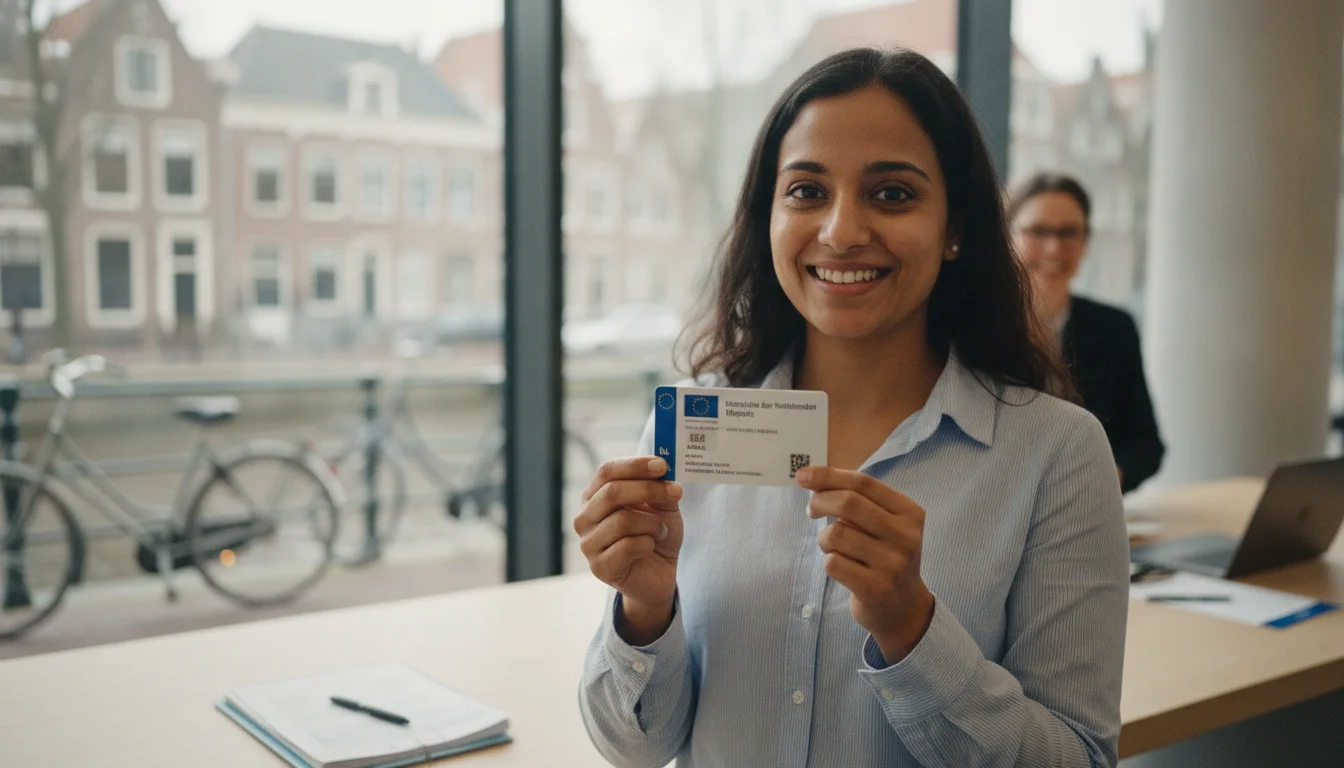
Moving to the Netherlands is an exciting adventure. You quickly learn to love the iconic Dutch windmills, the efficient infrastructure, and the sheer volume of bicycles. While navigating Dutch public transport is incredibly easy and efficient for daily commutes, there are times when having your own set of wheels is irreplaceable. Whether you want to explore the Dutch countryside, plan a weekend getaway across Europe, or transport heavy groceries on a rainy day, having a Dutch driving license (rijbewijs) opens up a world of convenience.
However, if you are a non-EU/EFTA citizen, the process of driving legally in the Netherlands can feel daunting. The rules are strict, the exams are notoriously challenging, and the transition from driving in your home country to navigating Dutch traffic circles can be a culture shock. In this comprehensive guide, we will break down the exact step-by-step process for non-EU citizens to get their Dutch driving license in 2026, ensuring you can hit the road with confidence and legal peace of mind.
If you have recently moved to the Netherlands from a non-EU/EFTA country, you cannot drive on your foreign license indefinitely. The Dutch government allows you to use your valid foreign driving license for a maximum of 185 days starting from the date you register at your local municipality (gemeente). To register, you must first get a BSN number as an expat, which serves as your citizen service number and unlocks all administrative processes in the country.
Once those 185 days have passed, your foreign license is no longer legally recognized on Dutch roads. If you are caught driving after this transition period without a valid Dutch license, you risk heavy fines and your insurance will be rendered void. Therefore, it is critical to start the process of obtaining your Dutch driving license as soon as possible after your arrival.
For the vast majority of non-EU citizens, exchanging a foreign driving license directly for a Dutch one is not permitted. You are generally required to pass both the Dutch theory and practical driving exams from scratch. However, there is a highly beneficial exception to this rule: the 30% ruling.
If you are a highly skilled migrant who has been granted the 30% ruling (a tax advantage for foreign expertise), you—and your family members registered at the same address—are eligible to exchange your foreign driving license for a Dutch one, regardless of your country of origin. To do this, you must submit an application through your local municipality. You can read more about the official requirements on the Dutch Government website.
If you do not qualify for the 30% ruling or come from a country with a specific reciprocal agreement, you must go through the standard Dutch testing procedure. Let’s look at what that entails.
Before you can book any driving exams in the Netherlands, you must prove that you are physically and mentally fit to drive. This is done by submitting a Health Declaration (Gezondheidsverklaring) to the Central Office for Motor Vehicle Driver Testing (CBR).
You can purchase and fill out this form online using your DigiD on the CBR website. The questionnaire asks basic questions about your physical health, mental health, eyesight, and any medications you might be taking. For most people, this is a quick administrative step, but if you answer "yes" to any medical condition, you may need to undergo a medical examination by a doctor or specialist. Because processing times for medical reviews can take several weeks or even months, it is highly recommended to submit your Health Declaration as early in the process as possible.
The Dutch theory exam is famous for being exceptionally thorough. It does not just test your knowledge of road signs; it tests your split-second decision-making skills and deep understanding of traffic dynamics. The exam is available in both Dutch and English (for an additional fee), but don't let the language option fool you—the questions are designed to test your limits.
The theory exam consists of three distinct sections:
To pass this exam on your first attempt, you must study diligently. While you can take the exam in English, learning the essential Dutch traffic vocabulary can give you a massive advantage, especially when communicating with your driving instructor. Using the StroopTaal app is an excellent way to build this specialized vocabulary. With its vocabulary building features and spaced repetition system, you can easily master critical driving terms like voorrang (priority), haaientanden (shark teeth road markings), and invoegen (merging) so they become second nature during your preparation.
Even if you have been driving for decades in your home country, taking professional driving lessons in the Netherlands is highly recommended—and practically mandatory if you want to pass the practical exam. Dutch roads are incredibly dense, highly regulated, and filled with vulnerable road users, particularly cyclists and moped riders.
When choosing a driving school (rijschool), do not just look for the cheapest option. Check their passing rates (slagingspercentage) on the official CBR website. A good instructor will evaluate your existing driving skills, help you unlearn bad habits from your home country, and teach you the specific "defensive driving" style that Dutch examiners expect to see.
Keep in mind that learning to drive in the Netherlands is a significant financial commitment. Lessons typically cost between €55 and €75 per hour in 2026, and most students require at least 20 to 40 hours of instruction to be fully prepared. As you plan these expenses, it is wise to incorporate them into your broader expat budgeting plans to avoid any unexpected financial stress.
Once your instructor believes you are ready, they will book the practical exam for you at a local CBR exam center. The exam takes about 55 minutes in total, with around 35 minutes of actual driving time. Here is what you can expect on the day of your test:
You will meet your examiner at the CBR center, where they will check your identity documents, theory certificate, and self-reflection form. In the parking lot, you will undergo a basic eyesight test (reading a license plate from a distance of about 25 meters) and answer a few simple questions about vehicle safety checks (such as checking tire tread or identifying dashboard warning lights).
During the drive, the examiner will assess your overall control of the vehicle, your safety awareness, and how well you interact with other road users. You will be asked to drive using a navigation system for a portion of the test to show you can drive independently. You will also have to perform "special maneuvers" (bijzondere verrichtingen), such as parallel parking, reversing in a straight line, or performing a turn in a narrow street.
Immediately after returning to the exam center, the examiner will let you know whether you have passed or failed. If you pass, your results are sent electronically to your local municipality, and you can book an appointment to apply for your physical driving license card the following business day.
Driving in the Netherlands has its own unique rhythm and set of unwritten rules. Here are three crucial aspects you must master before taking your practical test:
Getting your Dutch driving license as a non-EU citizen in 2026 requires patience, investment, and thorough preparation. While the process may seem rigorous, the reward is worth it: a lifetime of safe, confident driving on some of the best-maintained roads in the world. By taking it step-by-step—from registering your BSN to mastering the theory and finding the right driving school—you will set yourself up for absolute success.
As you embark on this journey, remember that language is key to integrating into Dutch life, understanding road signs, and communicating with instructors. Let StroopTaal support you along the way. With its interactive dialogue games and tailored grammar lessons, you can build the language skills you need to navigate not just the roads, but your entire expat life in the Netherlands. Safe travels, or as the Dutch say: Goede reis!
Share this article:
Demystifying the Dutch Loonstrook: An Expat's Guide Moving to a new country comes with a long list of bureaucratic milestones. You secure housing,...
Read moreWelcome to the Netherlands! You have unpacked your boxes, registered at the local municipality, and are ready to enjoy life in one of the world's...
Read moreThe Dutch Summer Paradox: What to Expect in June Ah, June in the Netherlands. It is the month of long, lingering evenings, vibrant outdoor festivals,...
Read more