Getting Your Dutch Driving License: 2026 Non-EU Expat Guide
Introduction: The Freedom of the Dutch Road Moving to the Netherlands is an exciting adventure. You quickly learn to love the iconic Dutch windmills,...
Read more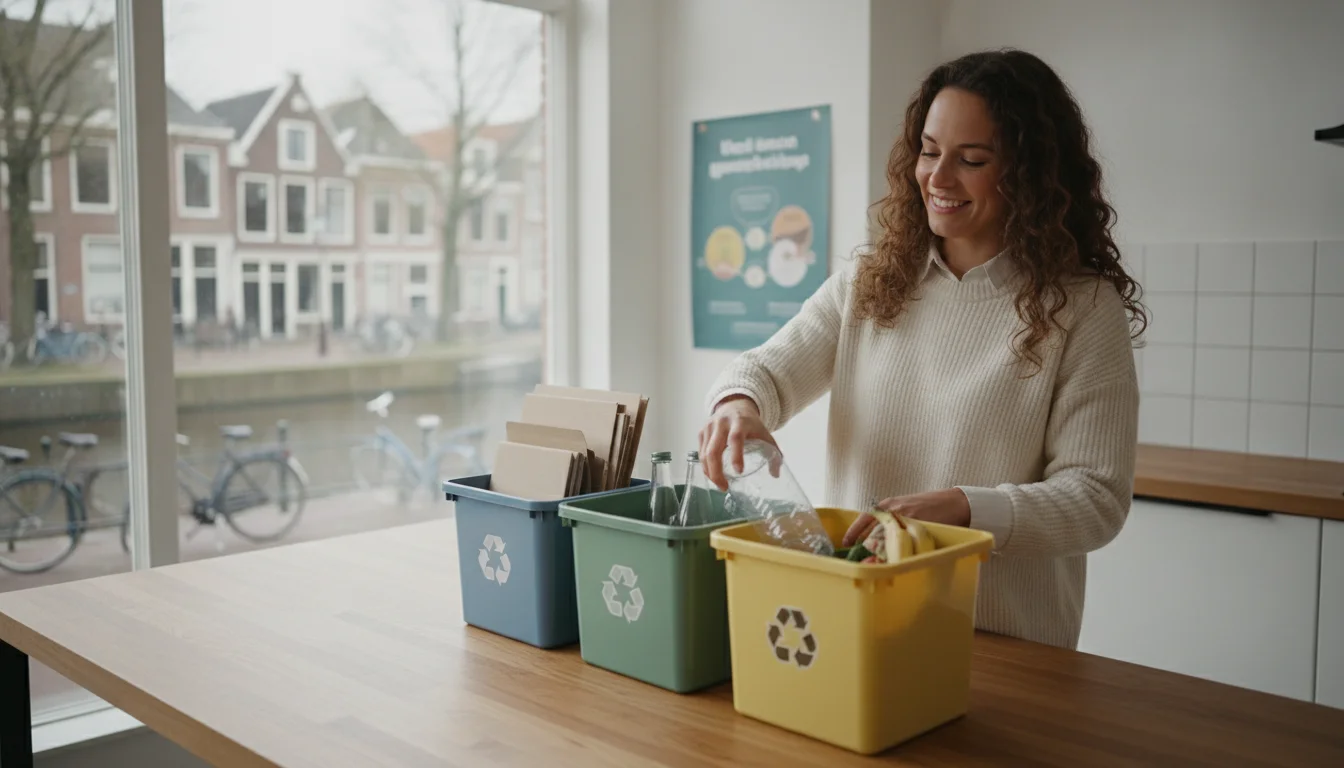
Welcome to the Netherlands! You have unpacked your boxes, registered at the local municipality, and are ready to enjoy life in one of the world's most sustainable countries. But as you stand in your kitchen holding an empty pizza box, a plastic milk carton, and a half-eaten apple, you might find yourself facing a confusing array of colorful bins, underground chutes, and strict disposal rules. Don't worry—you are not alone. Navigating the Dutch waste separation system is a rite of passage for every new expat.
Once you have figured out how to get a BSN number as an expat in the Netherlands and secured your housing, your next immediate challenge will likely be understanding the local municipal waste system. The Dutch take recycling seriously, aiming for a fully circular economy by 2050. In 2026, waste management policies are stricter than ever, with municipal inspectors actively monitoring compliance. Failing to separate your trash correctly can result in hefty fines (boetes). This comprehensive guide will walk you through everything you need to know about Dutch waste separation rules in 2026, ensuring you stay eco-friendly and fine-free.
In the Netherlands, waste is not just seen as rubbish; it is viewed as a valuable resource. The Dutch government, in collaboration with local municipalities (gemeenten), has designed a highly decentralized waste collection system. This means that while national guidelines exist, the exact collection methods, bin colors, and schedules vary depending on where you live.
Whether you live in a high-rise apartment in Amsterdam, a townhouse in Utrecht, or a suburban home in Eindhoven, you will need to learn the local rules. The overall goal remains the same: to minimize residual waste (restafval) and maximize the recycling of organic matter, paper, plastic, metal, and glass. For more information on national environmental policies, you can consult the official Dutch Government website.
To master recycling in the Netherlands, you must become familiar with the five primary waste streams. Each has its own dedicated bin (often called a kliko when referring to individual wheeled bins) or underground collection point (ondergrondse container).
GFT stands for Vegetable, Fruit, and Garden waste. This organic material is collected to be composted or converted into biogas.
Paper recycling is highly efficient in the Netherlands, but it requires clean, dry materials. Wet or greasy paper can ruin an entire batch of recyclable pulp.
PMD stands for Plastic packaging, Metal packaging, and Drink cartons. In many municipalities, this is collected in transparent plastic bags provided for free, or in orange-capped bins.
Glass is rarely collected at your doorstep. Instead, you will need to bring your empty glass bottles and jars to shared neighborhood recycling banks (glasbakken). These are usually located near supermarkets.
Restafval is the catch-all category for anything that cannot be recycled. Because municipalities charge high processing fees for residual waste, your goal should be to keep this bin as empty as possible.
Before throwing plastic bottles or metal cans into your PMD bin, check for the Statiegeld logo. The Netherlands has a highly successful deposit system designed to encourage recycling and reduce littering.
When you purchase certain drinks, you pay a small deposit (typically €0.15 for small plastic bottles and cans, and €0.25 for large plastic bottles). You can reclaim this money by returning the empty, undamaged bottles and cans to the automated reverse vending machines (emballage-automaten) located at the entrance of almost every supermarket. The machine will print a voucher that you can redeem for cash at the register or use as a discount on your groceries.
What do you do with an old sofa, a broken microwave, or leftover paint cans? These items must never be placed in or next to regular waste bins.
Large items like furniture, mattresses, and carpets are classified as grofvuil. Depending on your municipality, you can either schedule a free or paid pickup online, or drive the items to the local recycling center (milieustraat or afvalscheidingsstation). You will typically need to show your Dutch ID or municipal waste card to gain access to the recycling center.
Items containing hazardous chemicals—such as batteries, energy-saving lightbulbs, paint, motor oil, and old electronics—are classified as Klein Chemisch Afval (KCA). You can dispose of batteries and lightbulbs in collection boxes found at most supermarkets and DIY stores (bouwmarkten). Larger hazardous items must be taken directly to the local milieustraat.
If you receive an official letter from your municipality (gemeente) regarding waste taxes (afvalstoffenheffing) or collection schedule changes, don't panic. Our Dutch bureaucracy guide on tackling official letters and forms can help you translate and manage municipal paperwork with ease.
Integrating into Dutch society means learning how to discuss everyday tasks. Understanding waste terminology will help you communicate with neighbors, understand municipal letters, and navigate local websites. Here is a handy vocabulary list to get you started:
| Dutch Term | English Translation |
|---|---|
| De afvalscheiding | Waste separation |
| Het restafval | Residual waste |
| De vuilnisbak | Trash can / dustbin |
| De ophaaldag | Collection day |
| Het statiegeld | Deposit (on bottles/cans) |
| De milieustraat | Local recycling center |
Learning these words is much easier when you understand the gender of the nouns (de vs het). Using the StroopTaal app, you can play interactive article mastery games and use the vocabulary builder with spaced repetition to naturally memorize these essential daily terms. Plus, StroopTaal's real-life Dutch conversation practice with AI can help you confidently ask your neighbors: "Wanneer wordt het oud papier opgehaald?" (When is the old paper collected?).
To ensure a smooth transition and maintain good relations with your neighbors and local municipality, keep these practical tips in mind:
Mastering the Dutch waste separation rules may feel overwhelming at first, but it quickly becomes second nature. By separating your waste correctly, you are not only contributing to a cleaner, greener planet, but you are also actively participating in Dutch civic life—a key step for those preparing for their integration exams (inburgeringsexamen).
As you settle into your new life, remember that language is the ultimate key to feeling at home. Download the StroopTaal app today to access bite-sized grammar lessons from A0 to C1, cultural lessons about life in the Netherlands, and interactive games designed to make you sound like a local. Happy recycling, and success with your Dutch learning journey!
Share this article:
Introduction: The Freedom of the Dutch Road Moving to the Netherlands is an exciting adventure. You quickly learn to love the iconic Dutch windmills,...
Read moreThe Dutch Summer Paradox: What to Expect in June Ah, June in the Netherlands. It is the month of long, lingering evenings, vibrant outdoor festivals,...
Read moreStarting a new life in a foreign country is an exhilarating adventure, but for expat parents, it also comes with a unique set of administrative and...
Read more