How to Set Up Your Dutch DigiD with Two-Factor Authentication
If you have recently moved to the Netherlands or are navigating Dutch administrative life for the first time, you have likely encountered the term...
Read more
This article was written by AI and published by StroopTaal.
AI can get things wrong. For anything official, check the source it points to.
AI-generated image
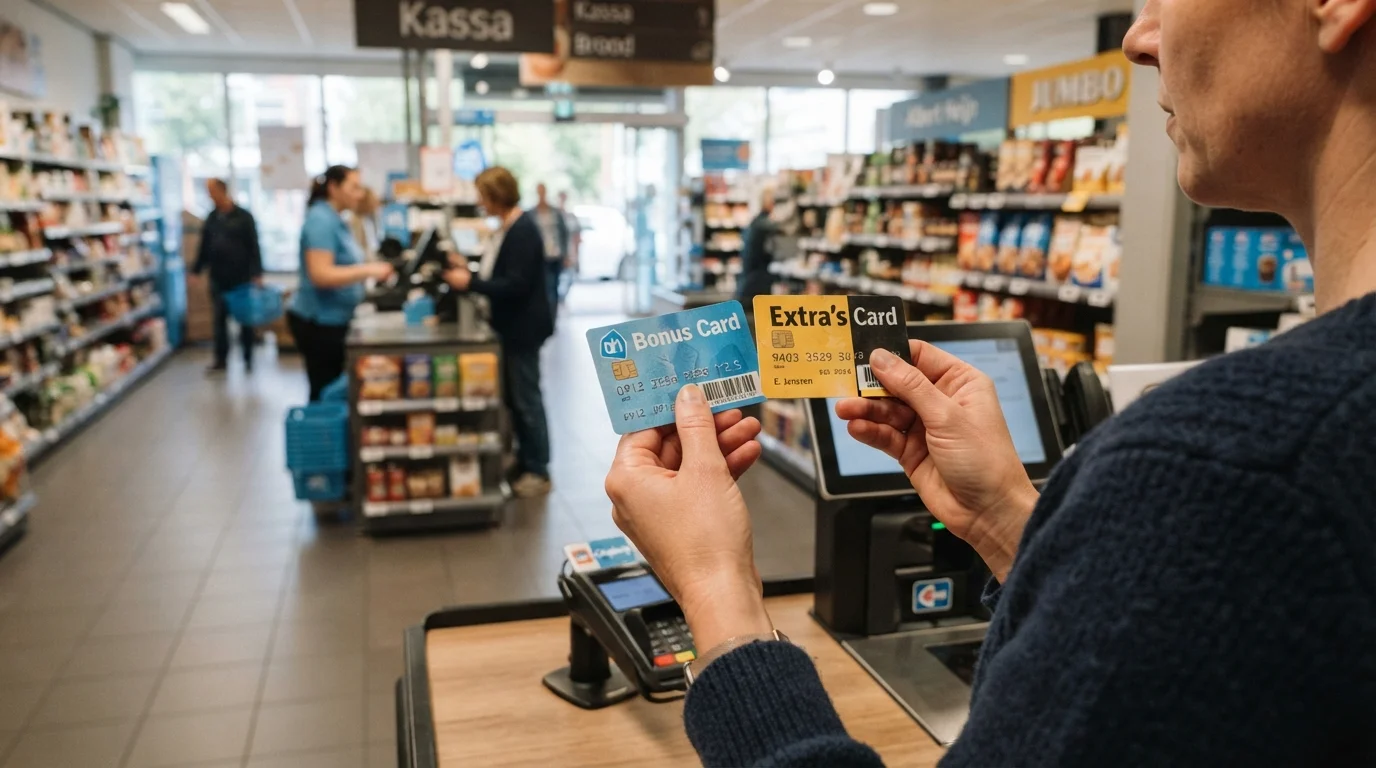
If you have recently moved to the Netherlands, your first trip to a local supermarket probably came with a mild shock at the checkout. You might have watched the cashier ring up your items, noticed promotional tags on the shelves advertising steep discounts, only to see the total bill remain at full price. Then came the inevitable question in rapid Dutch: "Wilt u er een Bonuskaart bij?" or "Heeft u Jumbo Extra's?"
In the Netherlands, grocery shopping is practically an art form centered on the cultural concept of korting (discounts). The Dutch are famous for their frugality and savvy budgeting, and the country's two grocery giants—Albert Heijn (market share leader, affectionately called "Appie") and Jumbo—compete fiercely for customer loyalty. Navigating their rewards programs, loyalty apps, and hidden perks can save an average household hundreds of euros every year.
Whether you are learning Dutch to pass your inburgering exams or simply trying to lower your weekly food bill while setting up utilities in the Netherlands and managing household expenses, this comprehensive guide breaks down the Albert Heijn Bonuskaart vs. Jumbo Extra's systems, teaches you the essential supermarket Dutch vocabulary, and reveals the country's best-kept savings secrets.
Albert Heijn is the oldest and largest supermarket chain in the Netherlands. Its signature blue-and-white branding is omnipresent in Dutch cities, and its loyalty program, the Bonuskaart, is fundamental to everyday life.
Unlike some international loyalty programs where cards merely accumulate points for future rewards, Albert Heijn locks standard weekly sales behind the Bonuskaart. If an item on the shelf has an orange "Bonus" tag (for instance, "1+1 gratis" or "2e halve prijs"), you must scan a Bonuskaart at checkout to receive that lower price. If you do not scan a card, you pay the full regular shelf price.
There are two types of Bonuskaarten:
Once registered in the app, you gain access to Mijn Bonus Box every Friday. The app generates 10 personalized product discounts based on your past purchase history. You can activate up to 5 of these offers each week, stacking extra 10% to 25% savings on top of the nationwide weekly Bonus flyers.
One of the most famous financial hacks among Dutch locals is koopzegels (savings stamps). When you activate digital koopzegels in the AH app, you pay an extra €0.10 for every €1.00 of groceries you buy. Once you accumulate 490 digital stamps (costing €49.00), Albert Heijn pays you out €52.00 into your bank account.
That is a guaranteed 6.12% return on your money—far higher than most standard European savings bank accounts. Dutch families frequently use koopzegels as an automatic holiday or vacation savings fund throughout the year.
For frequent shoppers, Albert Heijn offers a paid tier called AH Premium costing €12 per year. Subscribing gives you:
Jumbo (pronounced "Yoom-boh") is Albert Heijn's fiercest rival, known for its bright yellow branding and its customer-friendly philosophy known as the 7 Zekerheden (7 Guarantees). Jumbo's loyalty program, called Jumbo Extra's, operates very differently from Albert Heijn.
At Jumbo, general promotional discounts (such as weekly specials) are available to all shoppers automatically at the register—you do not need a loyalty card just to get the promotional price. Instead, the Jumbo Extra's card functions as a traditional points-earning rewards program:
While not strictly tied to the Extra's card, understanding Jumbo's store culture is vital for any newcomer. Their guarantees include promises like "Vlotte service" (if all checkouts are open and you are fourth in line, your entire grocery basket is free) and price matching if you find the exact identical item cheaper at a local competitor.
To help you decide which loyalty ecosystem suits your shopping style, let's look at a head-to-head comparison:
| Feature | Albert Heijn (Bonuskaart) | Jumbo (Jumbo Extra's) |
|---|---|---|
| Card Required for Standard Discounts? | Yes (Mandatory for orange tag prices) | No (Promotions apply automatically) |
| Personalized Discounts | Mijn Bonus Box (5-10 tailored deals/week) | Targeted points-earning promotions |
| Cashback / High-Yield Savings | Koopzegels (6.12% return upon completion) | No direct cash interest scheme |
| Rewards Redemption | Air Miles, seasonal cookware stamps, cash savings | Free grocery items, day trips, cooking gear |
| Paid Membership Tier | AH Premium (€12/year for extra 10% bio/vegan) | None (Free for all users) |
| Self-Scan (Zelfscan) Experience | Hand scanners, mobile phone app, or kiosk | Hand scanners or mobile phone app |
Mastering supermarket terms is one of the quickest ways to build conversational confidence when settling in. If you are preparing for your inburgering speaking exams or simply want to avoid holding up the line at the checkout, memorize these fundamental Dutch shopping phrases:
Want to turn grocery shopping into an active Dutch lesson? With StroopTaal, you can practice real-life supermarket dialogues using AI conversation tools. StroopTaal's interactive dialogue games let you simulate checkout interactions, train accurate Dutch pronunciation, and master everyday vocabulary with spaced repetition so you never freeze when a cashier asks you about points or stamps.
Beyond choosing your loyalty card, here are several insider strategies to navigate Dutch supermarkets like an experienced local:
In the Netherlands, almost all beer bottles, small plastic bottles, large soda bottles, and drink cans carry a statiegeld deposit ranging from €0.15 to €0.25. Look for the return machine (flessenautomaat) near the store entrance. Feed your empty containers into the machine, press the green button, and hand the printed voucher to the cashier or scan it at the self-checkout to deduct the amount from your grocery total.
Both AH and Jumbo provide hand scanners at the entrance. Picking up a scanner allows you to bag items as you walk through the aisles, keep an exact running total of your bill, and read product names and Dutch descriptions on the screen. It avoids checkout queues and makes tracking your budget effortless after moving within the Netherlands.
In an effort to combat food waste, Dutch supermarkets heavily discount meat, fresh produce, and baked goods nearing their expiration date. At Albert Heijn, look for bright orange 35% korting stickers early in the morning. At Jumbo, look for green stickers marked Samen tegen verspilling offering deep flat-rate discounts.
Both supermarket chains release their weekly promotional brochures (de folder) online and in their apps on Sunday, with new sales starting every Monday. Checking the folders in advance helps you meal-plan around "1+1 gratis" staples like olive oil, detergent, coffee, and pantry staples.
The straightforward answer for any expat or newcomer is: download both apps. Because Dutch neighborhood planning means you will likely have both an Albert Heijn and a Jumbo within cycling distance, holding both digital cards ensures you never pay full price when sales rotate.
If you prefer a seamless discount experience with lucrative high-yield savings (koopzegels) and frequent organic discounts, Albert Heijn's app and Bonuskaart system are unmatched. If you prefer transparent pricing without needing to scan cards for base sales, alongside earning rewards for days out, Jumbo Extra's is a fantastic companion.
Learning how everyday Dutch institutions work is one of the most empowering milestones of integration. By pairing these practical supermarket tricks with regular language practice on StroopTaal, you will turn every weekly shopping trip into an opportunity to expand your Dutch fluency, save money, and live like a true local.
Share this article:
If you have recently moved to the Netherlands or are navigating Dutch administrative life for the first time, you have likely encountered the term...
Read moreRelocating to the Netherlands is filled with milestones: finding a house, getting a BSN, picking out your commuter bicycle, and settling into Dutch...
Read moreMoving into a new Dutch home is an exciting milestone, whether you have just signed a lease on a historic canal house or bought a modern apartment....
Read more