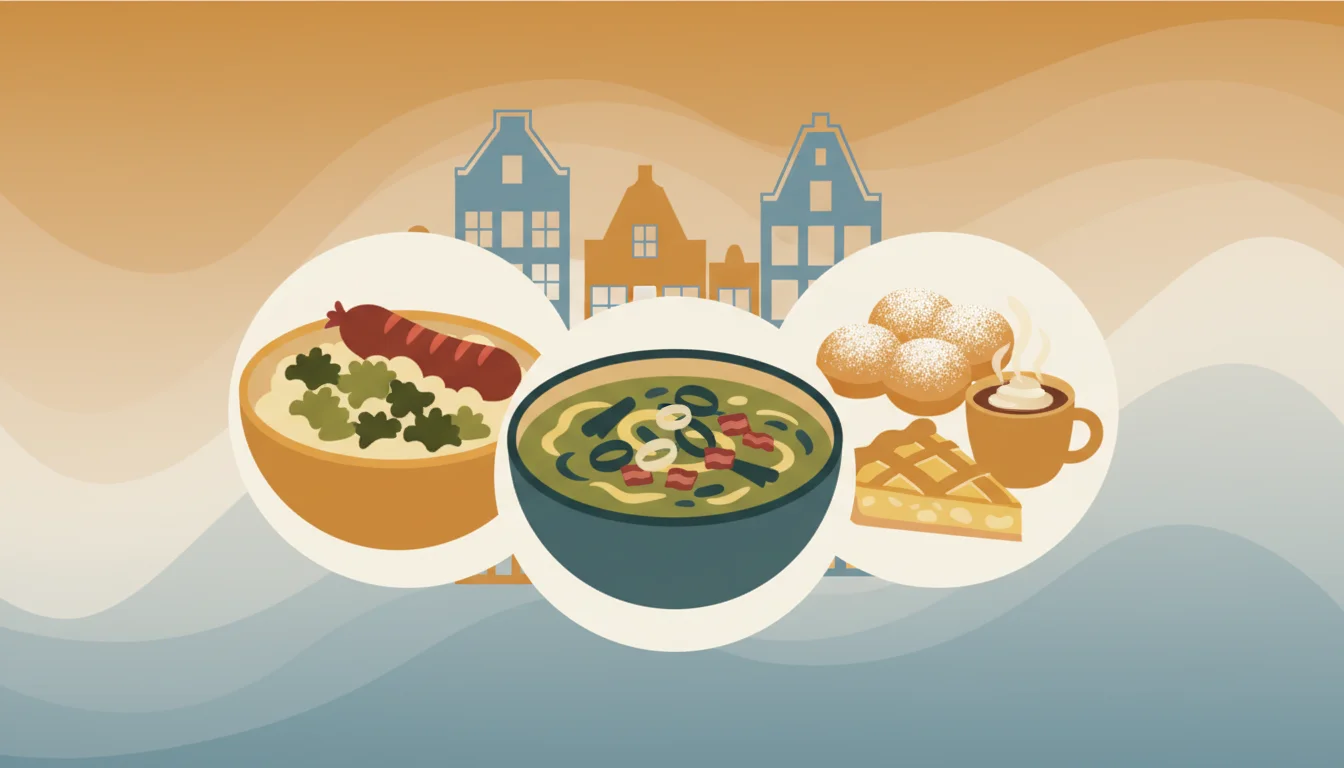
A Guide to Dutch Winter Comfort Foods: Stamppot, Snert & More
Surviving the Dutch Winter with Gezelligheid and Calories If you have spent more than a few days in the Netherlands during the winter months, you...
Read more
If you have recently moved to the Netherlands, you have likely heard the whispers. Other expats might have warned you with a look of terror in their eyes. Eventually, the invitation arrives. You are invited to a Dutch birthday party (verjaardag).
You might expect music, dancing, or mingling while standing up. Instead, you walk into a living room to find the furniture rearranged into a large, formidable circle. Everyone is seated. There is a table in the middle with cheese cubes. Welcome to the Dutch Circle Party (de kringverjaardag).
Dutch birthday traditions are unique, charming, and occasionally baffling to newcomers. From the specific greeting etiquette to the curious location of the birthday calendar, mastering these customs is a crucial part of your integration. In this guide, we will walk you through exactly what to expect so you can attend your next verjaardag with confidence.
The most distinctive feature of a Dutch birthday visit is the layout. The host will push all chairs, sofas, and stools against the walls to form a large circle. This setup is deeply rooted in the Dutch value of gezelligheid (coziness/togetherness) and egalitarianism.
In the circle, no one is left out. Everyone can see everyone else, and the conversation is often central. While this sounds inclusive, it can be intimidating for a learner. You cannot easily hide in a corner or stick to talking with just one person. You are on stage.
When you enter the room, the custom is to walk around the circle and greet everyone individually. Yes, everyone. Even if there are 15 people, you are expected to make your rounds.
The Golden Rule of Congratulating: Here is the part that confuses most non-Dutch people. You don’t just congratulate the birthday boy or girl. You congratulate their family and close friends, too.
It acknowledges that the birthday is a shared event for the loved ones. If this feels overwhelming, StroopTaal’s interactive dialogue games are perfect for practicing these specific introductions. You can simulate a party environment and practice saying "Gefeliciteerd" until it rolls off the tongue naturally.
A kringverjaardag is a traditional Dutch birthday gathering where guests sit in a wide, unbroken circle facing one another to converse while enjoying cake, coffee, and savory snacks, commonly referred to as a dutch circle party or dutch birthday circle. This seating layout reflects the Dutch cultural value of egalitarianism by ensuring that no guest is left isolated in a corner, making everyone an active participant in the shared conversation.
During a kringverjaardag, the living room furniture is arranged around a center coffee table laden with cheese blocks, sausage slices, and dips. The atmosphere stays calm, conversational, and cozy throughout the visit. If you want to prepare step-by-step for your first party circle, explore our complete How to Survive a Dutch Birthday Party: The Circle of Chairs Guide to learn the unwritten rules of entering and exiting the circle gracefully.
Physical contact in the Netherlands follows a strict protocol. When greeting friends and family (and often friends-of-friends at a birthday), the standard greeting is three kisses on the cheeks.
The Protocol:
If you arrive late and the circle is already full, you might get away with a general wave and a loud "Hallo allemaal!" (Hello everyone!), but traditionalists prefer the individual greeting.
A Dutch birthday follows a tight schedule. If you arrive at the designated start time (often around 10:00 AM or 2:00 PM), you will immediately be offered coffee or tea and a slice of cake (taart). Note: You usually get one piece. Refusals are polite but rarely accepted; the host has gone to the bakery specially for this!
After the coffee and cake are cleared away, the drinks (beer, wine, soda) come out, accompanied by the legendary Dutch hapjes (snacks). Expect to see:
If you use the bathroom at a Dutch home, look at the wall. You will almost certainly see a calendar hanging there (de verjaardagskalender). This calendar does not list the year or days of the week—only dates and names.
Why the toilet? It is the one place in the house where you are guaranteed to sit quietly for a few minutes with nothing else to do. It ensures you never forget a birthday. Once your name is added to a Dutch friend's toilet calendar, you know you have truly integrated!
In many cultures, if it is your birthday, your colleagues or boss might buy you a cake or take you out for lunch. In the Netherlands, the roles are reversed.
If it is your birthday, you are expected to treat the office. This is called trakteren. You should bring a cake, pastries, or cookies to share with your colleagues. If you don't bring anything, people will notice, and it is considered a bit stingy (and not very gezellig). It’s a great way to practice your small talk with colleagues as you hand out the goodies.
Dutch birthday traditions are structured cultural customs centered around home visits, collective circle seating, coffee with cake, and congratulating relatives, defining every typical dutch birthday and netherlands birthday celebration. Host duties and guest expectations follow a remarkably consistent routine across all provinces, prioritizing structured hospitality and family connections.
Among the most memorable netherlands birthday traditions are milestone birthdays known as kroonjaren (crown years), particularly when someone turns 50. When reaching half a century, men are said to "see Abraham" (Abraham zien) and women "see Sarah" (Sarah zien). Relatives often erect large inflatable figures, humorous signs, or dolls in the birthday person's front yard to mark the occasion.
The standard phrase for dutch congratulations on a birthday is "Van harte gefeliciteerd!", which means "Heartfelt congratulations!" and is spoken to both the birthday person and their family members. In Dutch etiquette, offering congratulations extends beyond the individual celebrating their birthday to encompass their spouse, parents, children, and close friends.
Common expressions for dutch congratulations include:
After completing your round of greetings, the event transitions into a relaxed social time. To learn more about how locals socialize over drinks and bites after cake time, check out our guide to summer borrel culture.
To survive the circle, you need more than just a smile. Here are the essential phrases you need to master:
Pronouncing "Gefeliciteerd" can be a tongue twister for beginners due to the guttural 'G' and the length of the word. This is where StroopTaal's pronunciation training shines. Our AI gives you instant feedback on your accent, ensuring you don't accidentally say something gibberish when you shake the host's hand.
The Dutch circle birthday party might feel stiff or awkward at first, but it is a beautiful tradition of acknowledging everyone in the room. It forces connection. You cannot hide in the crowd; you must participate, look people in the eye, and wish them well.
So, practice your three kisses, prepare your stomach for cheese cubes, and memorize your congratulations. Embrace the circle!
Ready to practice your birthday small talk before the real deal? Download StroopTaal today to role-play birthday scenarios with our AI tutor and master your Dutch pronunciation!
Share this article:
Surviving the Dutch Winter with Gezelligheid and Calories If you have spent more than a few days in the Netherlands during the winter months, you...
Read moreFrom Business Suits to Bananas: Welcome to the Madness If you live in the Netherlands, you might know the Dutch as organized, punctual, and generally...
Read moreIf you have spent more than a few days in the Netherlands, you have undoubtedly heard the word. It is uttered in cafés, whispered in living rooms,...
Read more