Maypole Traditions in the Netherlands: Spring Folk Customs
When spring arrives in the Netherlands, the minds of most expats and tourists immediately drift to endless fields of vibrant tulips, historic...
Read more
If you have ever spent more than five minutes in the Netherlands, or if you are currently preparing to move there, you have undoubtedly crossed paths with one specific, magical word: gezellig. It is plastered across café windows, whispered in glowing living rooms, and thrown around casually in almost every social interaction. But what does it actually mean? Often translated simply as "cozy," gezelligheid (the noun form) is far more than just a physical state of warmth. It is a fundamental pillar of Dutch culture, a philosophy of living, and a social glue that binds the nation together.
For expats, language learners, and anyone preparing for their integration exams, understanding this concept is your golden key to truly integrating into Dutch society. In this comprehensive guide, we will unpack the deep-seated cultural phenomenon of Dutch gezelligheid, explore how it manifests in daily life, and show you how to cultivate this unique sense of comfort for yourself.
To the untrained ear, gezelligheid might sound like a simple synonym for "coziness." However, trying to pin down the exact meaning of this word is a notorious challenge. In fact, it is widely considered untranslatable. The Dutch linguist and cultural enthusiast will tell you that while the Danish have hygge and the Germans have Gemütlichkeit, Dutch gezelligheid has its own distinct, deeply social flavor.
The linguistic roots of the word give us a major clue. It originates from the noun gezel, which archaically means "companion" or "comrade." Therefore, the word is inherently social. At its core, it describes an atmosphere that is warm, friendly, cozy, and inviting. It is about togetherness. A room can be gezellig (decorated with warm lighting and comfortable chairs), but a conversation, a person, a party, or even a quiet afternoon spent reading alone can also be described with this versatile adjective.
According to the Wikipedia page on Gezelligheid, the term refers to a general sense of belonging, warmth, and shared enjoyment. It is the antithesis of coldness, loneliness, and clinical efficiency. When a situation is gezellig, time slows down, guards are dropped, and people connect on a deeply human level.
What actually makes an experience gezellig? While it is largely an abstract feeling, certain physical and social ingredients are almost always present. If you want to recreate this true Dutch comfort, you need to understand its key components:
To truly appreciate this concept, one must observe how it shapes the daily routines of the Dutch people. It is not reserved for special holidays or weekends; it is woven into the fabric of everyday existence. Here are the most common ways you will experience it:
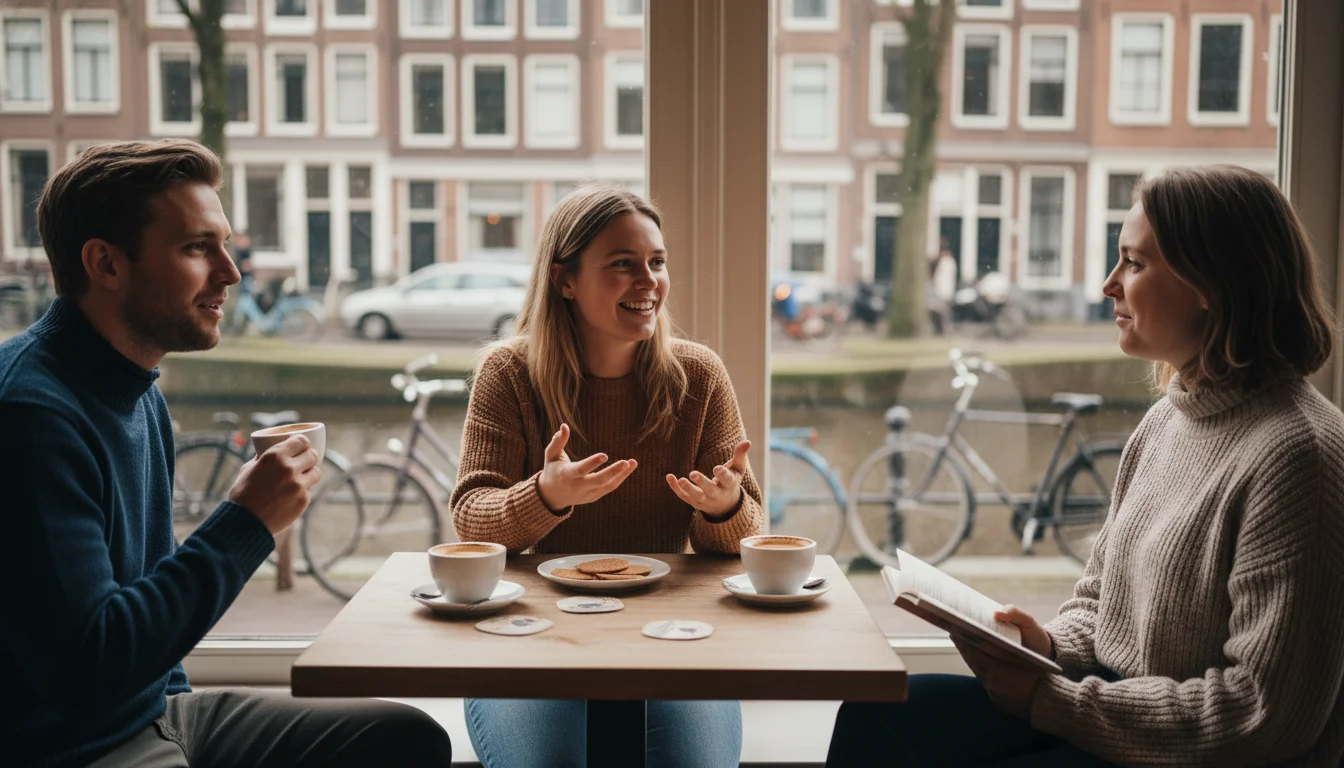
If you want to experience gezelligheid in its purest, most traditional form, step into a Dutch bruine kroeg. These historic neighborhood pubs get their name from their dark wood interiors, smoke-stained walls from decades past, and cozy, low-ceilinged rooms. Here, locals of all ages gather to drink draft beer, eat bitterballen (deep-fried meat ragout balls), and talk for hours. The lighting is low, the music is soft enough to talk over, and the atmosphere is thick with warmth.
The borrel is a sacred Dutch institution. Typically occurring on Friday afternoons (the vrijmibo or vrijdagmiddagborrel), it is an informal gathering of colleagues or friends to mark the end of the work week. It involves drinks (beer, wine, or jenever) and a platter of warm snacks (the borrelplank). Engaging in lighthearted banter during these social gatherings is an art in itself; you can master these interactions by learning the art of Dutch small talk.
When the sun finally emerges after a long, grey Dutch winter, the entire country undergoes a transformation. Sidewalks are instantly filled with outdoor tables and chairs. Sitting on a terrasje with a cold drink, soaking up the rare sunshine while chatting with friends, is the quintessential summer version of gezelligheid. Even if it is slightly chilly, cafés will provide fleece blankets and outdoor heaters to keep the cozy vibe alive.
No discussion of Dutch culture is complete without mentioning the traditional Dutch birthday party. Often characterized by guests sitting in a large, quiet circle of chairs, shaking hands with everyone, and congratulating the aunts and uncles of the birthday boy or girl, it is a highly specific social ritual. While expats often joke about its rigid nature, to the older Dutch generation, gathering in a circle to sip coffee and eat cake is the peak of family gezelligheid.
While it sounds overwhelmingly positive, this cultural phenomenon has a flip side. The opposite of gezellig is ongezellig, and in the Netherlands, being labeled ongezellig is a mild but effective social condemnation.
If you leave a party early, refuse to join your colleagues for a Friday afternoon drink, or sit quietly in a corner instead of participating in the group conversation, you might be playfully (or sometimes seriously) accused of being ongezellig. For expats and newcomers, this can sometimes feel like a form of soft social pressure. The Dutch value consensus and group harmony, and gezelligheid is the medium through which this harmony is maintained. To reject the cozy atmosphere is, in a way, to reject the community.
Understanding this dynamic is crucial for integration. It helps you realize that when your Dutch colleagues invite you to a gathering, they are not just being polite; they are inviting you into their circle of trust and comfort. Participating, even for a short while, shows that you respect this cultural cornerstone and are willing to contribute to the collective warmth.
Learning a new language, especially one with notoriously difficult pronunciation and complex grammar rules like Dutch, can often feel stressful, overwhelming, and decidedly ongezellig. But it does not have to be that way. You can actually leverage this cultural philosophy to make your language acquisition much more enjoyable and effective.
At StroopTaal, we believe that learning Dutch should feel like a warm, inviting experience rather than a cold classroom exercise. By incorporating elements of play, as discussed in our piece on gamification in Dutch learning apps, you can make studying feel less like a chore and more like a gezellig activity.
Here are a few actionable ways to make your Dutch learning journey truly gezellig:
Mastering the concept of gezelligheid is about more than just adding a versatile word to your vocabulary; it is about adopting a mindset. It is an invitation to slow down, appreciate the simple pleasures of life, and prioritize meaningful human connection. By seeking out these cozy moments—whether by lighting a candle on a rainy evening, joining your colleagues for a Friday afternoon borrel, or practicing your Dutch in a relaxed, gamified way—you will find yourself feeling less like an outsider and more at home in the Netherlands.
Ready to take your Dutch skills to the next level while exploring the rich cultural landscape of the Netherlands? Download the StroopTaal app today. With our AI-powered personalized learning plans, real-life conversation practice, and engaging cultural lessons, we make mastering Dutch a truly gezellig experience. Every cozy practice session is a step forward!
Share this article:
When spring arrives in the Netherlands, the minds of most expats and tourists immediately drift to endless fields of vibrant tulips, historic...
Read moreThe Iconic Sentinels of the Low Countries Picture the Netherlands in late spring: fields of vibrant tulips swaying in the breeze, historic canals...
Read moreIntroduction: The Myth of the Silent Dutch If you have ever stepped foot in the Netherlands, you have likely heard about the famous Dutch directness....
Read more