Exploring Dutch Windmills: History, Types & May Visits
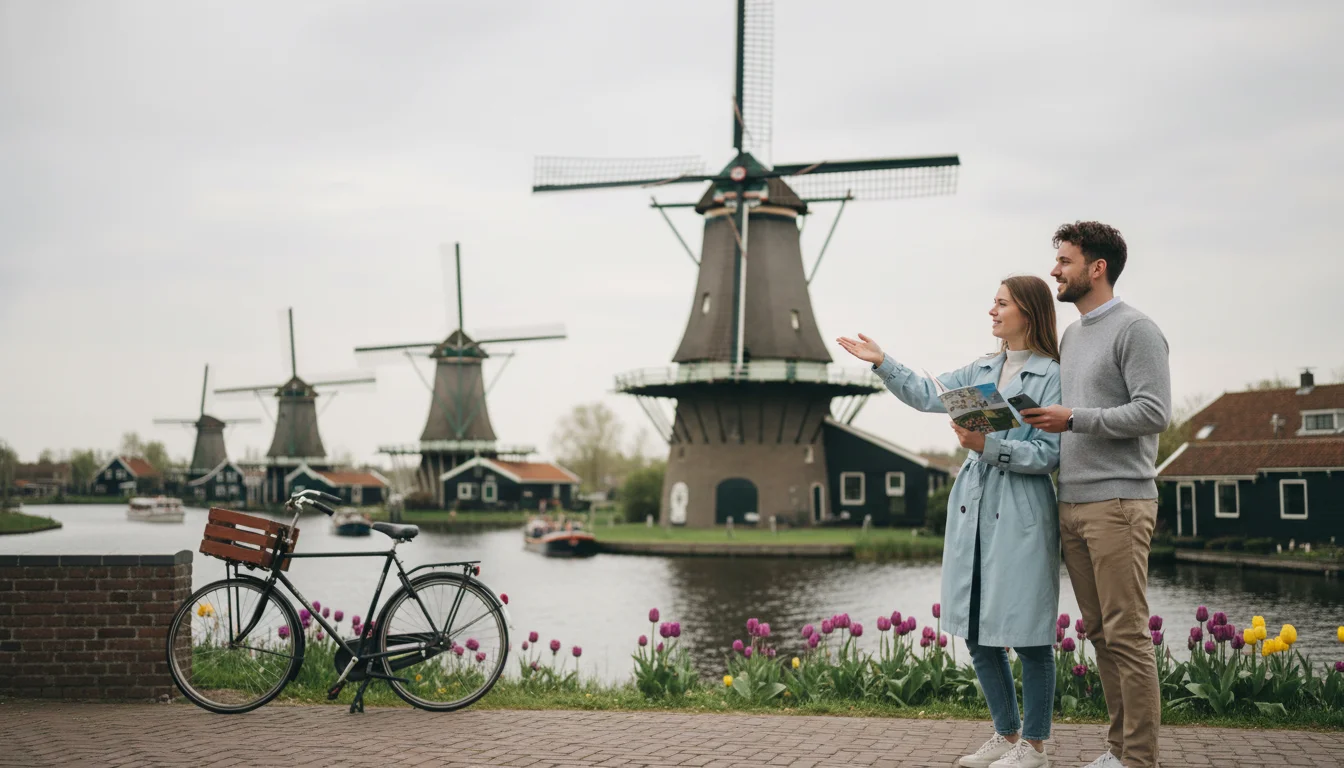
The Iconic Sentinels of the Low Countries Picture the Netherlands in late spring: fields of vibrant tulips swaying in the breeze, historic canals...
Read more
If you have ever stepped foot in the Netherlands, you have likely heard about the famous Dutch directness. Expats and visitors are often warned that the Dutch do not beat around the bush; they say what they mean, value efficiency, and have little patience for superficial pleasantries. This reputation leads many language learners to believe that small talk simply does not exist in Dutch culture. But this is a common misconception.
While it is true that Dutch social interactions differ significantly from the hyper-enthusiastic, overly polite exchanges often found in Anglophone countries, small talk is a vital social lubricant in the Netherlands. Locally referred to as kletspraat, babbeltje, or koetjes en kalfjes (literally "little cows and calves"), small talk is the key to building rapport, breaking the ice at work, and integrating into local communities. Whether you are waiting for your espresso at a local café, standing by the office coffee machine, or chatting with a neighbor, knowing how to navigate these micro-conversations is an essential step toward fluency and social integration.
In this comprehensive guide, we will demystify the art of Dutch small talk. You will learn the cultural philosophy behind these interactions, the most popular (and safe) topics of conversation, key vocabulary and phrases to keep the dialogue flowing, and how to practice these skills effectively using modern tools.
To master Dutch small talk, you must first understand the unique cultural framework that governs social interactions in the Netherlands. Two main pillars define this framework: the pursuit of gezelligheid and the boundaries of privacy.
First, let us look at the concept of Gezelligheid. Often translated as "coziness," "togetherness," or "warmth," gezelligheid is more of a feeling than a literal word. In a social setting, a conversation is considered gezellig when it is relaxed, friendly, and inclusive. Dutch small talk is designed to establish this comfortable atmosphere without demanding too much emotional energy from either participant. It is a way of saying, "We are sharing this space, and we are on good terms."
Secondly, the Dutch draw a clear line between public friendliness and private life. Unlike in some cultures where asking about someone's salary, relationship status, or political views is fair game after five minutes, the Dutch prefer to keep initial conversations light and neutral. They value their personal boundaries and respect yours. Therefore, successful Dutch small talk is a delicate dance: it must be warm and engaging enough to be gezellig, yet respectful enough to keep private matters private.
This balance is highly visible in daily rituals. For example, understanding how these social boundaries play out in daily routines is closely tied to understanding Dutch coffee culture, where a simple coffee break serves as the prime venue for light, structured social bonding.
If you are wondering what on earth to talk about without crossing any social boundaries, you are in luck. The Dutch have a few tried-and-true topics that are universally accepted, highly relatable, and guaranteed to get people talking.
If there is one thing that unites every single person living in the Netherlands, it is the weather. Because the Dutch climate is notoriously unpredictable, it is the ultimate icebreaker. Whether it is raining for the fifth consecutive day, unexpectedly sunny, or freezing cold, the weather is always a safe and engaging topic.
The beauty of discussing the weather in Dutch is that it often involves a shared, lighthearted complaint. Complaining about the rain (regen) or the wind (wind) is practically a national pastime. Here are a few classic weather-related observations you can use:
The Dutch work-life balance is highly protected, and people genuinely look forward to their free time. Asking about someone's weekend is a standard, polite way to initiate small talk, especially mid-week or on a Friday afternoon. It shows interest without being overly intrusive.
Keep your questions open but simple:
When answering, you do not need to give a highly detailed itinerary. A simple, "Ja, lekker rustig aan gedaan" (Yes, took it nice and easy) or "Ik ben naar het strand geweest" (I went to the beach) is perfect.
The Dutch transit system (the NS trains) and bicycle culture are central to daily life. Consequently, they are excellent fodder for casual conversation. Did your train have a delay? Did you get caught in a massive headwind (tegenwind) while cycling? Share it!
To make your small talk sound natural, you need more than just vocabulary; you need conversational fillers and active listening cues. The Dutch use these small words constantly to show agreement, interest, and empathy. Mastering these will instantly make you sound more like a native speaker.
When the other person is speaking, do not just stand there in silence. Use these common interjections to show you are following along:
These two tiny words do an immense amount of heavy lifting in Dutch conversation. Adding "hè" to the end of a statement turns it into a shared observation, inviting the other person to agree with you. It is equivalent to "isn't it?" or "right?"
Example: "Warm vandaag, hè?" (Warm today, right?)
"Nou" is often used to start a sentence, giving you a moment to think while softening your delivery. It can mean "well," "now," or simply serve as an introductory sigh.
Example: "Nou, ik ga er weer vandoor." (Well, I am off again.)
Every culture has its social landmines, and the Netherlands is no exception. To ensure your small talk is well-received, keep these three unwritten rules of Dutch social etiquette in mind:
There is a famous Dutch saying: "Doe maar gewoon, dan doe je al gek genoeg" (Just act normal, that is crazy enough). The Dutch value egalitarianism and humility. Bragging about your expensive new car, your high salary, or your exclusive social connections will likely make people uncomfortable and harm the gezelligheid of the moment. Keep your tone modest and down-to-earth.
In some cultures, it is polite to act incredibly excited about minor details. In the Netherlands, this can come across as insincere or exhausting. If someone tells you they spent their weekend cleaning their gutters, a simple, "Ah, nuttig" (Ah, useful) or "Fijn dat het gedaan is" (Nice that it is done) is much more appreciated than a high-pitched "Oh my gosh, that is amazing!" Keep your reactions genuine and grounded.
Dutch small talk is efficient. When the conversation has reached its natural end, there is no need to drag it out with long, drawn-out farewells. It is perfectly polite to wrap things up quickly and move on with your day. You can easily exit a conversation with a friendly:
For many expats and language learners, the hardest part of Dutch small talk is not learning the words, but finding the courage to use them. It is easy to freeze up when a cashier asks you a quick question or a neighbor greets you in the hallway. The key to overcoming this anxiety is consistent, low-stakes practice.
This is where modern technology can step in to build your confidence before you take your skills to the streets. Practicing with specialized tools allows you to make mistakes in a safe environment. For instance, using AI chatbots for Dutch fluency can help you simulate real-life interactions, allowing you to practice responding to casual questions about your weekend, the weather, or your hobbies without any social pressure.
With StroopTaal, you can access interactive dialogue games designed specifically for practical, real-world scenarios. The app's real-life Dutch conversation practice with AI simulates these everyday encounters, helping you master pronunciation, build your vocabulary with spaced repetition, and transition smoothly from textbook grammar to natural, flowing kletspraat. By practicing just a few minutes a day, you can build the muscle memory needed to respond naturally when someone asks you, "Lekker weertje, hè?"
Mastering the art of Dutch small talk is about much more than just memorizing phrases—it is about showing respect for the local culture, building bridges, and turning everyday encounters into opportunities for connection. The next time you find yourself standing next to someone at a bus stop or waiting in line at the supermarket, resist the urge to pull out your phone. Instead, take a deep breath, look up, and try out a simple observation about the weather or the transit system.
You might be surprised by how warmly your effort is received. Every small conversation is a step closer to feeling truly at home in the Netherlands. If you want to accelerate your journey to conversational confidence, download the StroopTaal app today to start practicing real-life dialogues with our personalized AI learning plans. Veel succes, and happy chatting!
Share this article:
The Iconic Sentinels of the Low Countries Picture the Netherlands in late spring: fields of vibrant tulips swaying in the breeze, historic canals...
Read moreIntroduction: The Dutch Obsession with Coffee If you have recently moved to the Netherlands or are currently learning the Dutch language, you have...
Read moreIntroduction: The Spirit of Freedom in the Netherlands As spring paints the Dutch landscape in vibrant hues of green and orange, the Netherlands...
Read more