
Dutch Gezelligheid Explained: Experience True Dutch Comfort
If you have ever spent more than five minutes in the Netherlands, or if you are currently preparing to move there, you have undoubtedly crossed paths...
Read more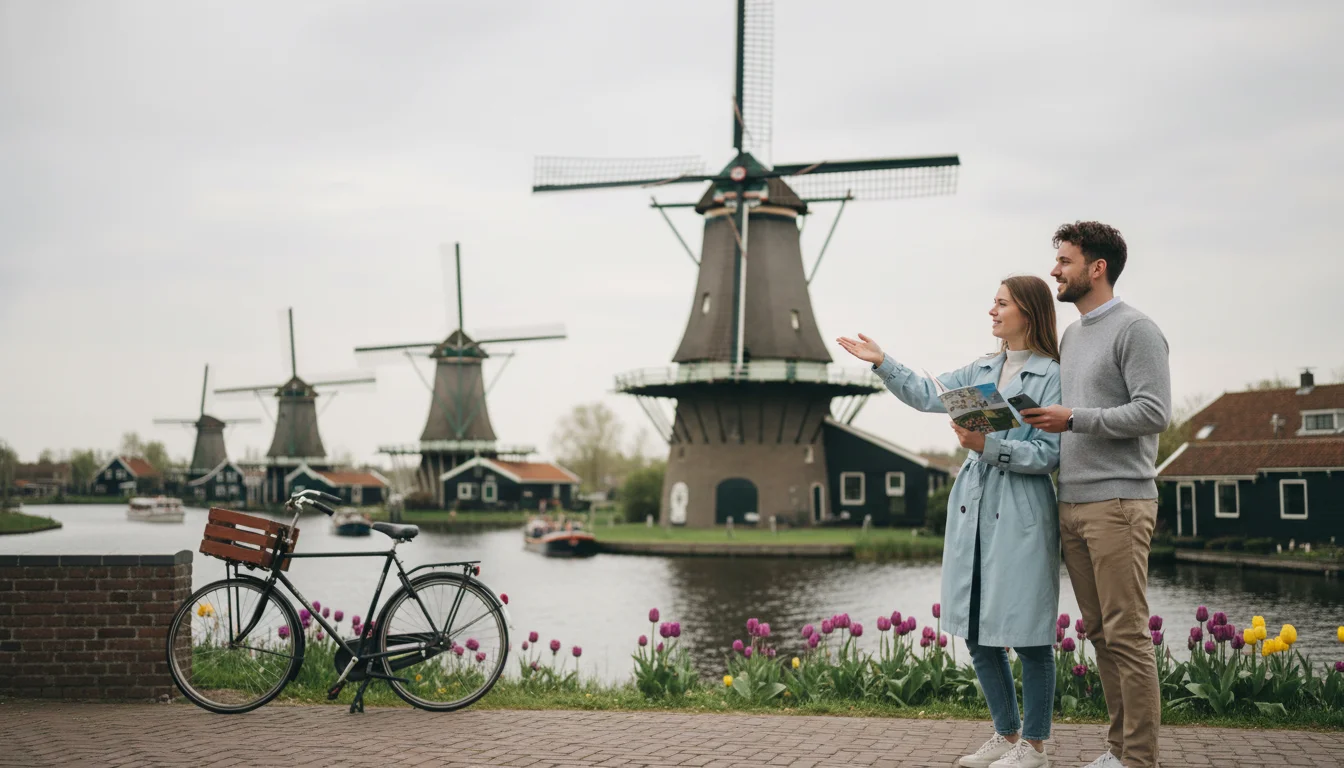
Picture the Netherlands in late spring: fields of vibrant tulips swaying in the breeze, historic canals reflecting the clear blue sky, and majestic windmills turning lazily against the horizon. For expats, language learners, and curious travelers alike, windmills (molens) are not just beautiful photo opportunities—they are the literal and figurative engines of Dutch history. Without them, much of the country we walk on today would still be underwater.
If you are preparing for your integration exams (inburgeringsexamen) or simply want to understand the soul of Dutch culture, exploring the country's windmills is an absolute must. May is the perfect month to do this, as the weather is ideal, the spring flowers are in full bloom, and the country celebrates National Mill Day. In this comprehensive guide, we will dive into the fascinating history of Dutch windmills, decode the different types you will encounter, and highlight the absolute best places to visit them this May.
To understand the Dutch relationship with windmills, you must first understand their relationship with water. Nearly a third of the Netherlands lies below sea level. For centuries, the Dutch have fought a relentless battle against flooding, famously summarized by the proverb: "God created the world, but the Dutch created the Netherlands."
While traditional windmills existed elsewhere in Europe, the Dutch elevated their design to an industrial art form in the 13th century. Initially used for grinding grain, windmills were soon adapted to pump water out of marshlands, creating dry, fertile areas of land known as polders.
By the 17th century—the Dutch Golden Age—windmills powered the world's first true industrial zone in the Zaan region. Over 10,000 windmills dotted the Dutch landscape, sawing timber imported from the Baltic, crushing oil seeds, pressing paper, and grinding cocoa, spices, and paint pigments. This wind-powered industrial revolution allowed the tiny Dutch Republic to become a global maritime and economic superpower.
Not all windmills are created equal. Depending on their location, age, and primary purpose, Dutch windmills vary significantly in their architectural design. Recognizing these types will greatly enrich your visits and help you appreciate the ingenuity of early Dutch engineers.
The unsung heroes of Dutch water management, polder mills were designed specifically to lift water from lower-lying polders into drainage canals. Many of these mills utilize an Archimedean screw (vijzel) to scoop up massive volumes of water. They are often built with a thatched octagonal body, resting on a brick foundation.
If you visit a historic Dutch city center, you are likely to see a stage mill. Because city buildings blocked the wind at ground level, these mills were built incredibly tall. To operate them, the miller needed a wooden platform or "stage" (stelling) wrapped around the middle of the tower to reach the sails and adjust them safely above the rooftops.
Unlike stage mills, ground-sailers are built in wide, open fields where there are no obstructions to block the wind. Their sails spin incredibly close to the ground—so close, in fact, that it is highly dangerous to stand near them when they are in motion. The miller can easily manage the sails and ropes directly from the ground.
Among the oldest types of windmills in Europe, the post mill is designed so that the entire wooden body of the mill rotates on a massive central wooden post. This allowed the miller to manually turn the entire structure to face whichever direction the wind was blowing.
While windmills are beautiful year-round, May is undeniably the most magical time to experience them. Here is why you should plan your windmill excursions during this spring month:
If you are ready to see these historic giants in action, here are the absolute best locations to visit in May, ranging from world-famous heritage sites to hidden urban gems.
Located in the province of South Holland, Kinderdijk is a UNESCO World Heritage site featuring a breathtaking alignment of 19 pristine 18th-century windmills. Walking or cycling along the canal paths here feels like stepping directly into a Golden Age landscape painting. In May, the surrounding reeds are lush and green, and you can take a boat tour to view the mills from the water. Two of the mills are fully operating museums where you can climb inside and meet real millers.
Just a short train ride north of Amsterdam lies Zaanse Schans, a meticulously recreated historic village. Here, you can witness the industrial power of wind firsthand. You can step inside working mills that still saw wood, grind mustard seeds, and crush pigments to make traditional oil paints. The air is filled with the scent of freshly sawn timber and nearby cocoa factories. It is highly touristy, but visiting early in the morning during May offers a peaceful and stunning experience.
For a completely different vibe, head to Schiedam, located near Rotterdam. Schiedam is home to the tallest traditional windmills in the world. These massive stage mills, reaching up to 33 meters high, were built specifically to grind grain for the city's famous jenever (Dutch gin) distilleries. Today, several of these giants still dominate the city skyline, and you can visit the Jenever Museum to see how the milling and distilling processes are intertwined.
If you want to combine a city trip with a windmill visit, Molen de Adriaan in the charming city of Haarlem is perfect. Rebuilt on its original 18th-century foundations along the scenic Spaarne River, this stage mill offers a fantastic guided tour. The view from the high wooden deck over the historic center of Haarlem is absolutely spectacular on a clear May afternoon.
To truly appreciate your visits and connect with the locals, it helps to learn some windmill-related vocabulary. The Dutch language has a rich collection of words and idioms tied to wind and milling. Here are some essential terms to add to your vocabulary builder:
Want to commit these words to memory before your trip? StroopTaal's vocabulary building system uses spaced repetition to help you effortlessly memorize essential Dutch terminology. Whether you are studying for your integration exams or just want to feel more confident speaking with locals, mastering these cultural terms is a fantastic step forward.
To make the most of your spring windmill excursions, keep these practical tips in mind:
While Zaanse Schans and Haarlem are easily accessible by train, reaching Kinderdijk is often best done by taking the Waterbus ferry from Rotterdam—a scenic and highly enjoyable journey in May. Renting a bicycle at your destination is highly recommended to explore the wider polder areas at your own pace.
Dutch millers are incredibly passionate about their craft, and many of them speak excellent English. However, trying out your Dutch will always bring a warm smile to their faces. Brush up on the art of Dutch small talk before you go, so you can confidently ask questions like, "Hoe oud is deze molen?" (How old is this mill?) or "Draait de molen vandaag?" (Is the mill turning today?). If you want to build up your confidence beforehand, you can practice these real-life scenarios using StroopTaal's interactive dialogue games and AI-powered conversation practice.
After a long bicycle ride or a walk around the windy dikes, there is nothing better than stopping at a local pancake house or café near the mills. Take the opportunity to relax and immerse yourself in the local lifestyle by understanding Dutch coffee culture—ordering a hot cup of coffee with a slice of traditional apple tart (appeltaart) is the perfect way to round off your day.
Dutch windmills are far more than just historic relics; they are living monuments to human ingenuity, community, and the timeless battle against the elements. Visiting them in May offers a unique window into the heart of Dutch identity, especially during National Mill Day when the sails spin and the history comes alive.
As you explore the polders and historic cities, you will realize that understanding the culture is just as important as learning the grammar when it comes to mastering the Dutch language. If you are ready to take your Dutch learning journey to the next level, let StroopTaal be your guide. With personalized AI learning plans, practical cultural lessons, and instant pronunciation feedback, StroopTaal helps you speak Dutch naturally and confidently. Download StroopTaal today and start preparing for your next Dutch adventure!
Share this article:
If you have ever spent more than five minutes in the Netherlands, or if you are currently preparing to move there, you have undoubtedly crossed paths...
Read moreIntroduction: The Myth of the Silent Dutch If you have ever stepped foot in the Netherlands, you have likely heard about the famous Dutch directness....
Read moreIntroduction: The Dutch Obsession with Coffee If you have recently moved to the Netherlands or are currently learning the Dutch language, you have...
Read more