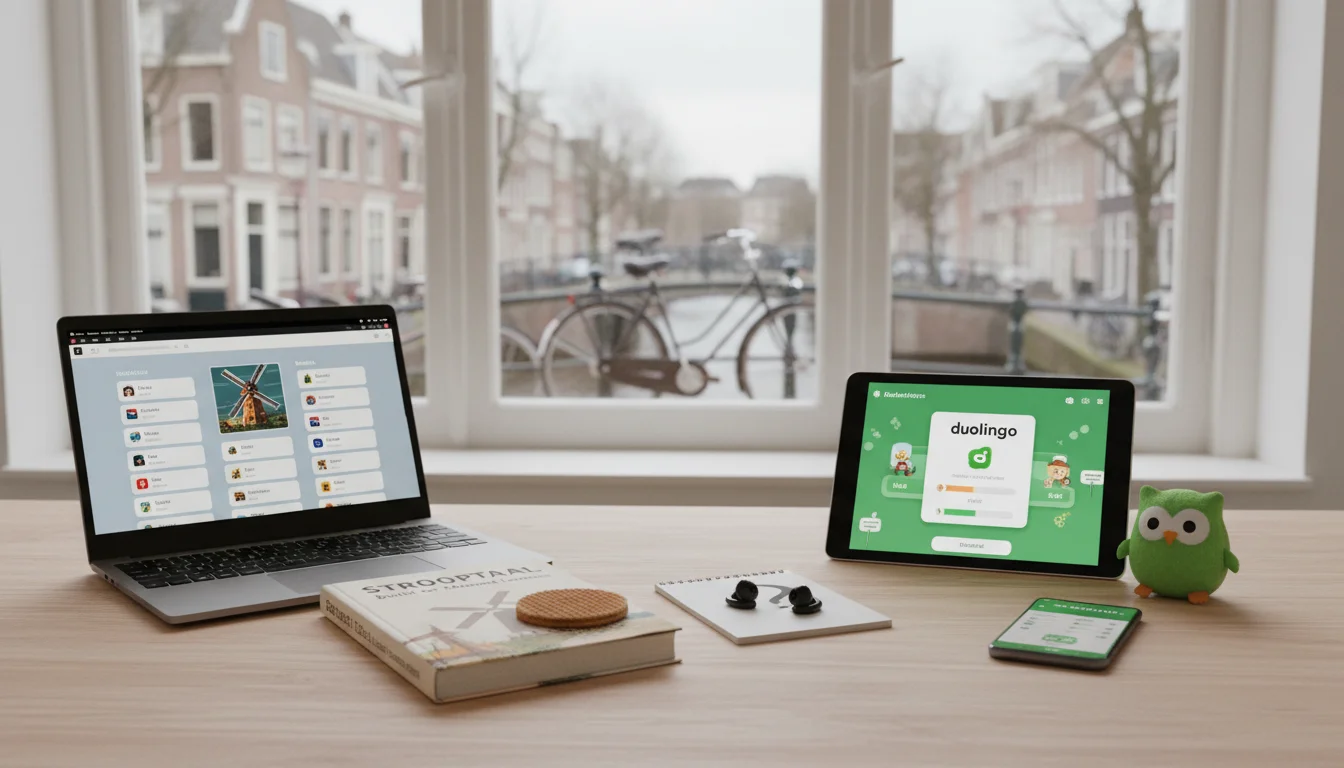
Choosing the Right Dutch Learning App: Features for 2026
So, You Want to Learn Dutch? Don't Just Download, Discern. The year is 2026, and the app store is a digital jungle teeming with promises of fluency....
Read more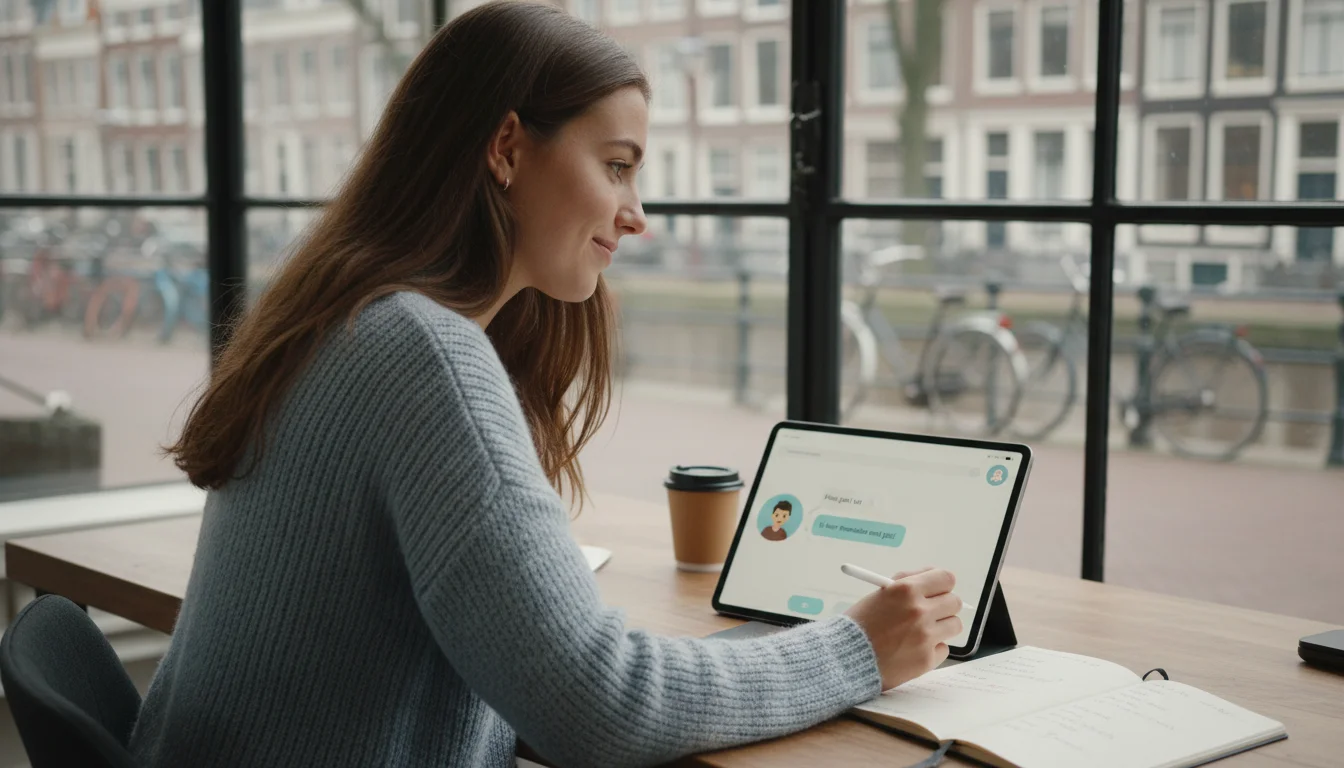
Picture this: you’re standing in an Albert Heijn, clutching a carton of what you think is 'volle melk'. A friendly cashier asks you something in rapid-fire Dutch. You freeze. All those vocabulary flashcards, all those grammar rules you memorized, suddenly vanish. Your brain is a blank slate. You manage a weak, "Sorry, ik spreek geen Nederlands," and the moment is lost.
This is the 'fluency gap' – the vast chasm between knowing a language and using it. For anyone learning Dutch, especially expats navigating daily life or those preparing for their inburgeringsexamen, this is the ultimate challenge. But what if you could practice these exact scenarios hundreds of times, in a safe space, with a partner who never gets tired or impatient? Enter the world of AI-powered chatbots. Can these digital conversation partners truly be the key to unlocking conversational Dutch fluency? Let's dive in.
Before we explore the solution, it's crucial to understand the problem. Why does speaking feel so much harder than reading or listening? Several factors are at play:
This is where AI technology, particularly language-learning chatbots, changes the game. They are not just fancy translators; they are sophisticated tools designed to simulate real conversation and tackle the core challenges of speaking practice head-on.
An AI chatbot is a judgment-free zone. It doesn't care if you mispronounce 'scheveningen' for the hundredth time or mix up 'de' and 'het'. This freedom from social pressure is incredibly liberating. You can experiment, make mistakes, and learn from them without any embarrassment. This builds the single most important ingredient for speaking: confidence.
Feeling motivated to practice at 11 PM? Your AI tutor is ready. Have a spare 10 minutes on your commute? You can run through a quick scenario. Unlike a human tutor or a language exchange partner, an AI chatbot is always available. This unparalleled accessibility means you can integrate speaking practice into your daily life, turning 'dead time' into productive learning moments.
One of the most powerful features of modern AI is its ability to provide immediate feedback. When you speak, the AI doesn't just understand your words; it analyzes your delivery.
AI excels at simulating real-life situations. Instead of just having a generic chat, you can practice specific, practical dialogues. Need to make a doctor's appointment, order a 'koffie verkeerd', or ask for directions to the Rijksmuseum? You can do that. Apps like StroopTaal leverage this with interactive dialogue games, guiding you through these scenarios so you're prepared when you face them in the real world.
Simply talking to an AI is good, but with a strategic approach, it can be transformative. Here’s how to get the most out of your AI practice sessions:
Don't just go in and chat aimlessly. Set a clear, small goal. For example:
It can be tempting to type your responses, but that defeats the primary purpose. Always use the voice input feature. Speaking aloud trains the muscles in your mouth and jaw, builds muscle memory for Dutch sounds, and directly improves your speaking and listening skills.
After a conversation, don't just close the app. If possible, review the transcript. Identify recurring mistakes. Were you struggling with a particular verb conjugation? Did you forget a key piece of vocabulary? Note these down and make them the focus of your next study session.
AI chatbots are a powerful tool, but they are not a magic bullet. True fluency comes from a balanced approach. Combine your AI conversation practice with:
Tailor your practice to your specific needs. If you're preparing for the civic integration exam, you should focus on the types of questions and topics covered. The Dutch government's Immigration and Naturalisation Service (IND) provides information on what to expect. Use your AI chatbot to practice introducing yourself, talking about your work, and discussing life in the Netherlands.
While AI is incredibly effective, it's important to be realistic about its limitations. It's a supplement to, not a replacement for, human interaction.
Therefore, as your confidence grows through AI practice, it's vital to take that next step. Join a 'taalcafe', find a language tandem partner, or even enroll in a group class. Sometimes, looking into the best language schools in your area can provide that structured social environment to put your skills to the test.
So, is AI-powered chatbot practice effective for conversational Dutch fluency? The answer is a resounding yes. It masterfully solves the biggest obstacles for learners: fear of mistakes and lack of consistent, accessible practice.
By providing a safe, 24/7 environment for real-time conversation, instant feedback, and scenario-based training, AI chatbots act as the perfect training ground. They build your confidence, sharpen your recall, and prepare you for the unpredictability of real-world interactions. They are the bridge between passively knowing Dutch and actively speaking it.
While AI will never fully replace the richness of a chat with a friend over a 'kopje koffie', it is an indispensable tool for getting you to that café in the first place, ready and confident to order, chat, and connect. Why not start building that bridge today?
Share this article:
So, You Want to Learn Dutch? Don't Just Download, Discern. The year is 2026, and the app store is a digital jungle teeming with promises of fluency....
Read moreStroopTaal vs Duolingo: Which is Better for Serious Dutch Learners? So, you’ve decided to learn Dutch. Geweldig! Your first instinct, like millions...
Read moreSo, You're Learning Dutch in Amsterdam? Let's Find Your Perfect School Welcome to Amsterdam! You've navigated the canals, tried your first...
Read more