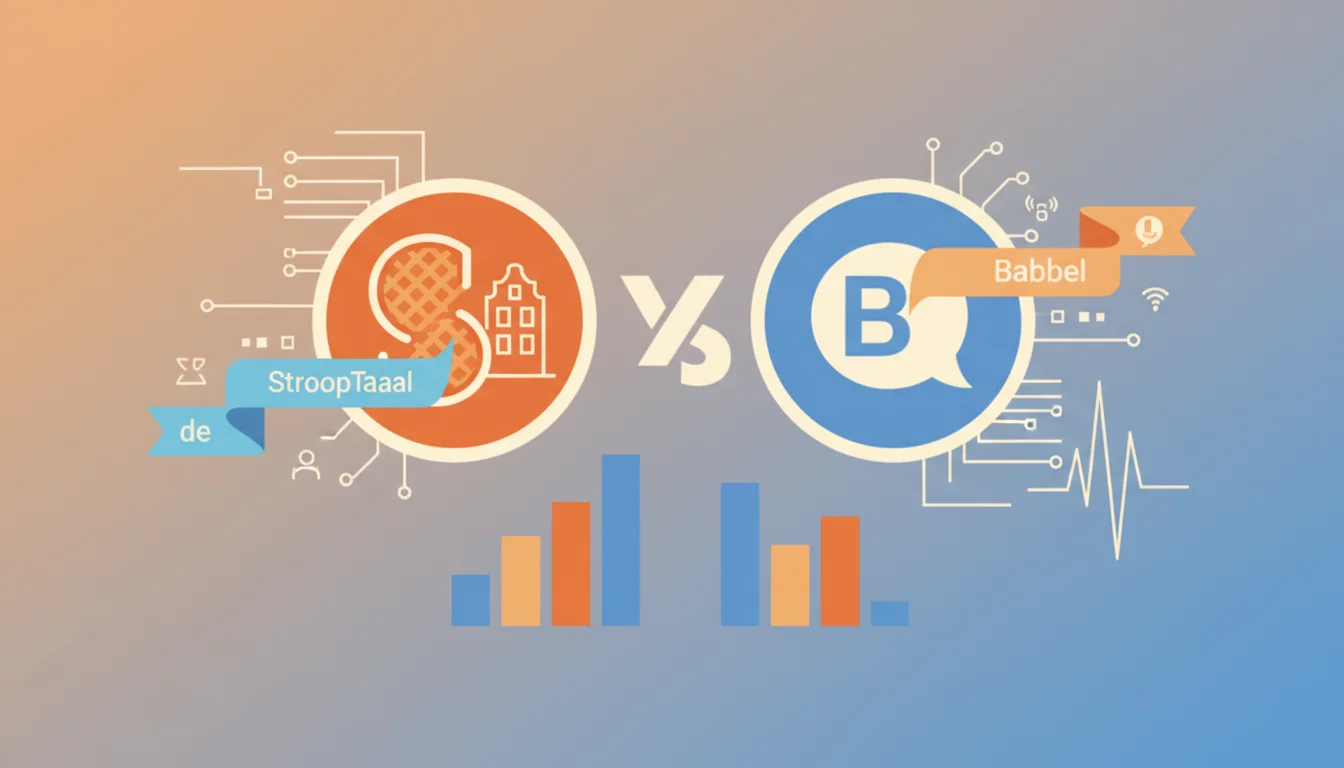
Top 5 AI Language Apps for Learning Dutch Grammar in 2026
Mastering Dutch Grammar in the Age of AIIf you are an expat living in the Netherlands, a prospective student, or simply a language enthusiast, you...
Read moreMoving to the Netherlands is an exciting adventure filled with beautiful canals, endless cycling paths, and the world-famous stroopwafels. However, for many expats and newcomers, the journey to becoming a permanent resident or Dutch citizen comes with a significant hurdle: the Inburgeringsexamen (civic integration exam). Whether you are taking the exams at the A2 level or adapting to the new B1 level requirements, there is one foundational element that will determine your success across every single test module: vocabulary.
Without a robust vocabulary, reading comprehension becomes a guessing game, listening exercises sound like an indistinguishable blur of sounds, and speaking tests induce unnecessary anxiety. Mastering Dutch vocabulary is not just about memorizing translations; it is about understanding context, usage, and cultural nuances. This is exactly where traditional flashcards fall short, and why a more intelligent, adaptive approach is required.
In this comprehensive guide, we will explore the unique vocabulary demands of the Dutch integration exams, the common pitfalls learners face, and how StroopTaal can help you learn Inburgering vocabulary. From AI-powered personalized learning plans to interactive dialogue games, we will show you how to transform your study routine and walk into your exam with absolute confidence.
To truly appreciate why vocabulary is your most valuable asset, it is essential to understand the structure of the integration exams. According to the Dutch Immigration and Naturalisation Service (IND), the integration process is designed to ensure newcomers can actively participate in Dutch society. The exams test your abilities across several distinct domains:
As the Dutch government's official integration guidelines outline, the shift toward the B1 language level means that simple, transactional vocabulary is no longer enough. You need to express opinions, understand nuances, and navigate complex societal themes. This requires a vocabulary of roughly 2,000 to 3,000 active words.
Learning Dutch presents a unique set of challenges for expats. While it shares Germanic roots with English, the way vocabulary functions in a sentence can be perplexing. Here are the most common vocabulary hurdles Inburgering candidates face:
In Dutch, every noun is assigned a definite article: either de (common words) or het (neuter words). Memorizing the word for "house" (huis) is useless if you don't know it is het huis, because this article dictates the behavior of adjectives and pronouns in the rest of your sentence. If you struggle with this, mastering Dutch articles is a crucial step in your Inburgering preparation, as making too many article mistakes can cost you points on the writing and speaking exams.
Dutch is infamous for its separable verbs. The verb uitnodigen means "to invite." However, in a standard present-tense sentence, the verb splits: "Ik nodig je voor mijn feestje uit." (I invite you to my party). Recognizing that nodig and uit belong to the same vocabulary item requires contextual practice that static vocabulary lists simply cannot provide.
Dutch and English share many lookalike words with completely different meanings. For example, actueel means "current" (not actual), eventueel means "possibly" (not eventually), and braaf means "well-behaved" (not brave). Misinterpreting these words on a reading exam can completely alter your understanding of a text.
For decades, the default method for building vocabulary has been rote memorization using physical or digital flashcards. While this method can help you memorize a word's direct translation, it fails to prepare you for the dynamic environment of an integration exam.
Traditional flashcards lack context. Knowing that verzekering means "insurance" is helpful, but the exam will test if you know how to use it in a sentence: "Ik moet een zorgverzekering afsluiten" (I need to take out health insurance). Furthermore, traditional methods rarely account for the "forgetting curve"—the psychological phenomenon where we rapidly forget new information unless it is reviewed at specific, calculated intervals.
This is where StroopTaal steps in. Designed specifically with practical, real-world Dutch in mind, StroopTaal moves beyond basic translation to offer a comprehensive, AI-driven learning ecosystem. Here is how it can help you with the Inburgering vocabulary.
No two learners start from the same place. StroopTaal uses AI-powered personalized learning plans to assess your current level and target your specific weaknesses. If the app notices you are struggling with healthcare vocabulary or formal letter-writing terms, it dynamically adjusts your curriculum to focus on those areas. This helps you spend more of your practice on the words you find hardest.
To combat the forgetting curve, StroopTaal utilizes scientifically proven algorithms. By integrating spaced repetition techniques, the app ensures that words move efficiently from your short-term memory into your long-term memory. You will be prompted to review a difficult word like verantwoordelijkheid (responsibility) more frequently, while words you have already mastered will appear less often, optimizing your study time.
The Spreken (Speaking) exam is often the most feared module. It requires you to recall vocabulary instantly and use it in a grammatically correct sentence. StroopTaal offers real-life Dutch conversation practice with AI, allowing you to simulate exam scenarios. You can role-play going to the gemeentehuis to register your address, or calling a mechanic to fix your bicycle. This contextual, interactive dialogue practice cements vocabulary in your mind far better than reading a list.
It is not enough to know the word; you must be understood by the examiner. Dutch has challenging sounds, like the hard "G" or the "UI" diphthong (as in huis or ui). StroopTaal includes pronunciation training with instant feedback, analyzing your speech and helping you correct your accent before exam day.
The KNM (Knowledge of Dutch Society) exam is essentially a test of cultural vocabulary. You need to know terms related to the Dutch education system (basisschool, middelbare school, leerplicht) and the housing market (huurtoeslag, hypotheek, makelaar). StroopTaal features dedicated cultural lessons about life and customs, and its exam practice includes KNM, so you can build vocabulary and knowledge of Dutch society side by side.
While using the right tool is half the battle, employing the right study strategies will accelerate your progress. Here are actionable tips to maximize your vocabulary retention for the Inburgering exams:
The brain remembers information better when it is categorized by theme. The Inburgering exams are heavily themed around daily life in the Netherlands. Focus your study sessions on specific categories. For example, dedicate one week entirely to "Healthcare" (gezondheidszorg), learning words like huisarts (GP), apotheek (pharmacy), recept (prescription), and verwijzing (referral). StroopTaal's modules are already organized thematically to support this learning style.
Consistency is more important than intensity. Studying for 15 minutes a day is far more effective than cramming for three hours on a Sunday. To maintain motivation, you should leverage gamification to speed up vocabulary retention. StroopTaal's daily streaks, article mastery games, and interactive dialogue games turn a tedious study session into an engaging, rewarding experience.
Instead of learning isolated words, learn phrases or "chunks" of language. Do not just learn the word sollicitatie (job application). Learn the phrase een sollicitatiegesprek voeren (to have a job interview). This prepares you directly for the writing and speaking exams, where you will need to string words together naturally. StroopTaal's grammar lessons from A0 to C1 level will help you understand the structures that hold these chunks together.
Supplement your app learning with real-world exposure. Watch Dutch news programs like the NOS Journaal (they offer a version in simple Dutch called NOS Nieuws van de Week). Listen to Dutch podcasts or read free local newspapers. When you encounter a word you learned on StroopTaal in a real-world context, your brain forms a much stronger neural pathway, locking that word in permanently.
Let's take a closer look at the specific vocabulary you will need for the KNM (Kennis van de Nederlandse Maatschappij) exam, and how you can tackle it. The KNM exam tests your understanding of Dutch values, history, and administrative processes. You will encounter questions about:
Because these words are highly specific and often abstract, learning them through StroopTaal's practical scenario games ensures you understand not just the translation, but the bureaucratic context in which these words are used.
One of the biggest risks of self-study is practicing mistakes. If you memorize the wrong pronunciation of a word, or consistently use the wrong article (de instead of het), unlearning those habits takes twice as much effort. StroopTaal acts as a tutor in your pocket. The app's pronunciation training with instant feedback corrects you the moment you make an error.
Similarly, the interactive dialogue games will gently correct your sentence structure, ensuring that the vocabulary you are building is being applied with the correct Dutch syntax (which, with its verb-at-the-end rules for subordinate clauses, can be quite tricky!). This immediate correction loop is invaluable for the Inburgering speaking and writing modules.
Passing the Dutch Inburgering exams is a monumental achievement that opens the door to permanent residency, citizenship, and a deeper connection to Dutch society. While the vocabulary requirements can seem daunting at first, breaking them down into manageable, contextualized lessons makes the process highly achievable.
Traditional flashcards and textbooks can only take you so far. By leveraging modern technology, you can study smarter, not harder. With its AI-powered personalized learning plans, culturally relevant vocabulary building with spaced repetition, and real-life conversation simulations, StroopTaal is a practical tool to build the vocabulary you need for your integration exams.
Stop stressing over endless word lists and start learning Dutch the way it is actually spoken. Download the StroopTaal app today, start your daily streak, and take the first confident step toward mastering your Inburgeringsexamen!
Share this article:
Mastering Dutch Grammar in the Age of AIIf you are an expat living in the Netherlands, a prospective student, or simply a language enthusiast, you...
Read moreThe Ultimate Showdown: Mastering "De" and "Het" If you are an expat living in the Netherlands or someone currently preparing for your integration...
Read moreThe Frustration of Forgetting Dutch Vocabulary Have you ever spent hours memorizing Dutch vocabulary at your kitchen table, feeling completely...
Read more