How StroopTaal Helps You Learn Inburgering Vocabulary
Introduction: The Inburgering Challenge Moving to the Netherlands is an exciting adventure filled with beautiful canals, endless cycling paths, and...
Read more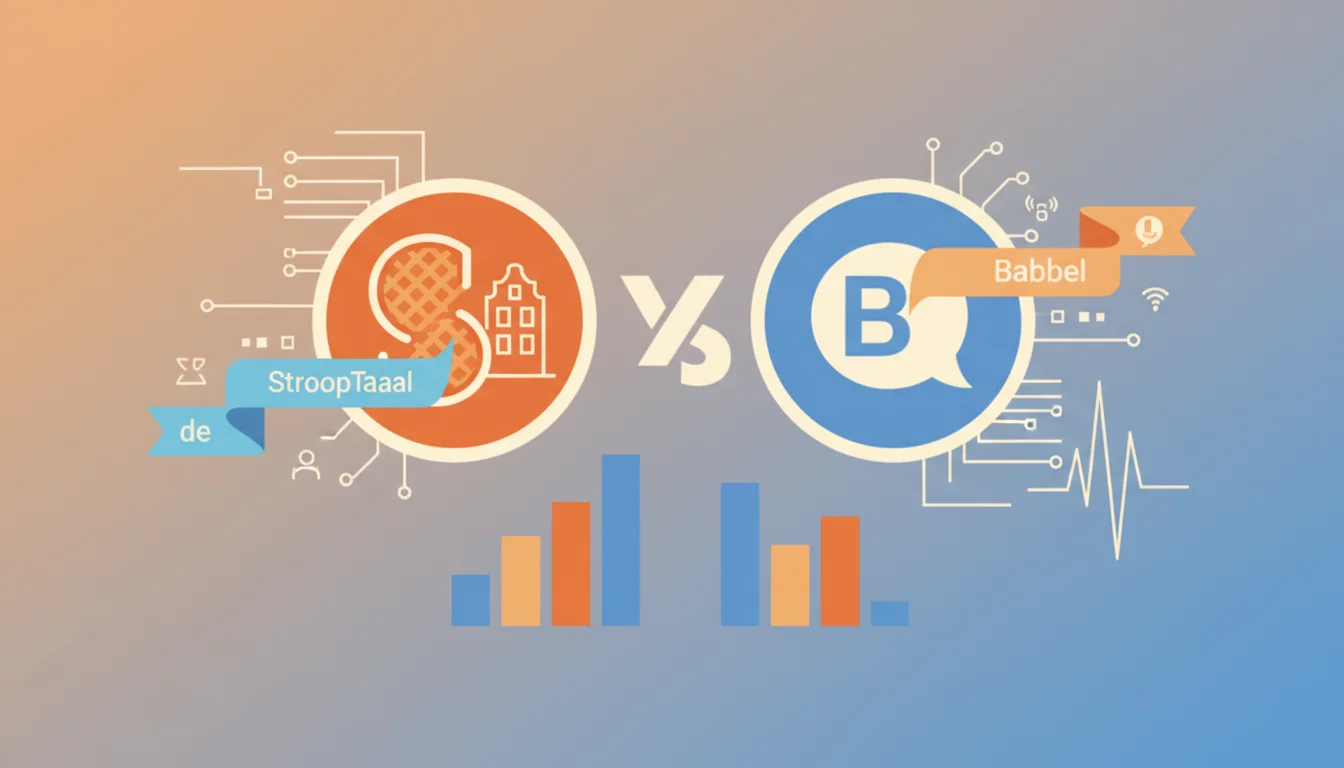
If you are an expat living in the Netherlands or someone currently preparing for your integration exams, you have likely encountered the most notorious hurdle in the Dutch language: the definite articles de and het. While English speakers enjoy the simplicity of a single definite article ("the"), Dutch learners must constantly guess, memorize, and stumble their way through two.
Choosing the right language learning app can make or break your journey to fluency. Today, we are putting two contenders head-to-head: the global heavyweight Babbel and the Dutch-focused, AI-powered specialist StroopTaal. In this comprehensive guide, we will explore which platform offers the best methodology, tools, and user experience for mastering Dutch articles.
Before diving into the apps, it is important to understand why de and het cause so much frustration. In Dutch, nouns are divided into two categories: common nouns (which take de) and neuter nouns (which take het). According to the rules governing Dutch nouns, approximately 75% of Dutch words use de, while the remaining 25% use het.
The problem? There is rarely a logical reason why a word belongs to one category or the other. For example, why is it de tafel (the table) but het raam (the window)? Why is a girl (het meisje) neuter, while a woman (de vrouw) is common?
Furthermore, knowing the correct article is not just about sounding natural; it directly impacts Dutch grammar. The article determines how adjectives behave. For instance:
Because of these cascading grammar rules, simply guessing the article is not a sustainable strategy, especially if you are aiming to pass official exams. Let us see how our two contenders handle this challenge.
Babbel is one of the oldest and most respected names in the language learning industry. It offers a highly structured, traditional approach to language acquisition, often resembling a digital textbook brought to life with audio and interactive quizzes.
Babbel integrates the learning of articles directly into its vocabulary and grammar lessons. When you are introduced to a new noun, Babbel presents it alongside its definite article. The platform uses a mix of fill-in-the-blank exercises, matching games, and listening comprehension tasks to reinforce the words.
Babbel also includes dedicated grammar modules that explain the few rules that do exist for Dutch articles (such as all plural nouns taking de, and all diminutives taking het).
Unlike Babbel, which offers dozens of languages, StroopTaal is built from the ground up specifically for Dutch. It leverages modern artificial intelligence to create a highly personalized, adaptive learning experience. Because it is tailored to the unique pain points of Dutch learners, it has specific features designed to tackle the de/het dilemma head-on.
StroopTaal recognizes that memorizing articles requires a different cognitive approach than learning standard vocabulary. The app features dedicated De/Het article mastery games. These rapid-fire, swipe-based exercises isolate nouns and force you to make split-second decisions between de and het. This builds intuitive muscle memory rather than relying on slow, conscious recall.
Furthermore, StroopTaal uses AI-powered personalized learning plans. If the algorithm notices you consistently fail on neuter nouns related to food, it will subtly weave those specific words into your daily review sessions. If you are curious about the mechanics behind this, you can read more about our dedicated approach to mastering definite articles.
When it comes to pure memorization, StroopTaal puts a clear focus on articles. Babbel's review manager is functional, but it tests the translation of the word rather than isolating the article. StroopTaal's specific focus on article mastery games ensures that you are not just learning that "huis" means "house," but that the unit of meaning is intrinsically tied to "het."
Babbel uses scripted dialogues to show how words are used in context. This is great for reading comprehension. However, StroopTaal offers real-life Dutch conversation practice with AI. You can actually speak into your phone, and the AI will correct your article usage in real-time. Seeing how AI is transforming the way we learn languages, this dynamic interaction is a massive advantage over static dialogues.
If your goal is passing the integration exams, context is everything. The Dutch Immigration and Naturalisation Service (IND) requires candidates to demonstrate practical language proficiency. Babbel's general Dutch course is excellent, but StroopTaal follows life in the Netherlands and offers practice for each part of the inburgering exam, alongside grammar rules like article-dependent adjective declension.
Regardless of which app you choose, here are some actionable tips to help you conquer de and het:
Both Babbel and StroopTaal are fantastic tools, but they serve slightly different needs.
Choose Babbel if: You prefer a traditional, textbook-style approach to language learning. If you want deep, reading-based grammar explanations and a linear path that guides you slowly through the language, Babbel is a safe, reliable choice.
Choose StroopTaal if: You are serious about mastering the nuances of Dutch, specifically the tricky de/het rules. If you thrive on gamification, want to practice speaking in realistic scenarios without the pressure of a human tutor, and need targeted preparation for the Inburgering exam, StroopTaal's AI-driven platform is a strong fit.
Learning Dutch as an expat is a rewarding journey that opens doors to deeper cultural understanding and better career opportunities in the Netherlands. While mastering de and het can feel like an uphill battle, using the right technology can turn a frustrating chore into an engaging challenge.
Stop guessing your articles and start speaking with confidence. Try integrating targeted article practice into your daily routine, and watch how quickly your Dutch grammar improves. Ready to master Dutch the smart way? Explore StroopTaal today and let our AI personalize your path to fluency!
Share this article:
Introduction: The Inburgering Challenge Moving to the Netherlands is an exciting adventure filled with beautiful canals, endless cycling paths, and...
Read moreThe Frustration of Forgetting Dutch Vocabulary Have you ever spent hours memorizing Dutch vocabulary at your kitchen table, feeling completely...
Read moreThe Importance of Offline Dutch Learning in the Netherlands Picture this: you are sitting comfortably on the Intercity train traveling from Amsterdam...
Read more