
Master Your Future: How to Enroll in a Dutch University as an Expat
So, you’ve fallen in love with the canals, the endless cycling paths, and perhaps even the salty licorice. You are ready to take the next big step...
Read more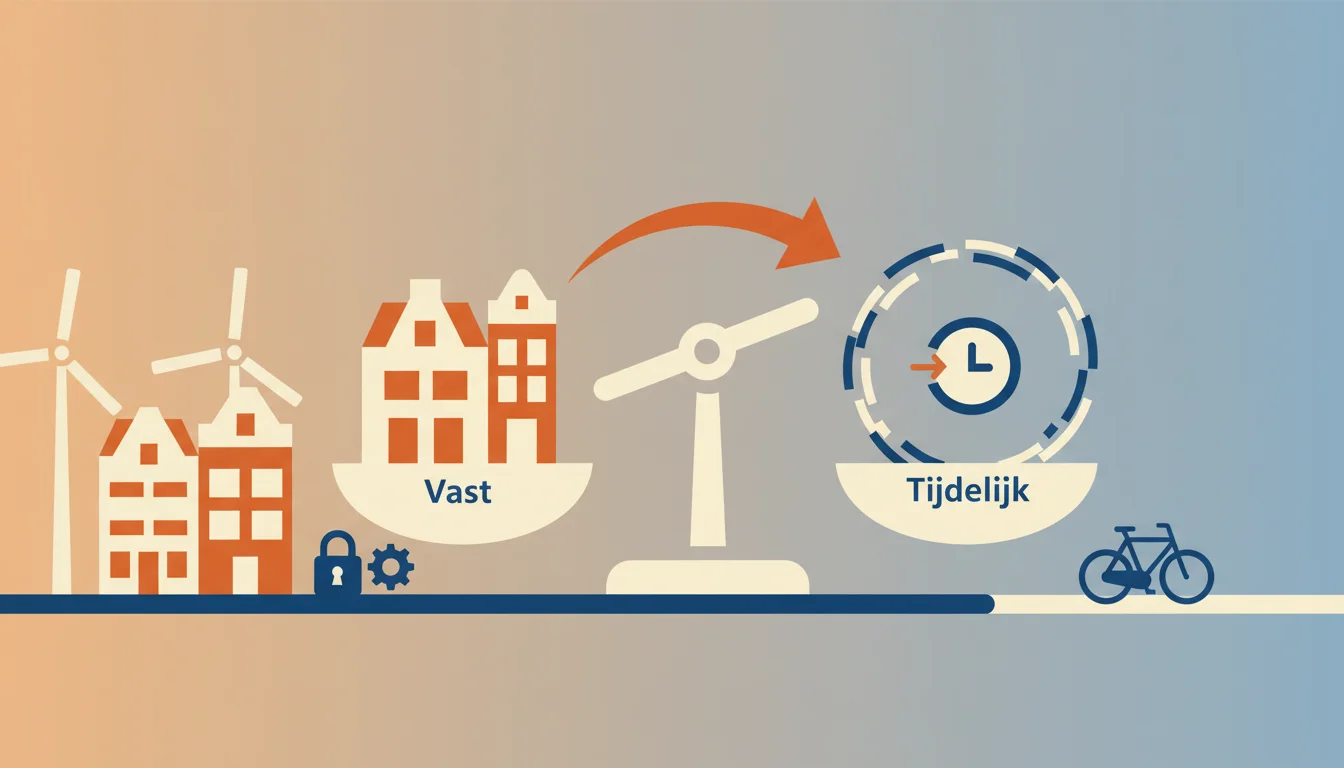
Gefeliciteerd! You have navigated the Dutch job market, aced the interview, and now an offer is on the table. But as you sit down to sign the dotted line, you are greeted by a document titled Arbeidsovereenkomst full of legal jargon. Sudden panic sets in. Are you signing your life away? What exactly are your rights?
For expats and international residents in the Netherlands, understanding local labor laws is crucial. The Dutch employment system is known for offering strong employee protection, but only if you understand what you are signing. The most common point of confusion usually lies in the difference between a Tijdelijk contract (fixed-term) and a Vast contract (indefinite).
In this guide, we will break down the differences, explain the famous "chain rule," and highlight the essential Dutch vocabulary you need to navigate your professional life in the Low Countries.
When you start a new job in the Netherlands, it is standard practice to be offered a tijdelijk contract (temporary or fixed-term contract) first. Employers use this to mitigate risk while they assess your fit within the company.
This is a vital concept for expats to understand. To prevent employees from being on temporary contracts forever, the Dutch government established the ketenbepaling.
An employer can give you a maximum of three temporary contracts within a period of 36 months. Once you exceed either the count of 3 contracts or the duration of 3 years, the next contract automatically becomes a permanent one (vast contract).
A vast contract is an indefinite contract. It has a start date but no end date. In Dutch society, this is often seen as a major milestone of adulthood and stability.
Even if your contract is in English (which is common for international companies), knowing the Dutch terms is essential for communicating with HR and understanding your payslip.
Learning business Dutch can feel overwhelming, but you don't have to do it alone. With StroopTaal, you can use our AI-powered vocabulary builder to focus specifically on work-related terms. You can even simulate a conversation with an AI HR manager to practice asking questions about your contract or salary negotiations without the pressure of a real-life meeting.
Before you sign, scan your document for these specific clauses:
This prevents you from taking clients with you if you leave the company. This is distinct from a non-compete clause, which stops you from working for a competitor entirely.
Did your employer pay for your relocation, Inburgering course, or professional training? This clause states that if you leave the company within a certain period (e.g., 2 years), you must pay back a portion of those costs.
Many industries in the Netherlands (like healthcare, education, or metalworking) fall under a CAO. If your contract refers to a CAO, your rights regarding pay raises, holidays, and overtime might be better than the statutory minimums. Always check the CAO!
Dutch work culture is famous for its directness. During the contract negotiation phase, do not be afraid to ask questions. If something is unclear regarding your reiskostenvergoeding (travel allowance) or pension scheme, ask directly. It is not considered rude; it is considered professional.
Also, keep an eye out for the 13th Month (Dertiende Maand). This is an extra month's salary paid out in December. It is not mandatory by law, but many companies offer it as a bonus. If it isn't in your contract, it doesn't exist!
Understanding the legal difference between vast and tijdelijk is just the first step. To truly thrive, you need to navigate the coffee machine talk, the team meetings, and the office culture.
Whether you are aiming to pass your Inburgering exam or simply want to impress your colleagues, improving your Dutch is the best investment you can make for your career security. StroopTaal offers personalized learning plans that take you from A0 to C1, helping you master not just the grammar, but the cultural context of working in the Netherlands.
Ready to take control of your Dutch career? Download StroopTaal today and start practicing your business Dutch with our interactive dialogue games!
Share this article:
So, you’ve fallen in love with the canals, the endless cycling paths, and perhaps even the salty licorice. You are ready to take the next big step...
Read moreUnlock the Secret to Dutch Social & Professional Life If you have recently moved to the Netherlands or started working at a Dutch company, you have...
Read moreMoving to the Netherlands is an exciting adventure. You’ve sorted out your BSN number, navigated the housing market, and perhaps even bought your...
Read more