
Inburgering for EU Partners: Rules and Exemptions in NL
Navigating the Dutch Integration Landscape as an EU Partner Moving to the Netherlands with your loved one is an exciting adventure. The picturesque...
Read more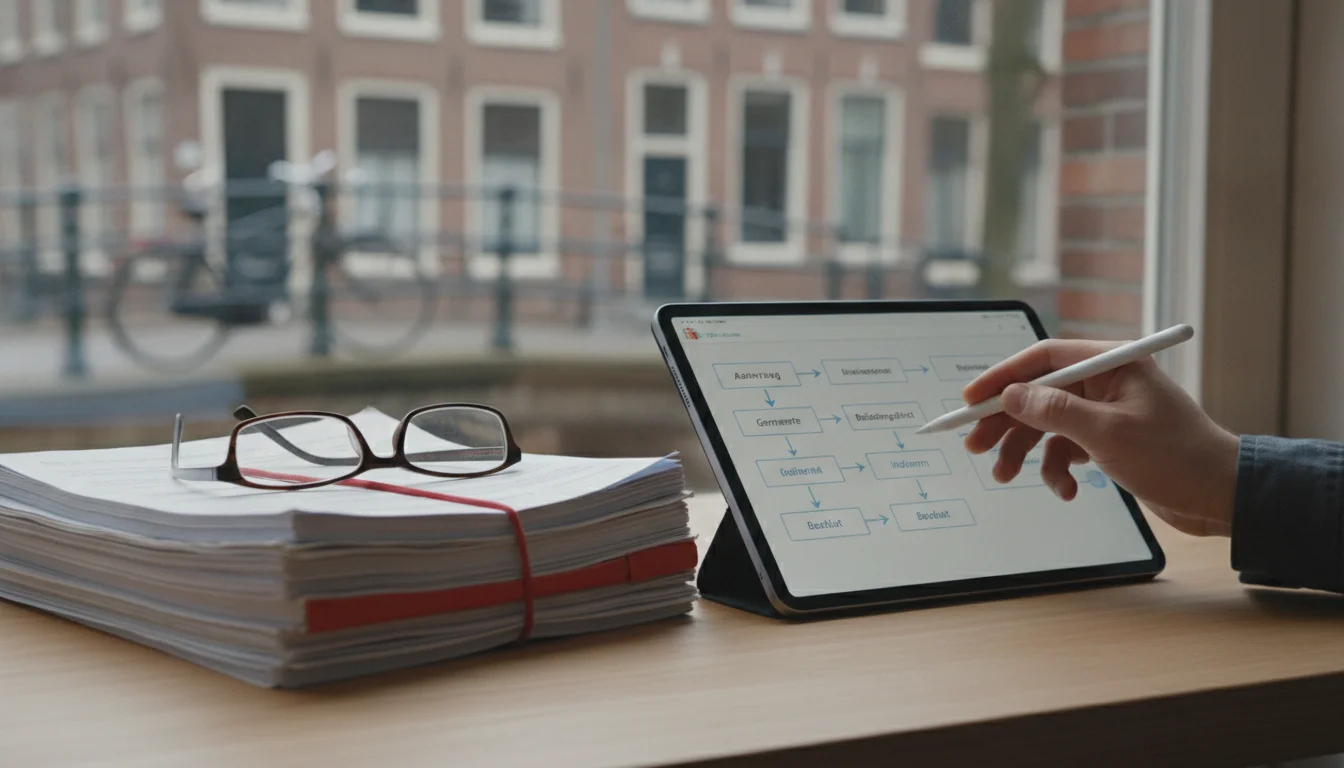
Moving to the Netherlands is an exciting adventure filled with cycling paths, historic canals, and delicious stroopwafels. However, sooner or later, every expat, highly skilled migrant, and integration candidate must face the legendary beast of de Nederlandse bureaucratie (Dutch bureaucracy). From registering your address at the local municipality to communicating with the immigration services or setting up your digital identity, official communication in the Netherlands can feel overwhelming.
When you are navigating Dutch bureaucracy, the language barrier can turn simple administrative tasks into stressful hurdles. Official letters from government agencies are notoriously written in a formal, dense style known as ambtelijk Nederlands (bureaucratic Dutch). But fear not! With the right strategies, a solid understanding of the key institutions, and some targeted language preparation, you can confidently handle any official interaction. This guide will provide actionable tips, essential vocabulary, and practical advice to help you master official communication during your integration journey.
To navigate the system successfully, you first need to understand who you are dealing with. The Dutch administrative landscape is highly centralized but digitized. Here are the main institutions you will interact with during your integration:
Most of these agencies communicate digitally through DigiD, the secure portal used by Dutch citizens and residents to access government services. Setting up your DigiD should be your absolute first priority upon receiving your BSN.
The Dutch government is slowly transitioning toward simpler language (known as B1-niveau), but many official letters still use archaic, formal structures. When a blue or white envelope lands on your doormat, do not panic. Here is how to systematically decode a Dutch official letter:
Every official letter in the Netherlands follows a highly standardized layout. Look for these key terms at the top of the page to understand what the letter is about:
Understanding these standard formal expressions will help you grasp the tone and urgency of the message:
While written communication is the default for official decisions, you will often need to call a helpline or attend an in-person appointment to clarify complex situations. Speaking to an official in a foreign language can cause anxiety, but preparation is your best defense.
Before making a phone call, gather all relevant documents, write down your BSN, and have your kenmerk ready. It is also helpful to draft a few opening sentences in Dutch. Even if the official eventually switches to English, starting the conversation in Dutch demonstrates respect and a willingness to integrate.
To build the confidence needed for these high-stakes conversations, the StroopTaal app is an invaluable companion. StroopTaal offers real-life Dutch conversation practice with AI and interactive dialogue games for practical scenarios. This allows you to practice asking questions, explaining your situation, and refining your pronunciation with instant feedback before you make that actual phone call to the Gemeente or IND.
Keep these phrases handy during your next call:
For many expats, official communication is heavily tied to the integration process governed by DUO. Navigating the integration exams requires a clear understanding of what is expected of you, particularly when preparing for spoken and written assessments.
If you are subject to the Wi2013 or Wi2021 integration laws, you will have to deal with various components, including the KNM (Kennis van de Nederlandse Samenleving) exam. Gaining a deep understanding of Dutch culture is key here; you can read more about understanding the Dutch value system to prepare for this specific component.
Furthermore, if you are completing the Orientation on the Dutch Labor Market (ONA) portfolio, you may face an oral interview. Knowing what to expect and how to communicate your professional goals is essential. Discover what awaits you by reading our guide on preparing for the ONA resultaatgesprek.
To help you build your vocabulary, here is a reference list of highly common terms used in Dutch bureaucratic correspondence. Memorizing these will save you hours of translation time:
| Dutch Term | English Translation | Context / Usage |
|---|---|---|
| De aanvraag | The application | Submitting a request for a permit, subsidy, or benefit. |
| De beschikking | The official decision | The formal ruling made by an agency (e.g., IND or DUO). |
| Bezwaar maken | To object / appeal | The process of formally disagreeing with an official decision. |
| De machtiging | The authorization / mandate | Giving someone else permission to act on your behalf. |
| De afspraak | The appointment | A scheduled meeting at the Gemeente or IND. |
| De bewijsstukken | Supporting documents | Evidence required to support an application (e.g., payslips, contracts). |
To wrap up, here are four golden rules to ensure your interactions with Dutch authorities go as smoothly as possible:
Never rely on verbal agreements. If an official promises you something over the phone, ask them to confirm it via email ("Kunt u dit schriftelijk per e-mail bevestigen?"). Keep organized folders of all physical letters and digital PDFs. When submitting physical documents, always make copies beforehand.
The Dutch system is incredibly strict regarding deadlines. If you are given six weeks to pay a bill or file an objection, that deadline is absolute. Missing a deadline can result in hefty fines or the automatic rejection of your application. If you need more time, contact the agency immediately to request an extension (uitstel).
Check your MijnOverheid inbox regularly. This is the digital message box linked to your DigiD where agencies like the Belastingdienst, RDW (vehicle authority), and your local municipality send digital letters. You can configure it to send you an email notification whenever a new official letter arrives, ensuring you never miss an important update.
If you receive a letter that you do not understand, do not ignore it. Reach out to local integration coaches, legal advisors (such as the Juridisch Loket for free legal advice), or use language tools to translate. Remember, asking for clarification is a normal part of the integration process, and Dutch officials are generally helpful if you approach them politely and proactively.
Navigating Dutch bureaucracy is an inevitable rite of passage for anyone making the Netherlands their home. While the formal language and strict procedures can seem daunting at first, understanding the structure of official communication, learning key vocabulary, and keeping organized will empower you to handle these situations with ease.
Learning the language is the single most effective way to demystify the system. By actively practicing your Dutch, you transition from being a passive recipient of bureaucratic decisions to an active, confident participant in Dutch society. Let StroopTaal help you build the vocabulary, grammar, and speaking skills you need to tackle any administrative challenge. Download the StroopTaal app today and take the stress out of your Dutch integration!
Share this article:
Navigating the Dutch Integration Landscape as an EU Partner Moving to the Netherlands with your loved one is an exciting adventure. The picturesque...
Read moreNavigating the Financial Realities of Dutch Integration in 2026 Moving to the Netherlands is a thrilling adventure filled with picturesque canals,...
Read moreMoving to the Netherlands is an exciting adventure filled with scenic canals, cycling paths, and the promise of a high quality of life. However, for...
Read more