7 Dutch Weather Idioms to Master This Rainy February
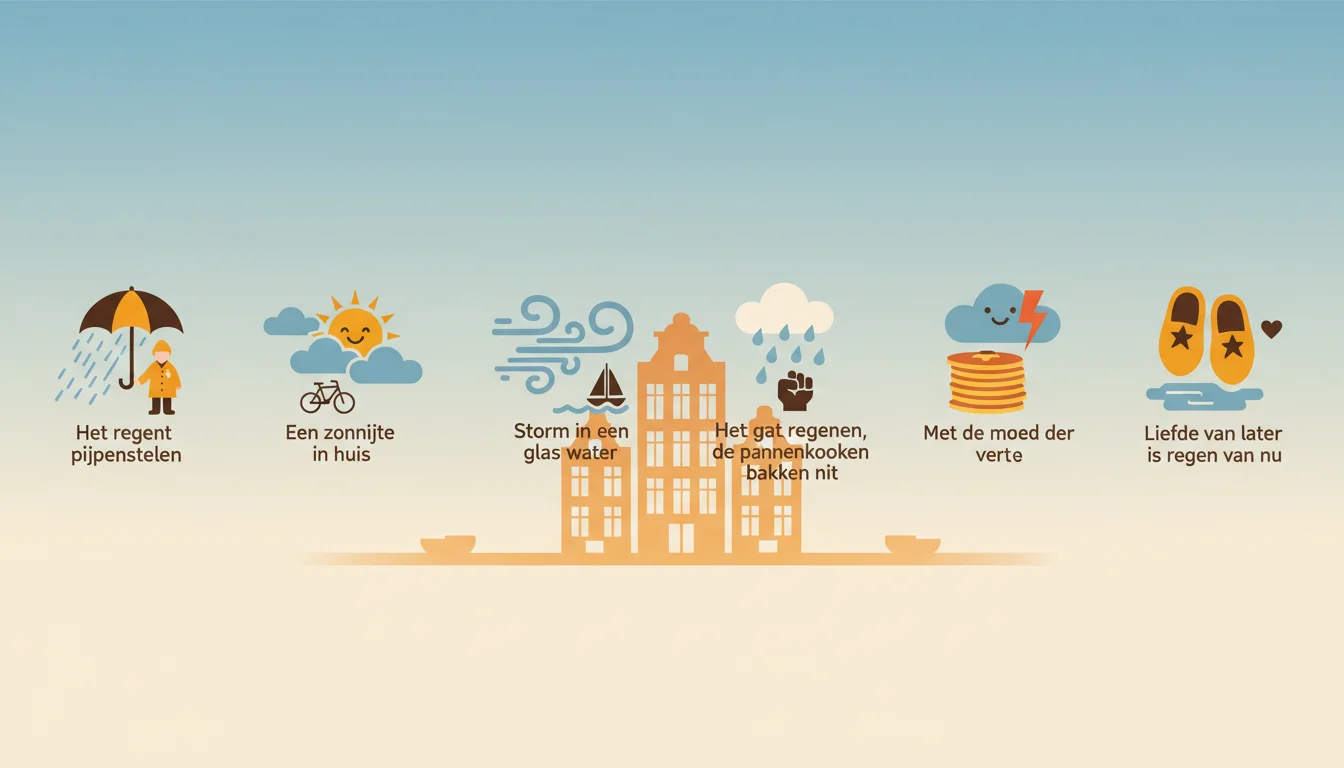
Embrace the Gray Skies Like a Local If you are currently living in the Netherlands, you know the drill. It is February. The days are short, the sky...
Read more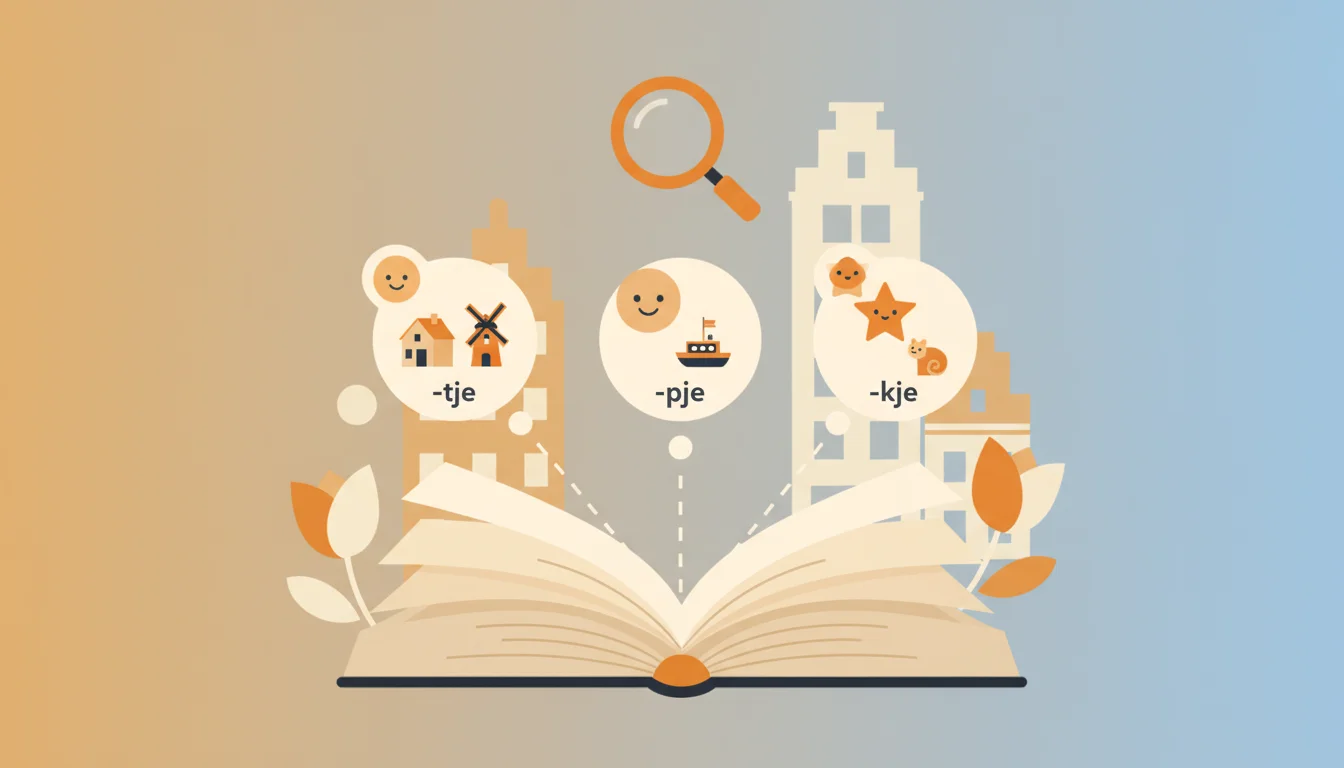
If you have spent any time in the Netherlands, you have probably noticed a peculiar habit among the locals. They don't just drink a beer; they have a biertje. They don't sit on a terrace; they enjoy the sun on a terrasje. Even a grown man might be referred to as a mannetje depending on the context.
Welcome to the world of Dutch diminutives, or verkleinwoorden. While the grammatical function is to indicate that something is small, the Dutch use them for so much more: to express coziness (gezelligheid), endearment, sarcasm, or simply to soften a sentence.
For expats and Dutch learners, mastering the endings -tje, -pje, -kje, -etje, and -je is a major milestone. It’s the difference between sounding like a textbook and sounding like a local. In this guide, we will break down the rules, the exceptions, and the cultural nuances of thinking small.
A diminutive in Dutch (known as a verkleinwoord) is a modified noun ending in suffixes like -tje, -je, -pje, -kje, or -etje to signal smallness, affection, modesty, or casual conversation. Unlike English, where you must add adjectives like "little" or "small", diminutives in Dutch are baked directly into the noun itself.
Virtually any noun in the Dutch language can be turned into a diminutive, and doing so changes both its emotional flavor and its grammatical properties. When you create Dutch diminutives, you make your speech sound significantly more natural, polite, and culturally aligned with native Dutch speakers.
To say small in Dutch, the standard adjective is klein (for example, een klein huis), but native speakers far more frequently use a diminutive suffix to convey smallness, warmth, or brevity. While klein expresses literal, objective size, a diminutive like huisje (little house) or kopje (small cup) communicates coziness (gezelligheid) and emotional closeness.
For instance, when ordering a drink using our cafe Dutch guide, asking for "een klein bier" sounds formal and clinical, whereas asking for "een biertje" sounds natural and friendly. Learning when to use a diminutive instead of simply saying klein is key to mastering everyday Dutch fluency.
Before we dive into the complex ending rules, here is a piece of good news that will make your life significantly easier. All Dutch diminutives are neuter nouns.
This means that no matter what the original article of the word is (de or het), the diminutive form always takes the article het.
If you are struggling with the notorious de/het distinction, turning a word into a diminutive is a clever hack to ensure you are using the correct article! If you want to practice this specifically, the StroopTaal app features dedicated De/Het article mastery games that help solidify these instincts.
The standard suffix is -je, but pronunciation flow dictates variations. Here is how to know which one to pick.
Use -je for words ending in voiceless consonants like -f, -k, -p, -s, (the "soft ketchup" rule, excluding -t).
This is arguably the most common variation. Use -tje if the word ends in a vowel, a diphthong (two-tone vowel sounds like ui, ij, ou), or the consonants -l, -n, -r, or -w (if preceded by a long vowel).
Spelling tip: If a word ends in a single open vowel, you often double the vowel to keep the sound long.
Example: Auto → Autootje.
The suffix -tje in Dutch is the default connector whenever a base word ends with a vowel sound or long resonant consonant, ensuring smooth pronunciation without harsh consonant clashes. Because Dutch speakers avoid awkward transitions between vowels and the standard -je, the "t" acts as a phonetic bridge in words like zoontje (little son) and treintje (little train).
Use -pje for words ending in -m. The ‘p’ acts as a bridge because transitioning from ‘m’ to ‘j’ is difficult for the mouth to do quickly.
Use -kje for words ending in -ing. However, there is a catch: you drop the ‘g’ before adding -kje.
The -kje diminutive ending in Dutch applies specifically to multi-syllable nouns ending in an unstressed -ing, where the final "g" is dropped before appending the suffix. For example, wandeling (walk) becomes wandelinkje (short stroll), and ketting (chain/necklace) becomes kettinkje. If the -ing syllable is stressed—such as in single-syllable nouns like ring or ding—you do not use -kje; instead, you apply -etje to get ringetje and dingetje.
Use -etje for monosyllabic words (words with one syllable) that contain a short vowel and end in -l, -r, -n, -m, or -ng. This is similar to the logic used when mastering Dutch plurals where word endings dictate the grammatical shift.
All plural diminutives in Dutch are formed by adding an -s to the singular diminutive, regardless of how the original root word is pluralized. While regular Dutch nouns take either -en or -s in the plural, every diminutive without exception takes an -s once modified. For example, huis becomes huizen in the regular plural, but its diminutive plural is huisjes; similarly, boom (plural: bomen) becomes boompjes. To explore standard noun endings further, check our comprehensive guide to mastering Dutch plural nouns.
Knowing the grammar is one thing, but knowing the culture is another. Here is why the Dutch actually use these words.
Some uncountable nouns become countable specific items when diminished.
Dutch can be a direct language. Diminutives act as linguistic padding to make commands or requests sound friendlier, much like mastering zouden for polite requests and wishes.
Beware! Context matters. If someone refers to your new business idea as a "leuk plannetje" (nice little plan), they might be being condescending rather than supportive. Similarly, "Dat is wel een dingetje" usually means "That is actually a significant problem."
The combination of consonants in diminutives (like the "mpj" in boompje) can be tongue-twisters for English speakers. Correct pronunciation requires practice.
This is where StroopTaal can accelerate your learning. Unlike static textbooks, StroopTaal offers pronunciation training with instant feedback. You can speak directly to the app, and it will analyze your intonation and articulation of tricky sounds like -tje and -ui-.
Furthermore, you can use the AI conversation practice to try out these diminutives in simulated real-life scenarios—like ordering a biertje at a bar or buying a kaartje for the train—without the fear of making mistakes in front of strangers.
Dutch diminutives are the salt and pepper of the language; they add flavor, nuance, and cultural context to everyday conversations. While the rules for -tje, -pje, and -kje might seem daunting at first, they follow a logical pattern based on the flow of sound.
Start listening for them in daily life. Once you start noticing them, you will realize they are everywhere! And remember, when in doubt, make it small, and make it het.
Ready to sound like a local? Download StroopTaal today and start your personalized Dutch learning journey with interactive dialogue games and real-time feedback!
Share this article:
Embrace the Gray Skies Like a Local If you are currently living in the Netherlands, you know the drill. It is February. The days are short, the sky...
Read moreThe Ultimate Guide to Avoiding One of the Most Common Dutch Mistakes Imagine this scenario: You are at a networking event in Amsterdam. You spot...
Read moreMoving to the Netherlands comes with many exciting challenges, but few are as daily and daunting as the first trip to the local supermarket. Whether...
Read more