How to Talk About Your August Summer Holiday in Dutch
August in the Netherlands is a magical time. The days are long, the terraces (terrasjes) are packed, and almost everyone you meet is either returning...
Read more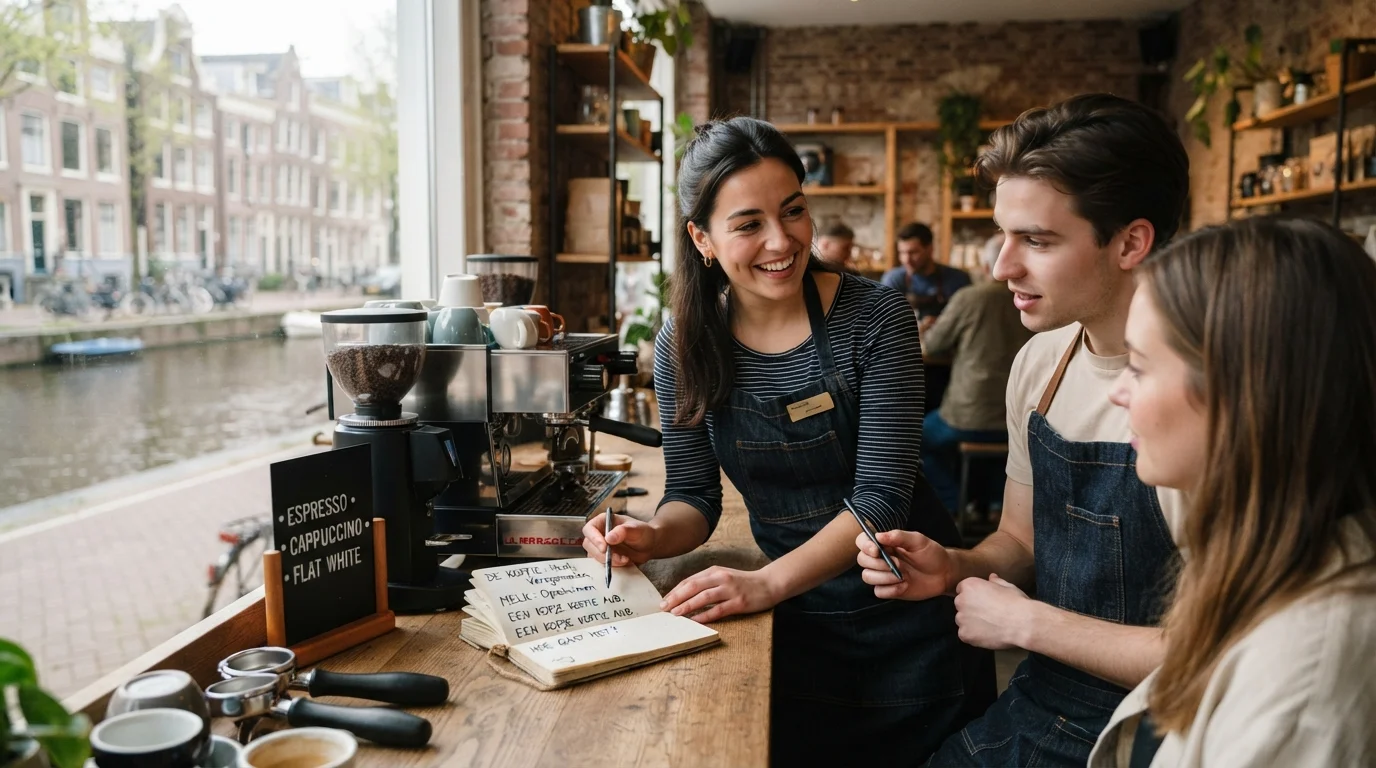
The Netherlands is a nation fueled by coffee. Whether it's a quick morning espresso before catching the train or a leisurely afternoon spent sipping a flat white in a cozy canal-side cafe, the Dutch love their koffie. In fact, the Netherlands consistently ranks among the top coffee-consuming countries in the world. This booming coffee culture means there is always a high demand for skilled baristas, making it a fantastic role for expats, international students, and newcomers looking to integrate into local life.
However, standing behind the espresso machine can feel intimidating if you don't speak the local language. While many Dutch locals speak excellent English, ordering coffee is an intimate, daily ritual where people naturally prefer to use their mother tongue. Learning how to speak 'Cafe Dutch' not only helps you secure a job more easily, but it also helps you build rapport with regular customers, increases your tips, and makes your workday infinitely more fun. In this guide, we will walk you through the essential Dutch vocabulary, phrases, and cultural nuances you need to master the art of being a barista in the Netherlands.
First impressions are everything in hospitality. When a customer walks through the door, a warm, authentic Dutch greeting sets the tone for their entire experience. Depending on the time of day and the vibe of your cafe, you have several excellent options to choose from.
Once you have greeted the customer, you want to invite them to place their order. Here are the most common ways to do this:
Pro-Tip: In modern, specialty coffee shops, the informal "je" (you) is almost always preferred over the formal "u." It keeps the atmosphere relaxed and neighborly.
Now comes the core of your job: understanding exactly what the customer wants. While many coffee terms are international (like espresso, cappuccino, and latte macchiato), the Dutch have their own specific ways of pronouncing and ordering them.
When customers describe their drink, they will often use adjectives like "groot" (large), "klein" (small), or "warm" (warm). In Dutch, adjectives change their endings depending on the gender of the noun they precede. For example, you say "een grote koffie" (because "koffie" is a de-word) but "een klein glaasje water" (because "glaasje" is a het-word). Understanding these subtle grammatical shifts can make you sound like a native speaker in no time. If you want to master these patterns, check out our comprehensive guide on mastering Dutch adjective ending rules.
To be an effective barista, you must train your ear to recognize how customers ask for things. They will typically say:
The modern Dutch coffee lover is highly particular about their milk alternatives and sweeteners. Plant-based milks are incredibly popular in the Netherlands, especially in urban centers like Amsterdam, Utrecht, and Rotterdam.
To ensure you make the drink exactly how the customer wants it, use these standard clarifying questions:
Once the drink is decided, you need to know where the customer plans to enjoy it. This is a crucial step for tax (VAT) purposes and for choosing the correct cup (glassware vs. takeaway paper cup).
The absolute most important phrase you will use dozens of times a day is:
"Voor hier of om mee te nemen?" (For here or to go? / Eat in or takeaway?)
Sometimes, customers might preemptively tell you by saying: "Om mee te nemen, graag" (To go, please) or "We drinken het hier op" (We will drink it here).
A great barista is also a great salesperson! Upselling a delicious Dutch treat is a fantastic way to boost the cafe's revenue. You can ask:
The Netherlands is a highly digitized society, and cash is rapidly becoming obsolete in many urban cafes. Many establishments are strictly "PIN-only" (card payments only). You need to communicate this clearly to avoid awkward situations at the register.
When handing over the payment terminal, you can say:
The Dutch value gezelligheid (coziness, social connection, warmth) above almost everything else. A friendly interaction, a warm smile, and a bit of lighthearted banter can turn a one-time visitor into a loyal daily regular.
Even the best baristas make mistakes. If you accidentally spill a drink, mix up an order, or take too long, use these polite phrases to smooth things over:
Working in a cafe is a team sport. To keep the workflow smooth, you need to communicate effectively with your fellow baristas, kitchen staff, and floor servers. Here is some useful behind-the-scenes lingo:
If you are a busy barista juggling work shifts and social life, finding time to sit down and study grammar books can be tough. Fortunately, you can easily learn Dutch on the go during your daily tram, train, or bike commute to the cafe. Maximizing these small pockets of time is the fastest way to build your conversational confidence.
While reading lists of vocabulary is a great start, the real challenge of working as a barista is thinking on your feet and responding quickly when a customer speaks to you. This is where StroopTaal comes in.
StroopTaal is an AI-powered Dutch language learning app designed specifically for real-world scenarios. Instead of memorizing abstract sentences, you can use StroopTaal's interactive dialogue games to simulate realistic cafe transactions. Practice taking orders, handling complex milk substitutions, and processing payments in a low-pressure environment. The app's pronunciation training gives you instant feedback with a score and tips on what to improve, so you can practice saying "havermelk" or "alsjeblieft" before you say it to a customer. With personalized learning plans that adapt to your current level (from A0 to C1), StroopTaal helps you build the exact vocabulary you need to excel in your hospitality career.
Working as a barista in the Netherlands is one of the most rewarding ways to immerse yourself in Dutch society. It forces you out of your comfort zone, connects you with the local community, and provides daily, active language practice. Don't be afraid of making mistakes—the Dutch highly appreciate any effort made by expats to speak their language, and they will gladly help you find the right words.
Are you ready to level up your Dutch and land your dream barista job? Download the StroopTaal app today, start practicing your cafe dialogues, and get ready to serve up great coffee with perfect Dutch!
Share this article:
August in the Netherlands is a magical time. The days are long, the terraces (terrasjes) are packed, and almost everyone you meet is either returning...
Read moreTurn Your Travel Time into Fluency: How to Dutch for Commuters Commuting in the Netherlands is a unique, sensory experience. Whether you are riding...
Read moreIntroduction: The Mystery of the Dutch "-e" Picture this: You are standing in a cozy bakery in Amsterdam, ready to order a delicious Dutch treat. You...
Read more