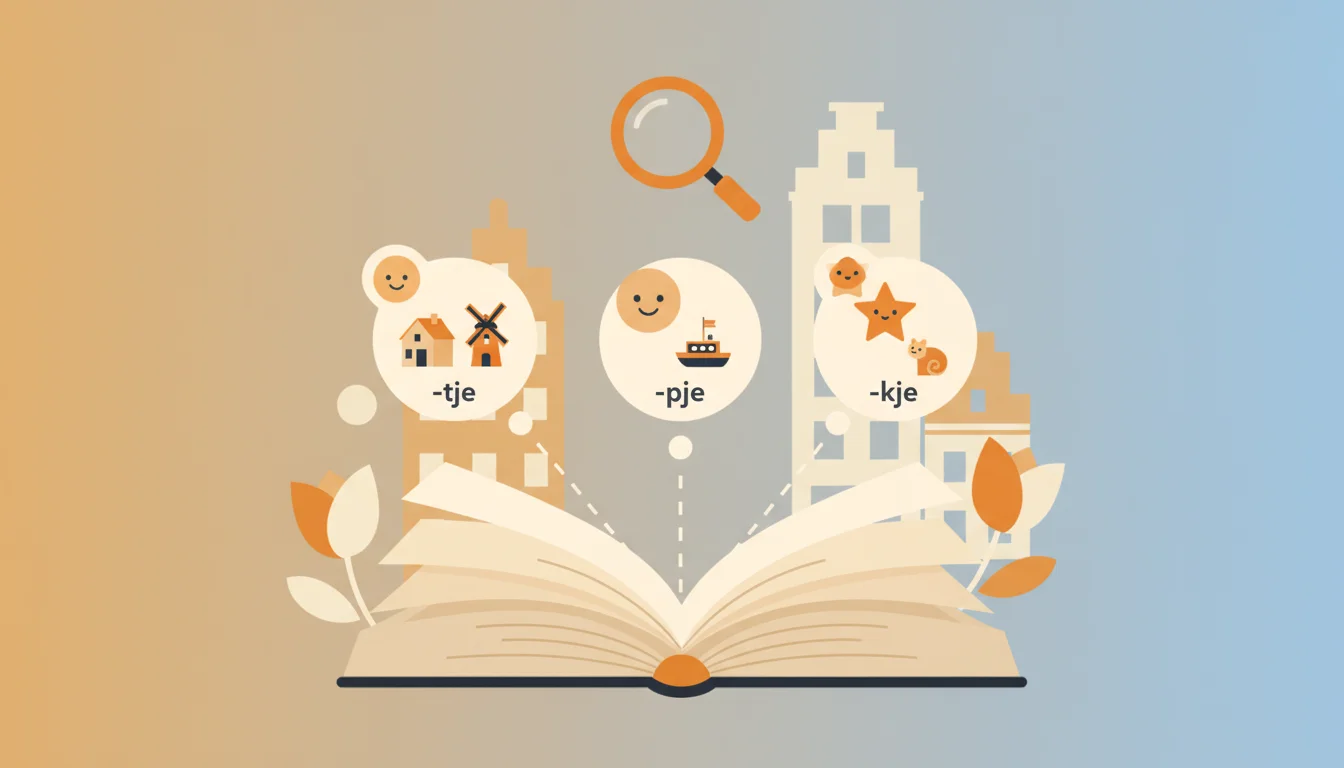
Mastering Dutch Diminutives: Guide to -tje, -pje, and -kje
Little Words, Big Impact: Understanding "Verkleinwoorden" If you have spent any time in the Netherlands, you have probably noticed a peculiar habit...
Read more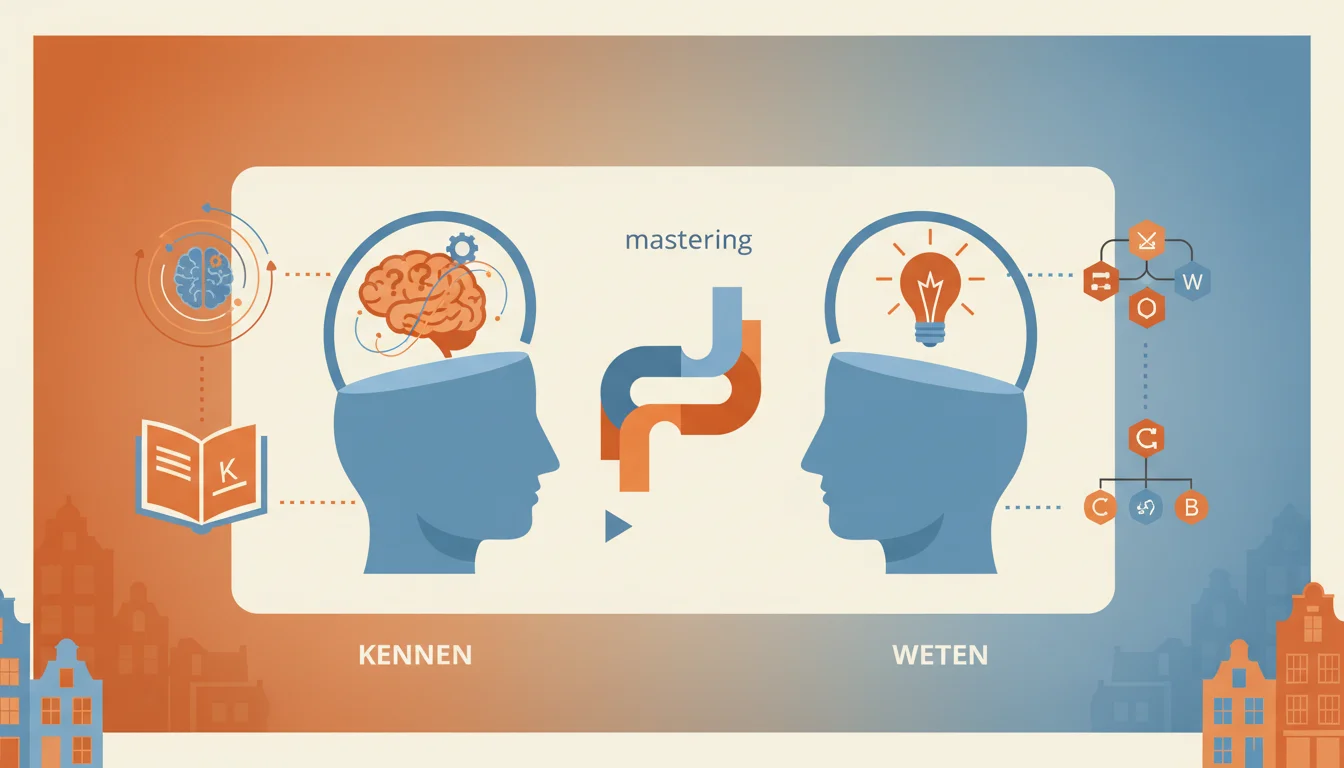
Imagine this scenario: You are at a networking event in Amsterdam. You spot someone familiar across the room. You turn to your Dutch colleague and confidently say, "Ik weet hem!"
Your colleague looks at you with a confused smile. Why? Because you just said something akin to "I have data about him" rather than "I know him."
For English speakers, the verb "to know" is a universal tool. You know a person, you know a fact, you know a place, and you know how to drive. In Dutch, however, this concept is split into two distinct verbs: kennen and weten.
Mixing these up is a rite of passage for every Dutch learner, from casual beginners to those studying for the inburgering exam. In this guide, we will break down the differences, give you a fool-proof decision framework, and help you sound more like a local.
Before we dive into the grammar rules, here is the simplest way to remember the difference:
If you can replace "know" with "am familiar with" in English, use kennen. If you can replace it with "have information about," use weten.
The verb kennen is used for direct objects. It implies a relationship or a familiarity derived from experience. You use it when you are talking about nouns (people, animals, places, or specific objects).
You always use kennen when talking about people. You cannot "weten" a person.
If you have visited a city, a street, or a restaurant and are familiar with it, you use kennen.
If you are familiar with a book, a song, or a movie, you use kennen.
The verb weten is cerebral. It is about facts, data, and mental realization. It is almost always used when "to know" is followed by a sub-clause starting with words like dat (that), wie (who), waar (where), wanneer (when), or hoe (how).
If your sentence contains a question word used as a conjunction, you need weten.
Note on the last example: You ask "Weet jij wie hij is?" (Do you know who he is? - asking for a name/fact) but "Ken jij hem?" (Do you know him personally?).
Still confused? Try these mental shortcuts to make the right choice instantly during conversation.
Can you shake hands with it? Can you physically visit it? If yes, use kennen.
(You can shake hands with a person; you can visit a city.)
Does the word "that" (dat) or a question word follow the verb? If yes, use weten.
(Ik weet dat..., Ik weet waar...)
Language wouldn't be fun without exceptions. Here are a few tricky scenarios where learners often stumble.
This is a classic debate. Usually, you say:
In practice, de weg weten is more commonly used when asking for directions.
Do you know Dutch? In English, we say "know." In Dutch, we usually use spreken (to speak) or kennen (to have knowledge of the language system).
Memorizing rules is one thing, but applying them in the heat of a conversation is another. Many learners freeze up trying to decide between kennen and weten, resulting in awkward pauses.
The best way to overcome this is through contextual practice. You need to hear these verbs used correctly in real sentences and practice using them yourself without the fear of judgment. For instance, you might find yourself using weten when discussing Dutch work contracts or other factual information.
This is where StroopTaal becomes your secret weapon. Unlike static flashcards, StroopTaal offers AI-powered personalized learning plans that adapt to your struggle points. You can engage in real-life Dutch conversation practice with AI, simulating scenarios like meeting new people (using kennen) or asking for train schedules (using weten).
If you make a mistake, the AI provides instant, gentle feedback, explaining why you should have used the other verb. It’s like having a patient Dutch tutor in your pocket 24/7.
| Feature | Kennen | Weten |
|---|---|---|
| Translation | To be familiar with | To know a fact |
| Used with | People, Places, Things | Sub-clauses, Facts |
| Key Triggers | Direct objects (Hem, Haar, Amsterdam) | Dat, Waar, Wie, Hoe, Wanneer |
Distinguishing between kennen and weten is a major milestone in learning Dutch. It marks the transition from translating word-for-word from English to actually thinking in Dutch. Remember: if it's a person or place, you kennen it. If it's a fact or information, you weten it.
Don't let the fear of making mistakes stop you from speaking! Download StroopTaal today to practice these verbs in interactive dialogue games and solidify your grammar skills on your way to Dutch fluency.
Share this article:
Little Words, Big Impact: Understanding "Verkleinwoorden" If you have spent any time in the Netherlands, you have probably noticed a peculiar habit...
Read moreMoving to the Netherlands comes with many exciting challenges, but few are as daily and daunting as the first trip to the local supermarket. Whether...
Read moreIf you have been learning Dutch for a while, you have likely encountered one of the language's most notorious features: the sentence that seems to...
Read more