Essential KNM Vocabulary: Key Words About Dutch Laws and Rights
Introduction to KNM and the Dutch Legal Framework If you are an expat living in the Netherlands or someone actively preparing for your integration...
Read more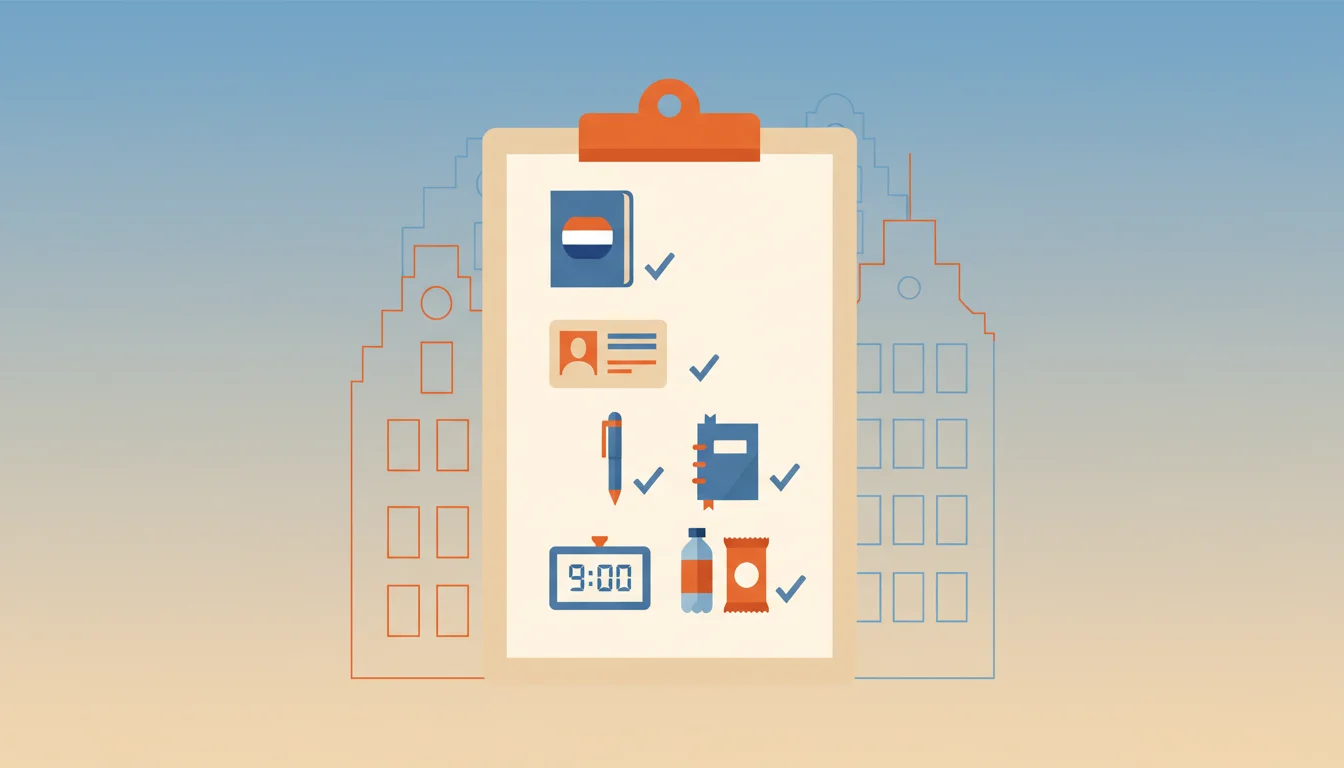
You have spent months navigating Dutch grammar, practicing your pronunciation, and familiarizing yourself with Dutch culture. The big day is finally approaching. Taking your inburgering (civic integration) exams can feel incredibly daunting, especially if you are not sure what to expect when you walk through the doors of the DUO testing center. But fear not—preparation is the ultimate antidote to test-day anxiety.
In 2026, the civic integration process has seen several updates, making it more important than ever to arrive at your exam location fully prepared, calm, and equipped with exactly what you need. Whether you are taking the Reading, Listening, Writing, Speaking, or Knowledge of Dutch Society (KNM) exam, knowing the logistical rules of test day allows you to reserve all your mental energy for the actual Dutch language.
In this comprehensive guide, we will walk you through the ultimate Inburgering Exam Checklist for 2026. From the absolute essentials you must carry in your bag to the items you should leave at home, we have got you covered. Let us make sure your test day goes as smoothly as a perfectly paved Dutch cycling path.
Before diving into the checklist, it is crucial to understand the context of the exams you are taking. With the upcoming transition to the B1 language requirement fully taking effect for many newcomers, the stakes feel higher than ever. The Dutch government wants to ensure that expats and migrants can participate fully in society, which means the exams are designed to test practical, real-world communication skills.
Because the exams are strictly regulated by DUO (Dienst Uitvoering Onderwijs), the rules on test day are uncompromising. Arriving late or forgetting a crucial document will result in you being turned away, losing your exam fee, and having to reschedule—which can delay your visa or naturalization process with the IND (Immigration and Naturalisation Service). Being meticulously prepared is not just a recommendation; it is a necessity.
A successful test day actually begins the night before. Scrambling to find your passport ten minutes before you need to catch the train is a guaranteed way to spike your cortisol levels and ruin your focus.
Lay out your clothes and pack your bag before you go to sleep. Keep it light. You will not be allowed to take your bag into the examination room anyway, so only bring what is necessary for the journey and the check-in process.
Public transport in the Netherlands is generally excellent, but unexpected delays (vertraging) happen. Check the NS app or 9292.nl the night before, and again when you wake up. Plan to arrive at the DUO testing location at least 30 minutes before your scheduled exam time. If you are driving, research parking options nearby, as DUO centers are often located in busy urban areas like Amsterdam, Rotterdam, Rijswijk, Zwolle, and Eindhoven.
Cramming vocabulary at 2:00 AM will not help you. Your brain needs sleep to consolidate memory and function optimally. If you have been balancing your job with inburgering exam prep, you might be tempted to use every last second to study. Resist the urge. Trust the preparation you have already done and aim for 7-8 hours of sleep.
When you walk into the DUO test center, the staff will ask you for two critical things. If you do not have them, you do not take the test. It is that simple.
This is the most important item on your checklist. DUO is incredibly strict about identification. You must bring an original, valid (not expired) ID. Copies or photos on your phone will absolutely not be accepted. Acceptable forms of ID include:
Pro Tip: Double-check the expiration date on your ID at least a month before your exam. If your residence permit is currently being renewed, you must bring your expired card along with the official extension letter from the IND, or a valid passport.
You will receive an invitation letter (oproepbrief) from DUO detailing the date, time, and location of your exam. While DUO staff can sometimes look you up in the system, having this letter physically printed or easily accessible on your phone makes the check-in process infinitely smoother. It also contains your candidate number, which you will need to log into the exam computer.
The DUO examination rooms are highly secure environments to prevent cheating. When you arrive, you will be assigned a locker to store your personal belongings. You are not allowed to bring the following items to your desk:
Knowing the logistical flow of the test center can significantly reduce your anxiety. Here is exactly what happens from the moment you walk through the doors:
Upon entering, you will be directed to a reception desk. Here, you will present your ID and your invitation letter. The staff member will verify your identity, check you off the list, and assign you a locker key.
You will proceed to the locker area to store everything except your ID and locker key. Take a deep breath here. This is the moment to leave your stress in the locker along with your phone.
You will wait in a designated seating area until your exam is called. Do not be intimidated by the silence or the nervous energy of other candidates. Use this time to do some light breathing exercises. If you want a quick mental warm-up before you lock your phone away, doing a quick 5-minute interactive dialogue game on the StroopTaal app while on the train is a great way to switch your brain into Dutch mode.
When it is time, an invigilator will call your group. You will show your ID again at the door of the computer room. You will be assigned a specific computer terminal. Sit down, adjust your chair, and put on the provided headphones if you are taking the Listening, Speaking, or KNM exams.
Each module of the inburgering exam has its own quirks. Here is a brief checklist of mental preparations for each:
You will be speaking into a microphone attached to your headset. The room will be full of other people also speaking Dutch at the same time. It can be loud and distracting. Checklist tip: Practice speaking Dutch with background noise at home. If you use StroopTaal's real-life Dutch conversation practice with AI, try doing it in a busy café to simulate the exam environment. Speak loudly, clearly, and do not let the person next to you break your concentration.
This is the only exam where you might be using a pen and paper (though the B1 exams are increasingly digitized, A2 still involves handwriting for many). DUO will provide the pen and the official exam paper. Checklist tip: Focus on legibility. If the examiner cannot read your handwriting, they cannot give you points. Keep your sentences simple and grammatically correct rather than trying to use overly complex structures you aren't confident in.
These are multiple-choice exams taken entirely on the computer. Checklist tip: Time management is your best friend here. Do not get stuck on a single difficult question. Make your best guess, flag the question using the computer system, and move on. You can return to it at the end if you have time.
This exam tests your understanding of Dutch culture, geography, and administrative processes. Checklist tip: Read the questions very carefully. Often, two answers will seem plausible, but one is the specifically "Dutch" way of handling a situation (for example, talking to your neighbor before calling the police about a noise complaint).
Beyond physical items, you need to bring the right mindset to the exam center. Test anxiety is a real phenomenon that can temporarily block your access to vocabulary you know perfectly well.
First, remember that failing a module is not the end of the world. You can retake individual modules without having to retake the ones you have already passed. Removing the "do or die" pressure can actually help you perform better.
Second, trust your training. If you have been utilizing a comprehensive overview of the civic integration process and studying consistently, the knowledge is in your brain. Apps like StroopTaal utilize vocabulary building with spaced repetition, which means the words you need are scientifically locked into your long-term memory. When you sit at that DUO computer, remind yourself that this is just another practice session.
If you feel panic rising during the test, look away from the screen. Close your eyes, take three deep breaths—inhaling for four seconds, holding for four, exhaling for four—and then look back at the screen with fresh eyes.
Once you complete your exam and submit your answers on the computer, you will quietly raise your hand or follow the on-screen instructions to leave the room. You will collect your belongings from your locker and head out.
Now comes the hardest part: waiting. For multiple-choice exams like Reading and Listening, results can sometimes be processed quickly, but officially, DUO states it can take up to 8 weeks to receive your results for any exam. For Writing and Speaking, which require human grading, it almost always takes the full 6 to 8 weeks. You will receive an email notifying you that a new message is available in your "Mijn DUO" portal.
Do not stress about the result while you wait. Celebrate the fact that you have completed a major milestone in your integration journey. Go buy yourself a stroopwafel or a slice of appeltaart—you have earned it!
Taking the inburgering exams in 2026 requires dedication, but test day itself does not have to be a nightmare. By following this checklist—packing your valid ID, leaving your phone in the locker, arriving early, and bringing a calm, focused mindset—you set yourself up for absolute success.
Remember that the goal of these exams is not to trick you; it is to ensure you can confidently navigate life in the Netherlands. If you want to walk into that DUO test center feeling completely prepared, consistent practice is key.
Ready to ace your Inburgering exams? Download the StroopTaal app today to access AI-powered personalized learning plans, pronunciation training with instant feedback, and specialized inburgering exam preparation. Start building your daily streak and turn your Dutch learning journey from a chore into a highly effective, gamified experience!
Share this article:
Introduction to KNM and the Dutch Legal Framework If you are an expat living in the Netherlands or someone actively preparing for your integration...
Read moreWelcome to the Dutch Labor Market Moving to the Netherlands is an exciting adventure filled with bicycles, stroopwafels, and picturesque canals....
Read moreConquer the Inburgering Spreekvaardigheid Exam with Confidence For many expats and newcomers in the Netherlands, the speaking portion of the civic...
Read more