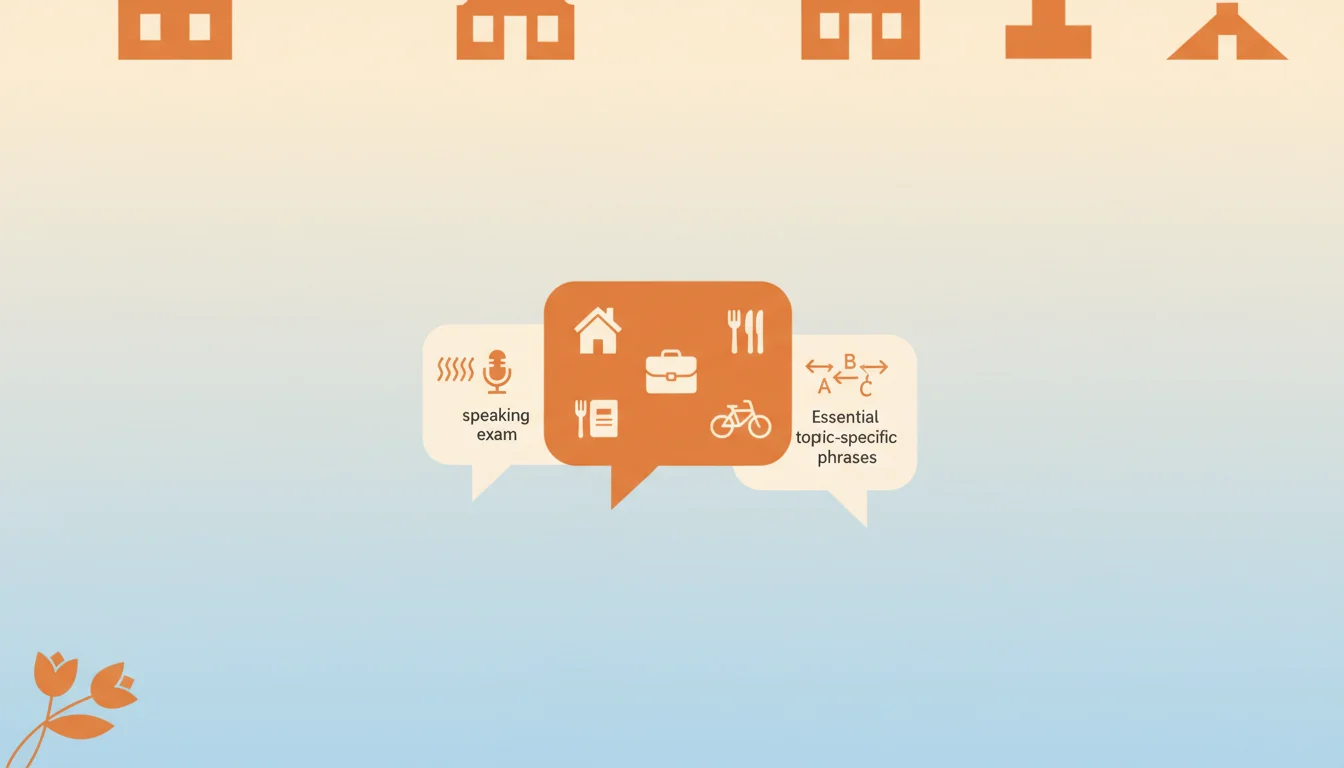
Inburgering Speaking Exam: Essential Topic-Specific Phrases
Conquer the Inburgering Spreekvaardigheid Exam with Confidence For many expats and newcomers in the Netherlands, the speaking portion of the civic...
Read more
This article was drafted by AI and edited by a person before it was published.
AI can get things wrong. For anything official, check the source it points to.
AI-generated image
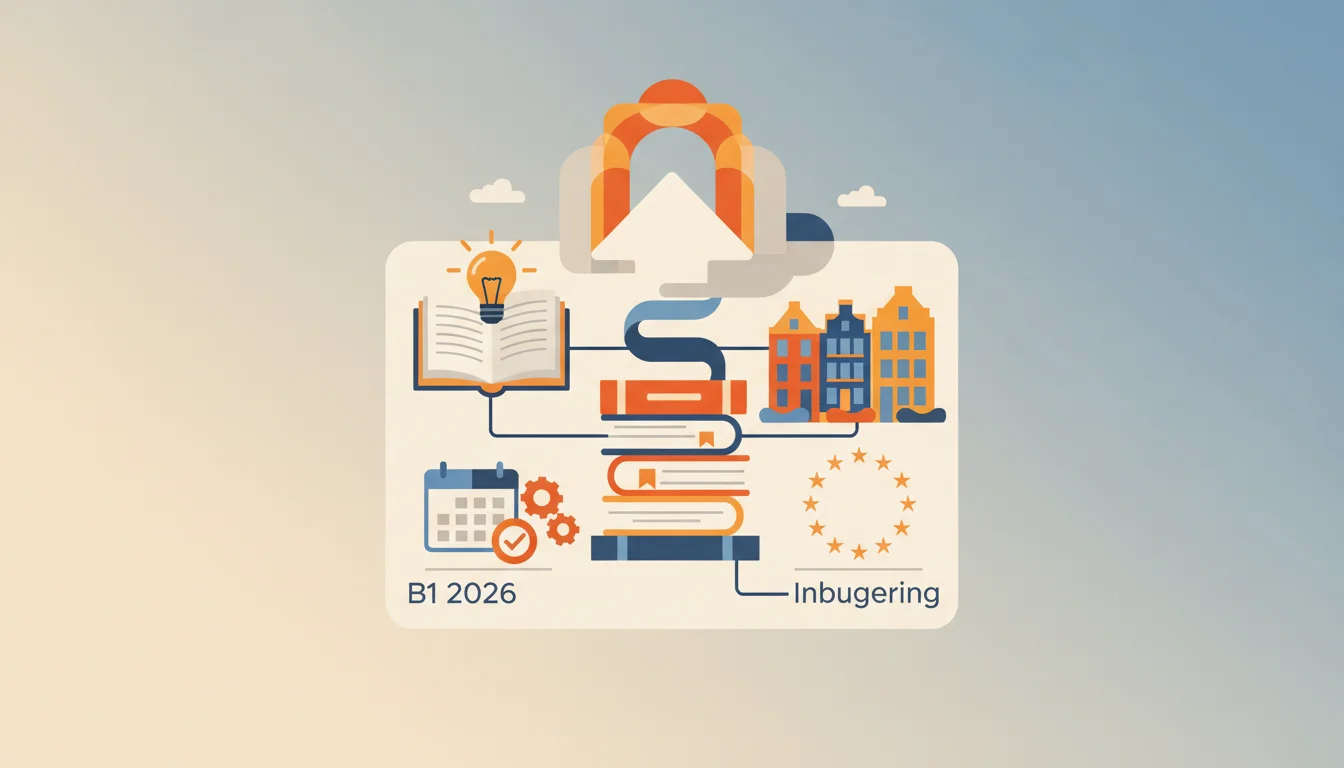
The Dutch integration process is evolving, and if you are planning to build a long-term life in the Netherlands, you need to be prepared. For years, expats and newcomers could pass the Dutch civic integration exams (Inburgeringsexamen) by demonstrating an A2 level of Dutch proficiency. However, under the new Civic Integration Act (Wet inburgering 2021), the standard language requirement has shifted to the B1 level of the Common European Framework of Reference for Languages (CEFR). By 2026, this transition will be fully realized for the vast majority of candidates seeking permanent residency or citizenship.
Moving from A2 to B1 is a significant leap. While A2 allows you to handle basic, predictable daily interactions, B1 requires you to express opinions, understand the main points of complex texts, and navigate unexpected situations. It is the threshold of true independent language use. In this comprehensive guide, we will break down exactly what the B1 transition means, what the exams entail, and how you can strategically prepare to pass with flying colors.
The Dutch government introduced the requirement for B1 Dutch to ensure that newcomers can participate more fully in Dutch society and the labor market. The rationale is simple: an A2 level is often not enough to independently navigate the Dutch healthcare system, understand official letters from the municipality, or communicate effectively in a professional workplace. The B1 level is considered the minimum standard for self-reliance in the Netherlands.
If your integration requirement started under the new law (typically if you registered in the Netherlands after January 1, 2022), the B1 requirement applies to you. By 2026, the transition period will have stabilized, and the B1 exams will be the standard benchmark. If you are aiming for permanent residency or a Dutch passport, the Immigration and Naturalisation Service (IND) and the official DUO website explicitly outline these language proficiency mandates.
Before you begin stressing over the increased difficulty, it is highly recommended to start by checking if you qualify for an exemption. Some individuals may be exempt based on previous diplomas or specific personal circumstances. However, for the majority, embracing the B1 challenge is the most direct path to securing your future in the Netherlands.
To prepare effectively, you first need to understand the target. At the A2 level, you can introduce yourself, order food, and talk about your weekend in simple terms. At the B1 level, you become an "independent user" of the language. According to the CEFR guidelines, a B1 Dutch speaker can:
In practical Dutch terms, this means you can call your internet provider to explain a complex outage, negotiate a minor disagreement with a colleague, understand the evening news broadcast (NOS Journaal), and write a polite, structured email to your child's teacher.
Preparing for the B1 Inburgering exams requires a structured approach. You cannot simply memorize a few vocabulary lists; you need to internalize the language. Here is a step-by-step strategy to guide your studies for a comprehensive preparation for the 2026 exams.
Consistency is far more important than intensity. Studying for 30 minutes every day is vastly superior to cramming for four hours on a Sunday. You need to expose your brain to Dutch daily to build the neural pathways required for B1 fluency.
Many candidates struggle to find the time to study. If you fall into this category, we highly recommend reading our tips on balancing full-time work and exam prep. Integrate Dutch into your daily life: change your phone's language to Dutch, listen to Dutch podcasts during your commute, and watch Dutch television with Dutch subtitles.
Grammar at the B1 level becomes more nuanced. You will need to move beyond simple present and past tenses. Key B1 grammar topics you must master include:
To master these tricky rules without getting overwhelmed, StroopTaal's AI-powered personalized learning plans guide you seamlessly from A0 all the way to C1. The app breaks down complex B1 grammar into digestible, interactive lessons, ensuring you understand the mechanics of the language before you are tested on them.
The jump from A2 to B1 requires a massive expansion of your vocabulary. While A2 requires roughly 1,500 to 2,000 words, B1 demands a working knowledge of around 4,000 to 5,000 words. You will need vocabulary related to professional environments, healthcare, education, politics, and the environment.
Using flashcards with spaced repetition is the most scientifically proven way to retain this amount of information. StroopTaal features built-in vocabulary building with spaced repetition, ensuring that you review words exactly when you are about to forget them, committing them permanently to your long-term memory. Additionally, our De/Het article mastery games will ensure you never guess the gender of a Dutch noun again—a crucial skill for speaking and writing accurately at the B1 level.
The Inburgering exam consists of several components. At the B1 level, the expectations for each are significantly higher than at A2. Let's break down how to conquer each section.
The B1 reading exam tests your ability to comprehend detailed texts, such as newspaper articles, opinion pieces, and formal letters. You will be asked to identify the main idea, locate specific information, and understand the author's tone or intention. To prepare, start reading free Dutch news sites like NOS.nl or NU.nl daily. Focus on understanding the context rather than translating every single word.
The listening exam will feature longer audio clips, faster speech, and more complex vocabulary. You might listen to an interview with an expert, a radio documentary, or a detailed public announcement. The key to passing is active listening. Practice summarizing what you hear. Podcasts like "Echt Gebeurd" or "Zeg Het In Het Nederlands" are excellent resources for B1 learners.
For the writing exam, you will need to produce coherent texts, such as a formal email to a municipality or a short essay expressing your opinion on a societal issue. You will be graded on your grammar, vocabulary, spelling, and how well you address the prompt. Practice writing daily, even if it is just a short diary entry. Focus on using linking words (echter, daarom, ten slotte) to structure your arguments logically.
The speaking exam is often the most anxiety-inducing component. At B1, you are expected to hold a conversation, defend an opinion, and react appropriately to unexpected questions. Fluency and pronunciation are key grading criteria.
Practicing speaking can be intimidating, but tools like StroopTaal offer real-life Dutch conversation practice with AI, allowing you to build confidence in a zero-pressure environment. The app's pronunciation training with instant feedback tells you what to improve, so you can work on those tricky Dutch vowels before you step into the exam room.
The KNM (Kennis van de Nederlandse Maatschappij) exam tests your understanding of Dutch history, geography, politics, and social norms. While the content is similar to the A2 exam, the questions and scenarios are presented in B1 Dutch. This means the exam is as much a test of your reading comprehension as it is of your cultural knowledge. Studying cultural lessons about Dutch life and customs will give you the context needed to pass this section effortlessly.
It is important to note that the Dutch government recognizes that achieving a B1 level is not feasible for everyone. Under the Wet inburgering 2021, municipalities guide newcomers through different learning pathways based on their capabilities.
If you are an expat or highly skilled migrant applying for a permanent residence permit independently, you are generally expected to meet the B1 requirement. Always consult with DUO or your local municipality to confirm your specific obligations.
The transition to the B1 Inburgering requirement in 2026 marks a shift towards deeper, more meaningful integration into Dutch society. While the leap from A2 to B1 requires dedication, consistent practice, and a strategic approach, it is entirely achievable. By mastering complex grammar, expanding your vocabulary, and immersing yourself in the language, you will not only pass the exams but also unlock a richer, more independent life in the Netherlands.
Ready to start your B1 journey? Download StroopTaal today. With our interactive dialogue games, daily streaks, and AI-driven personalized learning plans, mastering B1 Dutch has never been more engaging or effective. Start building your Dutch confidence now and prepare for your Inburgering exams step by step!
Share this article:
Conquer the Inburgering Spreekvaardigheid Exam with Confidence For many expats and newcomers in the Netherlands, the speaking portion of the civic...
Read moreConquering the Dutch Leesvaardigheid Exam For many expats and newcomers in the Netherlands, the Leesvaardigheid (reading comprehension) portion of...
Read moreNavigating the Maze of Dutch Civic Integration Moving to the Netherlands is an exciting adventure filled with bicycles, stroopwafels, and picturesque...
Read more