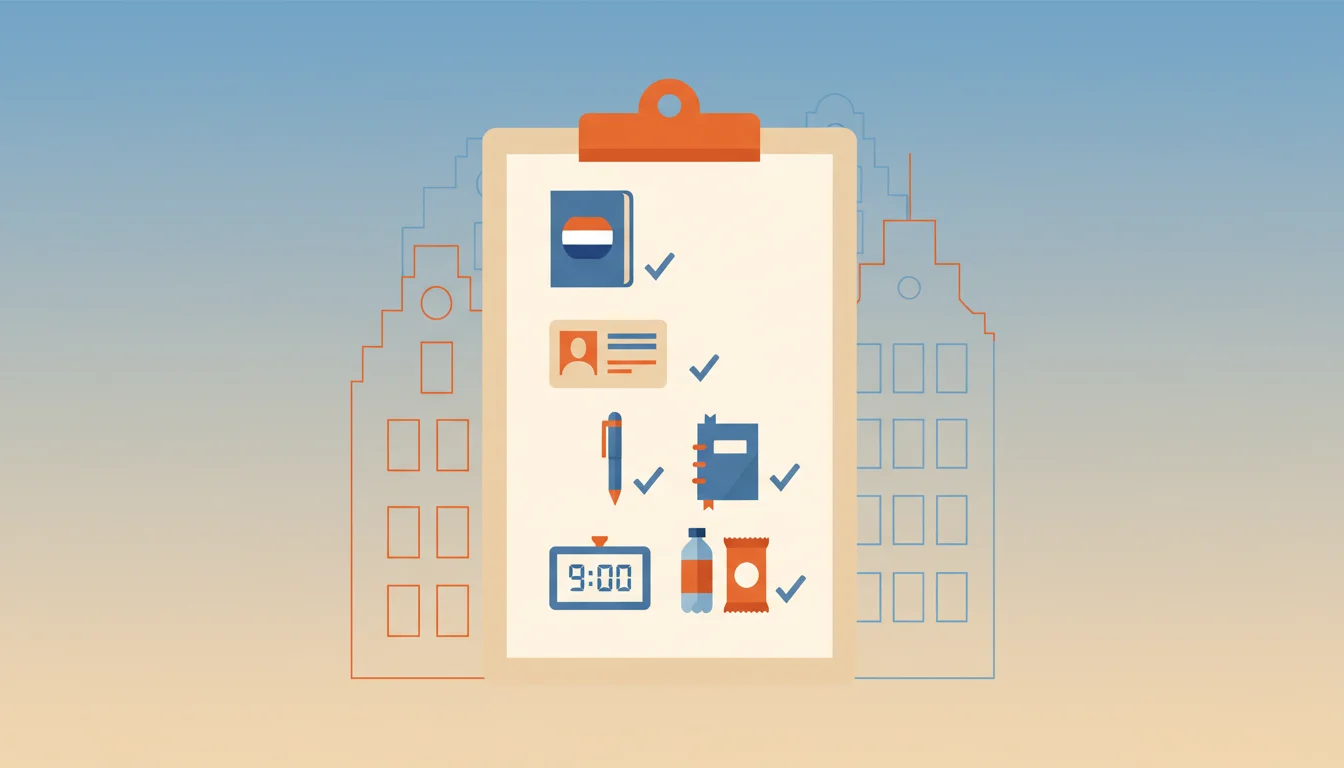
Inburgering Exam Checklist 2026: What to Bring on Test Day
The Ultimate 2026 Inburgering Exam Day Guide You have spent months navigating Dutch grammar, practicing your pronunciation, and familiarizing...
Read more
This article was drafted by AI and edited by a person before it was published.
AI can get things wrong. For anything official, check the source it points to.
AI-generated image
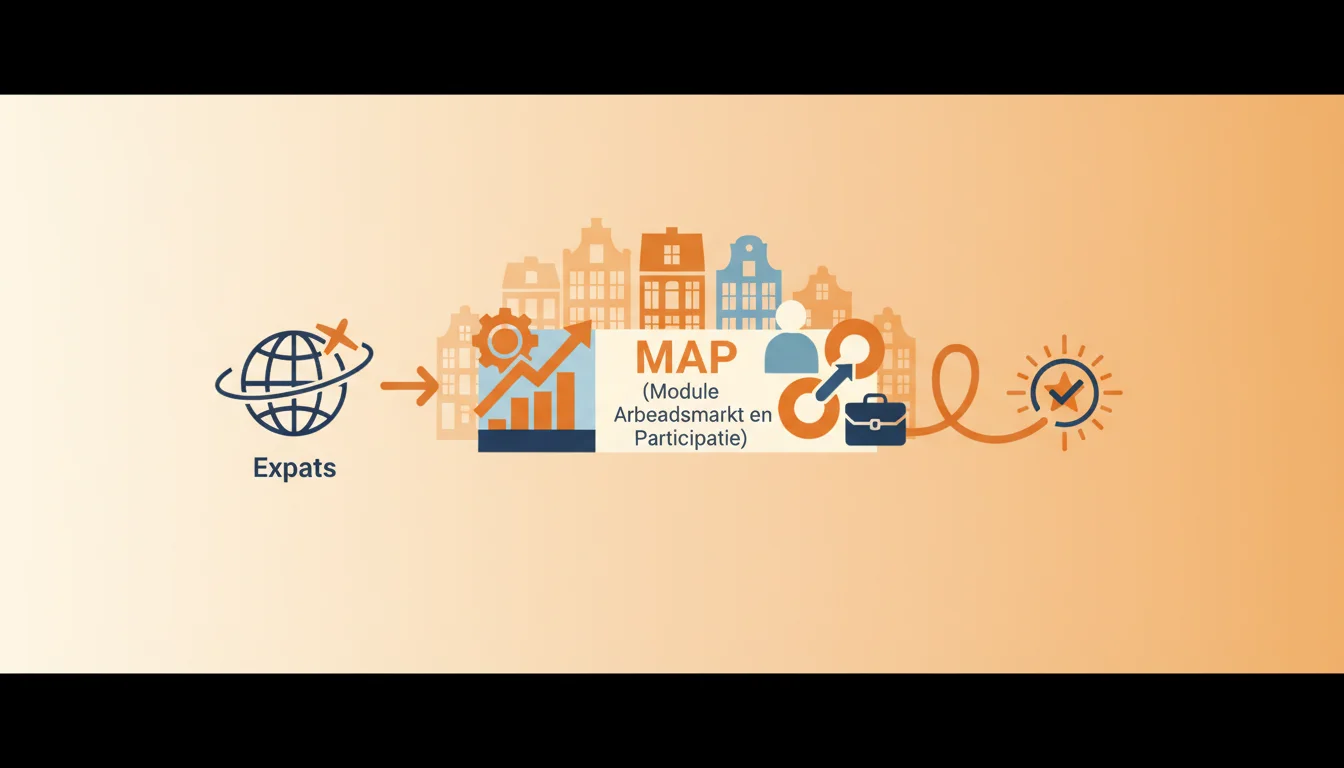
Moving to the Netherlands is an exciting adventure filled with bicycles, stroopwafels, and picturesque canals. However, settling in also involves navigating the Dutch integration process, known as inburgering. If you fall under the new integration law (Wet inburgering 2021), you will likely encounter a specific requirement: the Module Arbeidsmarkt en Participatie (MAP).
For many expats, the MAP can seem like a daunting bureaucratic hurdle. What exactly is it? How does it differ from the old ONA (Orientation on the Dutch Labor Market) module? And most importantly, how do you successfully complete it while juggling your daily life? In this comprehensive guide, we will walk you through everything you need to know about the MAP, from understanding its core components to practical tips for passing with flying colors.
The Module Arbeidsmarkt en Participatie, which translates to the Labor Market and Participation Module, is a mandatory component of the Dutch civic integration process under the Wet inburgering 2021. Its primary goal is to prepare newcomers for the Dutch labor market and encourage active participation in Dutch society.
Unlike traditional language exams that test your grammar and vocabulary, the MAP is highly practical. It focuses on helping you understand Dutch work culture, discover your own skills and competencies, and learn the practical steps of finding and securing a job in the Netherlands. Whether you are an experienced professional or looking for your first job, the MAP is designed to give you a solid foundation for building your career in the Netherlands.
If you have spoken to expats who integrated before 2022, they might have mentioned the ONA (Oriëntatie op de Nederlandse Arbeidsmarkt) exam. The MAP replaced ONA for anyone who started their integration under the 2021 law. The biggest difference is the shift in responsibility. Under the old system, ONA was managed by DUO (Dienst Uitvoering Onderwijs). Now, the MAP is organized and evaluated directly by your local municipality (gemeente).
This localized approach means that your municipality can offer more personalized guidance tailored to the local job market. It also means the exact process and support offered might vary slightly depending on which city you live in.
The MAP is a requirement for most people who are obliged to integrate under the Wet inburgering 2021. This includes asylum migrants, family migrants, and certain other categories of newcomers. The module applies regardless of which learning route you are taking (the B1 route, the Education route, or the Z-route).
However, not everyone has to complete the MAP. If you are already employed or running your own business in the Netherlands, you might be eligible for an exemption. Generally, if you have worked in the Netherlands for a specific number of hours over the past year, your municipality may wave this requirement. Before you start stressing about adding another task to your plate, it is highly recommended to check if you qualify for an inburgering exemption based on your current employment status.
The Module Arbeidsmarkt en Participatie is not a standard sit-down exam. Instead, it is a continuous process that involves practical experience, reflection, and an interview. The module consists of three main pillars:
During this phase, you will explore the Dutch labor market and map out your own career goals. You will build a portfolio that typically includes:
This is the "Participatie" part of the MAP. You are required to complete at least 40 hours of practical participation in Dutch society. The goal is to get you out of the classroom and into real-world environments. Activities that count towards these 40 hours include:
Once you have completed your portfolio and your 40 hours of participation, you will have a final interview with a representative from your municipality. This is not a strict pass/fail test in the traditional sense, but rather a conversation to verify that you have actively engaged with the material, understand the labor market, and have a clear vision for your future in the Netherlands.
Feeling overwhelmed? Don't be. Breaking the MAP down into manageable steps makes the process much smoother. Here is your step-by-step roadmap to success:
Your MAP journey begins with the PIP (Persoonlijk Inburgeringsplan or Personal Integration Plan). During your intake interview with the municipality, your case manager will assess your current situation, education level, and work experience. Together, you will outline how you will tackle the MAP. Make sure to communicate your career goals clearly during this meeting!
Start looking for your 40 hours of practical participation early. Finding a suitable volunteer position or internship can take time. Websites like Vrijwilligerswerk.nl or local community boards are great places to start. If you are struggling with balancing work and your integration exam preparation, speak to your municipality. They often have partnerships with local businesses that offer flexible participation opportunities.
A Dutch CV might look different from what you are used to in your home country. In the Netherlands, CVs are typically concise (1-2 pages), highly structured, and often include a short personal profile. Dutch employers value transparency, so be clear about your language levels and integration status. Your municipality will provide templates and guidance, but you can also find excellent resources on the Dutch government integration portal.
The final interview is your chance to shine. You will need to explain your portfolio, discuss what you learned during your 40 participation hours, and demonstrate a basic understanding of Dutch workplace norms. While your municipality will guide you, it is crucial to practice talking about your career in Dutch.
While the MAP is about labor market orientation, your Dutch language skills play a massive role in your success. Understanding job descriptions, communicating with colleagues, and writing a cover letter all require a solid grasp of Dutch vocabulary and grammar.
This is where StroopTaal becomes your best friend. Our AI-powered language learning app is specifically designed to help expats conquer the Dutch language with confidence. When preparing for the MAP, you can utilize StroopTaal's real-life Dutch conversation practice with AI to simulate job interviews, practice networking introductions, and build your confidence before the real final interview with your municipality.
Furthermore, StroopTaal's vocabulary building feature uses spaced repetition to help you memorize essential workplace terminology—from arbeidsovereenkomst (employment contract) to vakantiegeld (holiday allowance). By integrating your language learning with your MAP preparation, you save time and learn the exact Dutch you need to succeed.
A significant part of the MAP is proving that you understand how things work in a Dutch office. The Dutch work culture is unique and often surprises expats. Here are a few key concepts you should understand and mention during your MAP process:
To ensure you pass the MAP without unnecessary stress, keep these practical tips in mind:
1. Keep a Detailed Logbook: Document your 40 hours of participation meticulously. Have your supervisor or contact person sign off on your hours regularly so you aren't scrambling at the end.
2. Treat It Like Real Networking: Don't just do the 40 hours to tick a box. Use this time to genuinely network. Many expats have turned their mandatory participation hours into paid job offers simply by showing enthusiasm and building relationships.
3. Practice Your Dutch: Even if your Dutch isn't perfect, making an effort during your participation hours and the final interview goes a long way. Use StroopTaal's pronunciation training with instant feedback to work on sounding clear and understandable when discussing your career goals.
4. Ask for Help: Your municipality wants you to succeed. If you are struggling to find a participation placement or don't understand a portfolio assignment, reach out to your case manager. They are there to facilitate your integration, not just test you.
The Module Arbeidsmarkt en Participatie (MAP) might seem like a lot of work initially, but it is genuinely one of the most useful components of the Dutch integration process. By forcing you to build a Dutch CV, understand the local work culture, and gain practical experience, the MAP sets you up for long-term career success in the Netherlands.
Remember that integration is a marathon, not a sprint. Take it one step at a time, lean on your municipality for support, and use modern tools to accelerate your learning. If you want to ensure you are fully prepared for all aspects of your integration journey, be sure to read our comprehensive guide to the inburgering exams.
Ready to ace your MAP interview and speak Dutch with confidence? Download the StroopTaal app today and start practicing real-world professional dialogues with our AI tutors. Your dream job in the Netherlands is waiting!
Share this article:
The Ultimate 2026 Inburgering Exam Day Guide You have spent months navigating Dutch grammar, practicing your pronunciation, and familiarizing...
Read moreConquer the Inburgering Spreekvaardigheid Exam with Confidence For many expats and newcomers in the Netherlands, the speaking portion of the civic...
Read moreThe Dutch integration process is evolving, and if you are planning to build a long-term life in the Netherlands, you need to be prepared. For years,...
Read more