Understanding Dutch Employee Rights: Labor Laws for Expats
Understanding Dutch Employee Rights: Key Labor Laws for International Workers Moving to the Netherlands is exciting, but understanding your rights as...
Read more
This article was drafted by AI and edited by a person before it was published.
AI can get things wrong. For anything official, check the source it points to.
AI-generated image
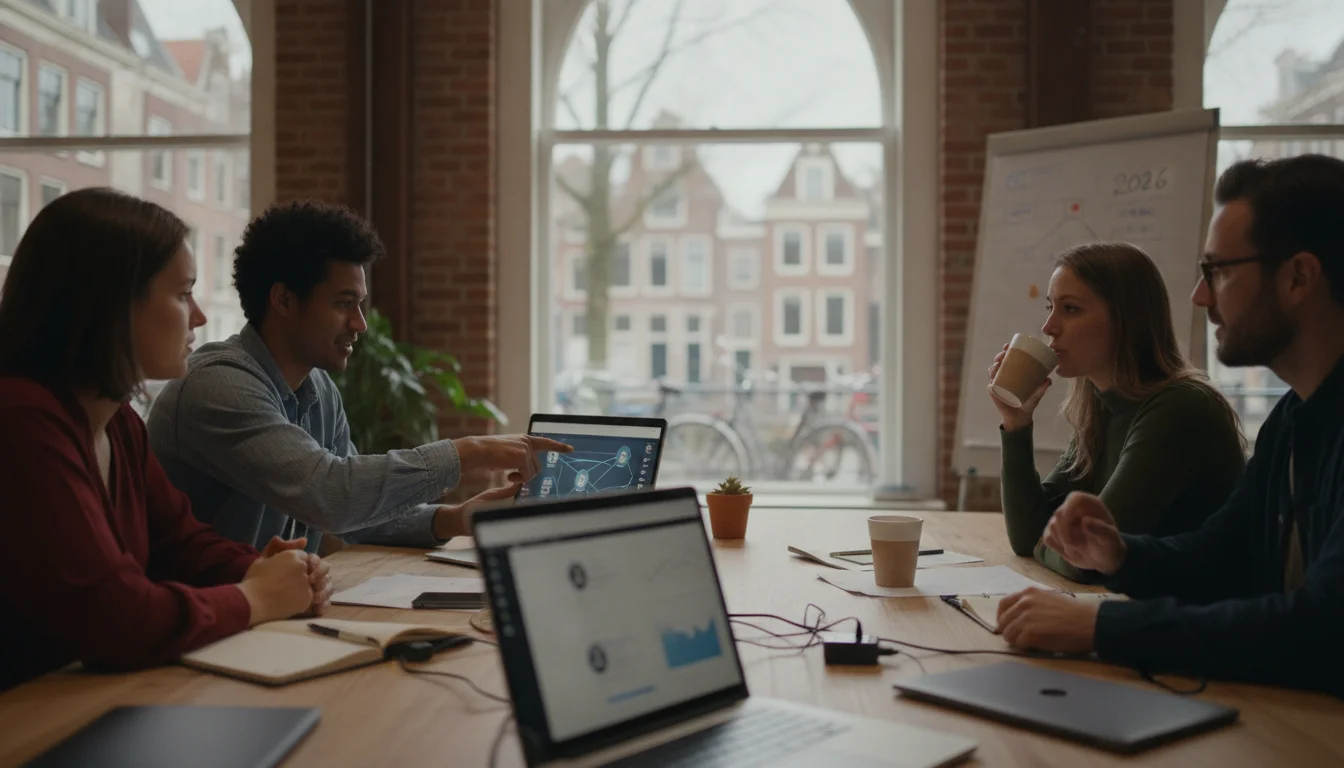
The Netherlands has long been established as one of Europe's premier technology hubs. As we navigate 2026, the Dutch tech ecosystem has evolved into a highly sophisticated market. Fueled by pioneering developments in Artificial Intelligence (AI), green energy technology, semiconductors, and software-as-a-service (SaaS), cities like Amsterdam, Eindhoven, Utrecht, and Rotterdam continue to attract top-tier global talent. However, the job market has also become more competitive and nuanced than ever before.
For expats, securing a rewarding role in this dynamic environment requires more than just submitting a generic resume on LinkedIn. It demands a localized approach, a deep understanding of Dutch corporate culture, strategic networking, and a commitment to integrating into the local community. Whether you are a software engineer, product manager, data scientist, or tech marketer, this comprehensive guide will equip you with the ultimate job search strategies to stand out and thrive in the Dutch tech industry in 2026.
To launch a successful job search, you must first target the right geographical and industrial sectors within the country. The Netherlands operates on a highly decentralized model, with different regions specializing in distinct areas of technology:
When planning your move or job transition, it is also crucial to stay informed about local economic incentives and financial regulations. For instance, understanding the latest updates on the Dutch 30% ruling changes can significantly impact your financial planning and salary negotiations with potential employers. Additionally, ensure you verify visa requirements and sponsorship capabilities of potential employers via the official Immigration and Naturalisation Service (IND) registry.
Dutch recruiters appreciate efficiency, clarity, and honesty. The 'hype' and exaggerated buzzwords often found in US-style resumes do not translate well to the Dutch market. To make a lasting impression, optimize your CV using these localized guidelines:
Limit your CV to two pages. Use clean formatting with clear headings, bullet points, and a reverse-chronological order. Start with a brief, honest personal profile (3-4 sentences) outlining who you are, your core technical strengths, and what you want to achieve in your next role.
Instead of merely listing your responsibilities, focus on your concrete achievements. Use metrics to demonstrate impact. For example, write: 'Optimized database queries, reducing latency by 35% and saving €12,000 in monthly cloud infrastructure costs' rather than 'Responsible for database maintenance.'
One of the first questions a Dutch recruiter will ask is whether you require visa sponsorship. Save time by explicitly stating your status at the top of your CV (e.g., 'EU Citizen', 'Highly Skilled Migrant Visa Eligible', or 'Hold valid search year visa').
Ensure your LinkedIn location is set to the Dutch city you are targeting (or 'Netherlands' generally). Use highly specific keywords in your headline and skills section (e.g., 'React Developer | TypeScript | AWS' rather than 'Software Engineer looking for new opportunities'). Recruiters use Boolean search strings daily, and having the right technical keywords in your profile is key to being discovered.
In the Netherlands, a massive portion of professional tech roles are filled through warm introductions and internal referrals. The Dutch are famous for their egalitarian, flat organizational structures, which makes them incredibly accessible. This accessibility has birthed the famous 'koffie drinken' (coffee drinking) culture.
Do not hesitate to reach out to engineering managers, product leads, or fellow expats working at your target companies. Send a polite, low-pressure message on LinkedIn asking for a brief, 15-minute virtual or physical coffee chat. Frame your request around curiosity and learning, not an immediate ask for a job. You might say:
'Hi [Name], I really admire the work your team is doing on [Project/Product] at [Company]. As a fellow DevOps engineer newly arrived in Amsterdam, I would love to buy you a quick coffee to learn more about the local tech landscape and your journey. Would you be open to a 15-minute chat next week?'
To maximize your chances of building a robust professional circle, check out our comprehensive guide on networking for expats in the Netherlands. Building these organic relationships often leads to 'hidden' job opportunities before they are ever posted on public boards.
It is a well-known fact that the Dutch tech industry operates predominantly in English. Companies like Booking.com and Adyen have English as their official corporate language. However, relying solely on English is a missed opportunity that limits your long-term career growth, cultural integration, and competitive edge.
While you can easily survive in the Netherlands without speaking a word of Dutch, learning the local language signals respect, commitment, and adaptability to local employers. It transforms how you are perceived during informal company gatherings, lunch breaks, and client-facing meetings. Furthermore, as the tech market matures in 2026, many mid-to-large-scale Dutch enterprises and consultancy firms are prioritizing bilingual candidates who can bridge the gap between international development teams and local Dutch stakeholders.
This is where the StroopTaal app becomes an invaluable asset in your job-hunting toolkit. Instead of spending hours memorizing dry grammar tables, StroopTaal offers AI-powered personalized learning plans tailored specifically to your professional goals. You can engage in real-life Dutch conversation practice with AI, focusing on real-world business scenarios, and build your confidence using interactive dialogue games. By dedicating just 10-15 minutes a day, you can steadily build the vocabulary needed to navigate the office environment.
When you secure an interview, demonstrating even a basic command of the language can leave an unforgettable impression. Be sure to review these essential Dutch phrases for job interviews to help you charm your interviewers and showcase your cultural integration efforts from day one.
The interview process in the Dutch tech sector is highly structured, collaborative, and focused on cultural alignment. Typically, the process consists of four main stages:
During these stages, keep in mind that the Dutch highly respect honesty and directness. If you do not know the answer to a technical question, do not try to bluff your way through it. Admit it openly, explain how you would go about finding the solution, and invite feedback. This transparency builds trust, which is the foundation of any successful Dutch professional relationship.
Additionally, do not be afraid to ask questions about the company's approach to employee well-being. The Dutch are global pioneers in promoting a healthy lifestyle, and discussing structural benefits like thriving in a 36-hour workweek is entirely normal and respected during the final stages of negotiation.
Landing your dream tech role in the Netherlands in 2026 requires a balanced approach of technical excellence, cultural adaptation, and strategic outreach. By tailoring your CV for the local market, engaging in active networking, understanding the regional tech hubs, and taking proactive steps to learn the Dutch language, you position yourself as a highly desirable, well-rounded candidate.
Are you ready to elevate your job search and stand out from the competition? Start your language-learning journey today with StroopTaal. Download the app to access personalized AI lessons, master professional Dutch vocabulary, and open doors to incredible career opportunities in the Dutch tech industry. Success is just a conversation away!
Share this article:
Understanding Dutch Employee Rights: Key Labor Laws for International Workers Moving to the Netherlands is exciting, but understanding your rights as...
Read moreMoving to a new country brings a whirlwind of adjustments: finding a home, adapting to a new work culture, and learning a complex language. But when...
Read moreDemystifying the Dutch Higher Education System Welcome to the Netherlands—a country famous for its flat landscapes, efficient cycling...
Read more