Pass the 2026 Inburgering Listening Exam: Top Audio Resources
Conquering the Inburgering Listening Exam in 2026 Are you dreading the listening section of your upcoming Dutch integration exams? You are certainly...
Read more
This article was drafted by AI and edited by a person before it was published.
AI can get things wrong. For anything official, check the source it points to.
AI-generated image
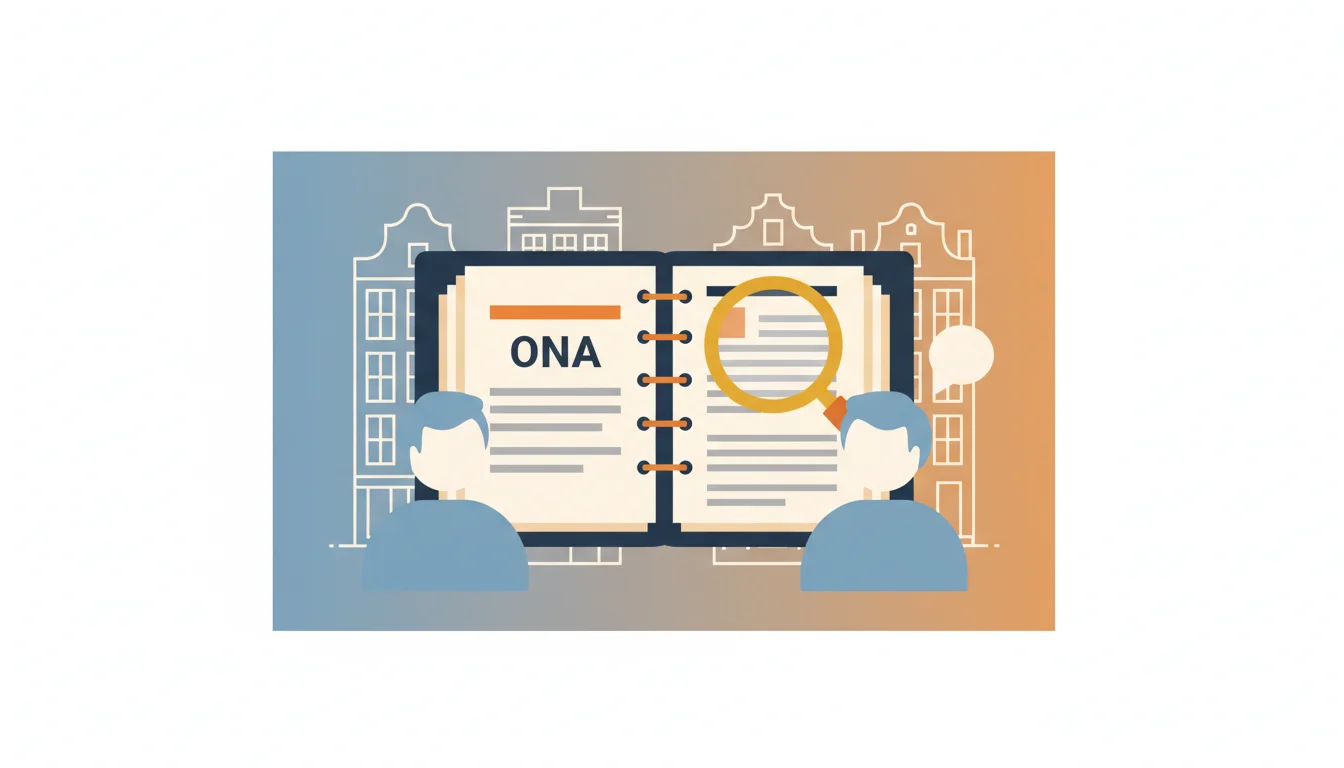
Welcome to the Netherlands! If you are an expat or migrant navigating the Dutch civic integration process (inburgering), you have likely encountered the acronym ONA. Standing for Oriëntatie op de Nederlandse Arbeidsmarkt (Orientation on the Dutch Labour Market), this module is designed to help you understand the Dutch working culture and find employment that matches your skills.
For those falling under the 2013 integration law, the ONA exam typically consists of two main components: creating a comprehensive portfolio of Result Cards (Resultaatkaarten) and completing a final interview with examiners from DUO (Dienst Uitvoering Onderwijs). While compiling the portfolio is a significant task, many candidates find the final interview to be the most nerve-wracking part of the process.
The good news? Your portfolio is essentially the cheat sheet for your interview. The examiners will base their questions entirely on the information you provided in your Result Cards. In this comprehensive guide, we will explore exactly how to use your ONA portfolio to prepare for your integration interview, ensuring you walk into the exam room with confidence.
Before you can prepare for the interview, you must deeply understand your own portfolio. The ONA portfolio consists of eight specific Result Cards. During your 40-minute interview, the examiners will ask you to elaborate on the choices, research, and plans you documented in these cards.
Here is a breakdown of the eight cards and how to use them as your primary study material:
This card explores your professional background and the types of jobs you are interested in pursuing in the Netherlands. You likely listed a primary desired profession and a few alternatives.
How to use it for prep: The examiners want to see that you are realistic. Practice explaining why you chose your primary profession. If you were an engineer in your home country but chose to pursue IT support in the Netherlands, be prepared to explain that transition. If you're managing this process independently and looking for cost-effective ways to study, you might want to check out our tips for self-studying for the inburgering exams on a budget.
Here, you dive deep into your chosen profession, detailing the daily tasks, required working hours, and physical demands.
How to use it for prep: Build a specialized vocabulary list. If you want to be a nurse (verpleegkundige), ensure you know the Dutch words for shifts (wisseldiensten), patients (patiënten), and care (zorg). Memorize the specific tasks you wrote down, as examiners will ask, "What does a typical day look like in this job?"
This card highlights your strengths and weaknesses regarding your desired profession.
How to use it for prep: This is a classic job interview scenario. You must be able to name two strong points and two areas for improvement in Dutch. More importantly, practice giving real-life examples of these traits. Don't just say "I am punctual" (Ik ben punctueel); say "I always arrive 10 minutes early to prepare for my shift."
This section covers your educational background and whether your foreign diplomas have been evaluated by IDW (Internationale Diplomawaardering).
How to use it for prep: Be ready to explain the Dutch equivalent of your highest degree (e.g., MBO, HBO, or WO). If your diploma isn't recognized, practice explaining your plan to either study further or gain experience through internships (stages).
Finding a job in the Netherlands relies heavily on networking. This card details how you plan to use contacts to find work.
How to use it for prep: Examiners love to ask how you will expand your network. Practice talking about LinkedIn, attending industry events, or asking friends and neighbors. Know the difference between a formal and informal network in Dutch.
This card requires you to find real, current job vacancies and evaluate if you meet the requirements.
How to use it for prep: Review the specific vacancies you included. The examiner might ask, "You applied for this role at Company X. Why were you a good fit?" Be prepared to discuss the application process, writing a motivation letter (motivatiebrief), and creating a Dutch CV.
Dutch work culture is unique—it is direct, egalitarian, and values work-life balance.
How to use it for prep: You must be able to compare the work culture in your home country to the Netherlands. Practice scenarios: What do you do if you are sick? (Call your boss immediately). How do you speak to a manager? (Often informally, using first names). Understanding these cultural nuances is critical.
This is arguably the most important card. It is your step-by-step roadmap to achieving your career goal.
How to use it for prep: Memorize your timeline. Examiners will ask, "What is your very first step after passing this exam?" Whether it's taking a B1 language course, applying for three jobs a week, or starting volunteer work, your answer must be concrete and realistic.
While the interview is a conversation rather than a strict test, DUO examiners pull from a standard pool of topics based on your cards. To help you articulate your answers, review these essential topic-specific phrases, which are incredibly valuable for your ONA interview.
Here are some of the most common questions you should prepare for:
Knowing what you want to say is only half the battle; you must be able to say it in Dutch. For the 2013 integration law, the required language level is A2. However, discussing professional topics can sometimes push your vocabulary limits.
This is where StroopTaal becomes your ultimate study companion. Our AI-powered language learning app is specifically designed to help expats master practical Dutch. With StroopTaal's real-life Dutch conversation practice with AI, you can simulate ONA interview scenarios directly on your phone. The AI conversation partner can ask you questions about your profession, as in a job interview, and you can read the conversation back afterwards.
Furthermore, StroopTaal's vocabulary building feature uses spaced repetition, ensuring that the specific professional terms you need for your desired job are locked into your long-term memory before exam day.
Do not let the official DUO interview be the first time you talk about your portfolio out loud. Set up mock interviews. Ask a Dutch-speaking friend, colleague, or language buddy to review your portfolio and grill you with questions. Record yourself answering. When you listen back, you will easily spot areas where you hesitate or lack the correct vocabulary.
It is important to note that the integration laws changed recently. If you started your integration process under the new 2021 law (Wet inburgering 2021), the ONA module has been replaced by the MAP module. If you fall under this newer system, we highly recommend reading our complete guide to the MAP (Module Arbeidsmarkt en Participatie) for expats to understand your specific requirements.
However, if you are under the 2013 law, completing the ONA portfolio and passing this interview remains a mandatory step to secure your permanent residency or citizenship through the Immigration and Naturalisation Service (IND).
Being mentally prepared for the logistics of the day can significantly reduce your anxiety. Here is what you need to know about the exam day:
As you approach your interview date, keep these final tips in mind:
Preparing for the ONA interview doesn't have to be an overwhelming experience. By deeply understanding your own Result Cards, anticipating common questions, and actively practicing your spoken Dutch, you can turn your portfolio into a powerful tool for success.
Ready to supercharge your Dutch speaking skills before the big day? Download the StroopTaal app today! With our interactive dialogue games, AI-powered personalized learning plans, and dedicated inburgering exam preparation modules, you'll be speaking Dutch with confidence in no time. Start your daily streak and walk into your ONA interview with more confidence!
Share this article:
Conquering the Inburgering Listening Exam in 2026 Are you dreading the listening section of your upcoming Dutch integration exams? You are certainly...
Read moreIntroduction: The Expat's Journey to Dutch IntegrationMoving to the Netherlands as a Highly Skilled Migrant (kennismigrant) is an exciting milestone....
Read moreThe Dreaded "Onvoldoende": What Happens Next? So, you logged into the DUO portal, heart pounding, only to see the word you were dreading: Onvoldoende...
Read more