Dutch Inburgering Exam 2026: Complete Guide to KNM
Mastering the Knowledge of Dutch Society (KNM) Exam in 2026 Preparing for the Dutch civic integration process can feel like navigating a maze,...
Read more
This article was drafted by AI and edited by a person before it was published.
AI can get things wrong. For anything official, check the source it points to.
AI-generated image
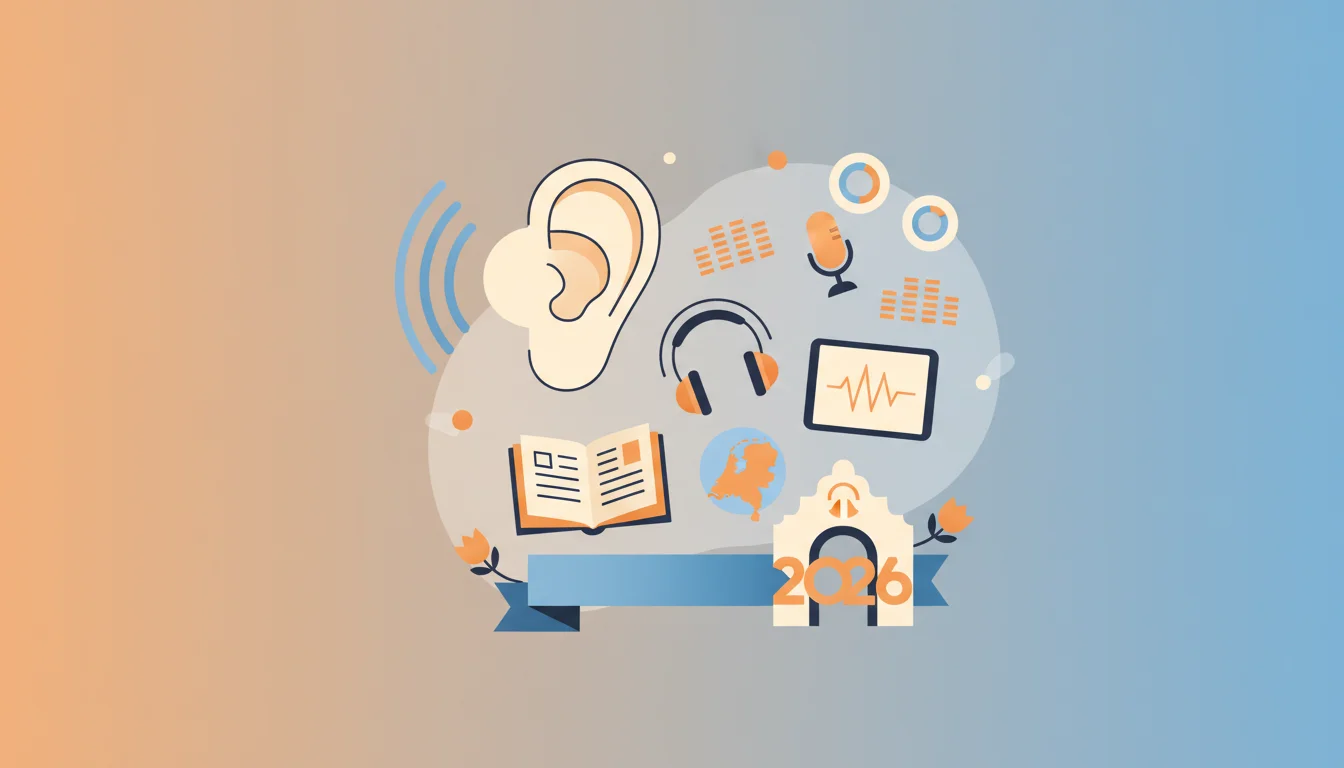
Are you dreading the listening section of your upcoming Dutch integration exams? You are certainly not alone. For many expats and language learners in the Netherlands, the Luistervaardigheid (listening comprehension) module is one of the most intimidating hurdles on the path to permanent residency or citizenship. Spoken Dutch can often feel incredibly fast, filled with unfamiliar idioms, regional accents, and swallowed syllables that leave you wondering if you are even listening to the same language you've been studying in your textbooks.
However, passing the Inburgering listening exam is entirely achievable with the right preparation strategy and the best audio resources. As the integration requirements evolve, particularly with the newer civic integration law (Wi2021) cementing the B1 language proficiency standard for most candidates, your study approach needs to evolve as well. Gone are the days when simply recognizing a few keywords was enough to pass. Today, you need genuine comprehension of everyday Dutch conversations, news broadcasts, and formal announcements.
In this comprehensive guide, we will break down exactly what to expect from the 2026 Inburgering listening exam, explore the top audio resources available to Dutch learners, and provide actionable, step-by-step strategies to transform your listening skills from passive hearing to active comprehension.
Before diving into study materials, it is crucial to understand the battlefield. The Inburgering listening exam tests your ability to understand spoken Dutch in various real-life contexts. If you are preparing for the B1 level transition, you must be ready for longer, more complex audio clips than those found in the older A2 exams.
The exam is administered on a computer at an official testing center. According to the official DUO website, you will be provided with headphones and will listen to a series of audio fragments. These fragments typically include:
After listening to each fragment, you will answer multiple-choice questions. The questions are designed to test not just your ability to pick out specific facts (like a time or a price), but also your understanding of the speaker's tone, opinion, and the overall context of the situation.
To succeed at the B1 level, you need to immerse yourself in spoken Dutch. Fortunately, there is a wealth of high-quality audio resources tailored specifically for learners, as well as native content that is accessible enough for intermediate students. Here are the top resources you should be using in 2026.
Podcasts are arguably the most convenient way to improve your listening skills. You can listen while commuting, cooking, or working out. For Inburgering preparation, look for podcasts that speak slightly slower than native speed but still use natural vocabulary.
Because the B1 exam often includes news clips and interviews, you must get comfortable with journalistic Dutch. Native news broadcasts can be overwhelming, but there are excellent stepping stones available.
While passive listening is helpful, interactive listening accelerates your progress dramatically. This is where modern technology comes into play. If you are looking for an edge, using an app that offers interactive dialogue games for practical scenarios can make a massive difference.
For example, using StroopTaal's real-life Dutch conversation practice with AI allows you to not only listen to native-sounding Dutch but also respond in real-time. The AI adapts to your level, and you choose the topic or situation you want to practice, from speaking with a doctor to negotiating with a colleague. Plus, StroopTaal's AI-powered personalized learning plans ensure that you are consistently exposed to the vocabulary you struggle with through spaced repetition, making your listening practice highly efficient.
Once you feel comfortable with learner-focused materials, it is time to transition to native content. This will prepare you for the fastest, most challenging audio clips on the exam.
Many students make the mistake of thinking that simply having Dutch audio playing in the background is enough to pass the exam. While passive listening helps with language familiarization, active listening is what actually builds comprehension skills.
If you are self-studying for the integration exams on a budget, mastering the art of active listening is the most cost-effective way to prepare. Here is a highly effective, four-step active listening routine you can apply to any podcast or video:
Choose an audio clip that is 3 to 5 minutes long. Listen to it once all the way through without looking at a transcript, subtitles, or a dictionary. Do not pause. Your goal here is not to understand every single word, but to grasp the overall context. Who is speaking? What is the general topic? What is the tone (serious, comedic, informative)?
Listen to the exact same clip a second time. This time, you can pause the audio to process what is being said. Try to pick out specific details. If there is a transcript available, do not look at it just yet. See how much more you can understand on the second pass now that you know the general context.
Now, listen for a third time, but this time, read along with the transcript or Dutch subtitles. This is the crucial step where you connect the sounds you are hearing to the written words. You will often realize that words you thought you didn't know were actually familiar words spoken with a specific accent or blended together (e.g., hearing "kweenie" instead of "ik weet het niet"). Highlight any unknown vocabulary words and add them to your flashcards.
Finally, practice "shadowing." Play the audio sentence by sentence, pause, and repeat exactly what the speaker said, mimicking their intonation, rhythm, and pronunciation. Not only does this drastically improve your speaking skills, but it trains your brain to process the sounds of Dutch much faster, directly improving your listening comprehension.
Even with great preparation, test anxiety can cause you to make simple mistakes. Being aware of these common pitfalls will help you stay calm and focused during the actual DUO exam.
At the A2 level, you might have had time to hear a Dutch sentence, translate it into your native language in your head, formulate an answer, and translate it back. At the B1 level, the audio is simply too fast for this. If you try to translate every word, you will fall behind the audio track and miss crucial information. You must train yourself to understand the Dutch words as concepts, not as translations. This takes time and lots of active listening practice.
You will hear words you do not know on the exam. This is a certainty. The key is not to panic. Often, the unknown word is not even necessary to answer the question. If you get stuck trying to figure out what one specific adjective meant, you will miss the next three sentences. Practice letting go of unknown words and using the surrounding context to guess their meaning.
On the computer-based DUO exam, you can usually read the question before the audio plays. Always do this! Knowing what you are listening for—whether it is a time, a reason, or an opinion—gives your brain a massive head start. It acts as a filter, allowing you to focus on the relevant information and ignore the fluff.
If you have struggled with exam anxiety in the past, it is important to know your options. Understanding the rules regarding failing an exam and resit rules can actually take a lot of pressure off your shoulders on test day, allowing you to relax and listen more effectively.
Consistency is more important than intensity when it comes to listening comprehension. Studying for 20 minutes every day is far more effective than cramming for three hours on a Sunday. Here is a sample weekly schedule you can adapt to your own routine:
Passing the 2026 Inburgering listening exam requires a strategic blend of the right resources, active study techniques, and consistent daily practice. By moving beyond passive listening and engaging deeply with podcasts, simplified news, and interactive tools, you will train your ear to catch the nuances of spoken Dutch at the B1 level.
Remember that listening comprehension is a skill that develops gradually. Do not get discouraged if you feel like you aren't making progress day by day; look at your progress month by month. Surround yourself with the language, embrace the challenge of native audio, and use smart technology to your advantage.
Ready to supercharge your Dutch listening and speaking skills? Download the StroopTaal app today to access AI-powered personalized learning plans, real-life conversation simulations, and an extensive library of interactive Dutch exercises designed specifically to help you ace your Inburgering exams!
Share this article:
Mastering the Knowledge of Dutch Society (KNM) Exam in 2026 Preparing for the Dutch civic integration process can feel like navigating a maze,...
Read moreNavigating the ONA Portfolio and Interview Process Welcome to the Netherlands! If you are an expat or migrant navigating the Dutch civic integration...
Read moreIntroduction: The Expat's Journey to Dutch IntegrationMoving to the Netherlands as a Highly Skilled Migrant (kennismigrant) is an exciting milestone....
Read more