Registering at the Gemeente: Expat Document Checklist
Welcome to the Netherlands! You’ve unpacked your boxes, tasted your first stroopwafel, and maybe even hopped on a bike. Now comes the inevitable...
Read more
This article was drafted by AI and edited by a person before it was published.
AI can get things wrong. For anything official, check the source it points to.
AI-generated image
If you have lived in the Netherlands for more than a few weeks, you likely recognize the iconic blauwe brief (blue envelope). For many expats and international students, this piece of mail from the Belastingdienst (Tax and Customs Administration) triggers a mild panic response. Is it a bill? A fine? A request for information in complex bureaucratic Dutch?
While the Dutch tax system is known for being thorough, it is also highly structured and logical once you understand the basics. Whether you are working, freelancing, or studying, understanding the tax landscape is a crucial part of your integration—almost as important as learning to ride a bike in the rain.
In this guide, we will break down the essential Dutch taxes, from income tax to VAT, and help you navigate the vocabulary you need to survive tax season.
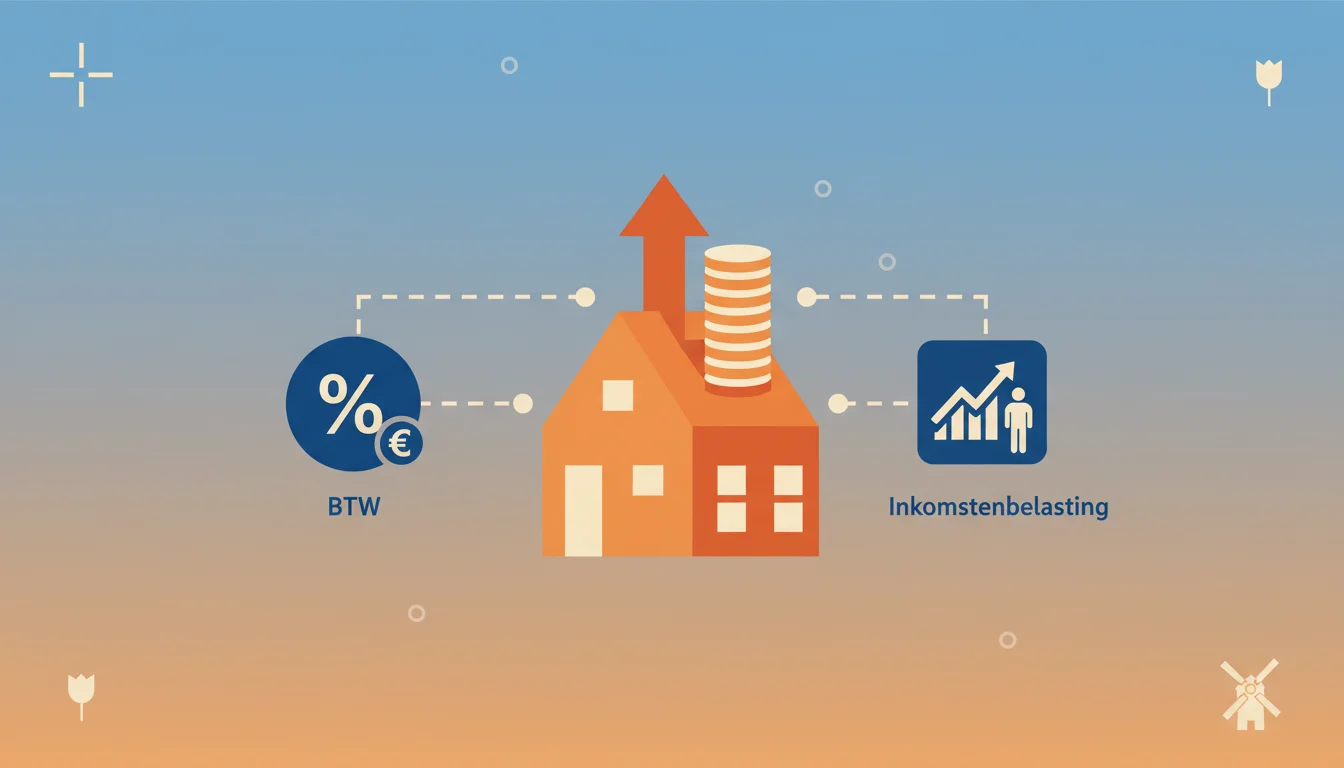
The most significant tax you will encounter is the inkomstenbelasting. If you are employed by a company, this is usually deducted from your salary automatically (known as loonheffing), but you still need to file an annual return.
The Dutch system divides income into three metaphorical "boxes":
Pro Tip: Tax season generally runs from March 1st to May 1st. Even if you don't think you owe anything, filing a return (aangifte doen) is smart because you might be eligible for a refund!
For highly skilled migrants, the "30% ruling" is a game-changer. This tax advantage allows employers to grant 30% of the gross salary tax-free to cover extraterritorial costs. However, rules regarding this benefit have tightened recently, so always check the latest government regulations.
If you are a freelancer (ZZP'er) or simply a consumer, you deal with BTW (VAT) every day. This is the sales tax added to goods and services.
There are three rates you need to know:
Learning the difference between these rates is a great practical exercise. In StroopTaal, you can save the Dutch words for items you buy at the supermarket and practice them later, which helps when you sort out which items fall under the 9% or 21% category.
Just when you think you are done with the national government, the local municipality (gemeente) sends their own bill. These taxes vary by city but typically include:
It is not all about paying money; sometimes the government pays you. The Netherlands has a robust system of toeslagen (allowances) for lower and middle-income residents. If you are learning Dutch to prepare for your Inburgering exam, understanding these terms is vital for the 'Knowledge of Dutch Society' (KNM) section.
The biggest challenge with Dutch taxes isn't always the math—it's the language. The Belastingdienst website is informative, but the terminology can be dense. Words like aftrekposten (deductibles), vermogensrendementsheffing (capital yield tax), and voorlopige aanslag (provisional assessment) are not usually covered in standard beginner textbooks.
This is where an AI-powered tool becomes indispensable. With StroopTaal, you can create a personalized learning plan focused on "Administration and Finance." You can use the AI conversation feature to role-play a call with the tax office or practice reading comprehension in the reading part of exam practice. This practical approach ensures that when the real blue envelope arrives, you read it with confidence rather than fear.
Here are five words to add to your spaced repetition deck today:
Taxes in the Netherlands support the excellent infrastructure, healthcare, and social security that make living here so pleasant. While the paperwork can be daunting, mastering the vocabulary is a huge step toward feeling at home. Don't let the blue envelope scare you—treat it as your next Dutch language lesson!
Ready to master the language of life in the Netherlands? Download StroopTaal today to practice real-life dialogues and prepare for your Inburgering with confidence.
Share this article:
Welcome to the Netherlands! You’ve unpacked your boxes, tasted your first stroopwafel, and maybe even hopped on a bike. Now comes the inevitable...
Read moreIs it Me, or Was That Rude? Picture this: You have just moved to Amsterdam. You spent twenty minutes styling your hair this morning. You walk into...
Read moreIf you have just arrived in the Netherlands, you have likely noticed a distinct sound echoing through train stations and bus terminals: a sharp,...
Read more