Essential Dutch Taxes Explained: From BTW to Inkomstenbelasting
Demystifying the Blue Envelope If you have lived in the Netherlands for more than a few weeks, you likely recognize the iconic blauwe brief (blue...
Read more
This article was drafted by AI and edited by a person before it was published.
AI can get things wrong. For anything official, check the source it points to.
AI-generated image
Picture this: You have just moved to Amsterdam. You spent twenty minutes styling your hair this morning. You walk into the office, feeling confident, and your Dutch colleague looks at you and says, "Your hair looks a bit messy today."
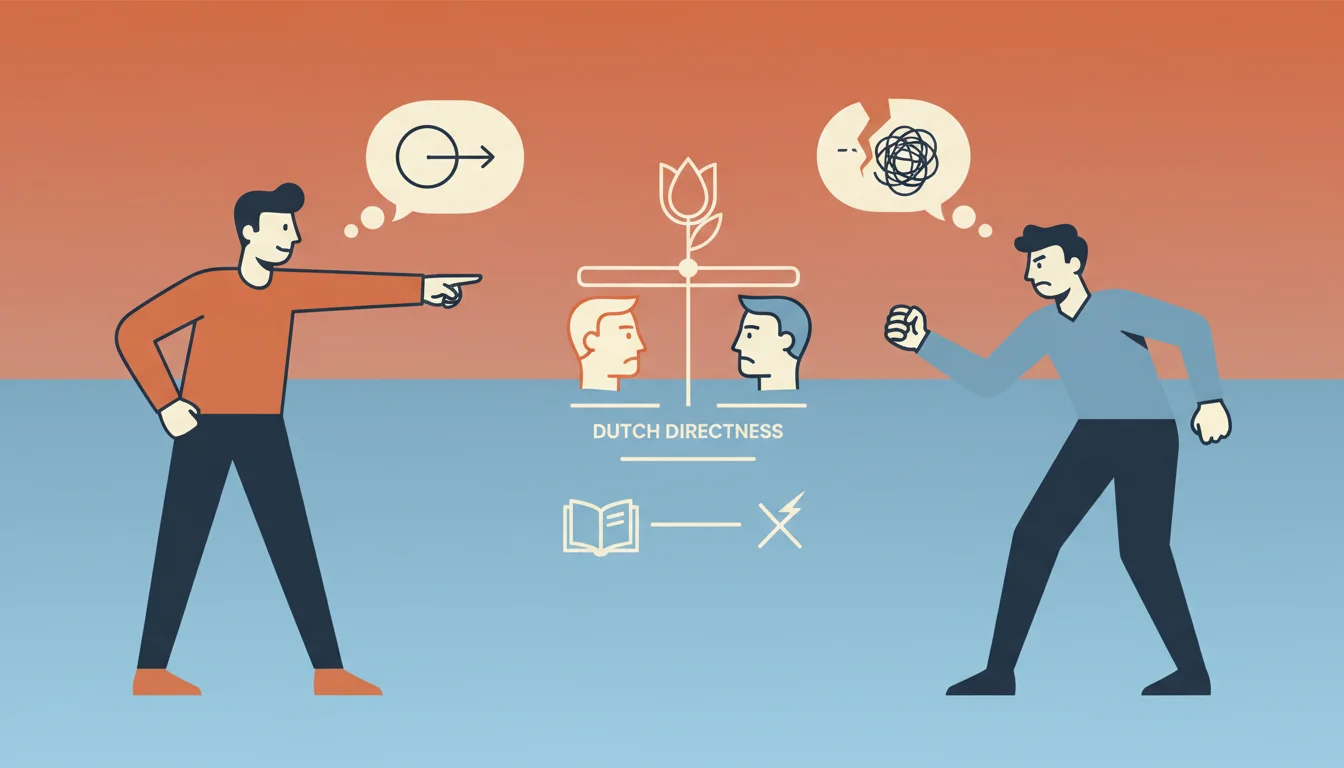
Your instant reaction? Shock. Offense. You might even label them as incredibly rude. But to your colleague, they were simply making an observation—perhaps even a helpful one in their eyes. Welcome to the world of Dutch directness.
For many expats and language learners, the lack of sugar-coating in the Netherlands can be a significant culture shock. It is often mistaken for rudeness, arrogance, or a lack of empathy. However, understanding the nuance between directness and rudeness is the key to thriving socially and professionally in the Low Countries.
To understand why the Dutch communicate the way they do, you have to look at their cultural values. The Netherlands has a history that emphasizes honesty, sobriety, and transparency. There is a strong societal belief in egalitarianism—the idea that everyone is equal.
Because everyone is equal, no one should be spared the truth. In many other cultures (like British, American, or Japanese), communication is "high-context," meaning you have to read between the lines to understand the real meaning. The Netherlands is a low-context culture. Yes means yes, no means no, and feedback is given literally.
The Dutch value bespreekbaarheid—the ability to discuss anything openly. If you have spinach in your teeth, a Dutch friend will tell you immediately. Not to embarrass you, but to save you from walking around with spinach in your teeth all day. They view this as an act of kindness and efficiency, whereas other cultures might view the act of pointing it out as awkward.
In many international offices, feedback is sandwiched: a compliment, the criticism, and another compliment. In the Netherlands, expect the meat without the bread. If a Dutch manager says, "This report is not good," they are criticizing the work, not you as a person. They expect you to fix it and move on. Taking it personally is seen as unprofessional.
Dutch spontaneity is... well, rarely spontaneous. If you drop by a friend's house around 17:30, do not expect to be fed. In fact, you might hear the infamous phrase: "Wij gaan zo eten" (We are about to eat). This is the cue for you to leave.
Is this rude? To a Dutch person, no. They have planned their meal for their family unit, as grocery shopping is often done with exact portions in mind. Showing up unannounced disrupts the schedule. If you want to hang out, send a WhatsApp and schedule it in the agenda, likely weeks in advance. How to tell time in Dutch is crucial here, as being even five minutes late to a scheduled appointment can be seen as a lack of respect for their time.
If you invite a Dutch person to a party and they don't want to go, they will likely say: "No, I don't feel like it." They won't make up an excuse about a sick cat or a prior engagement if there isn't one. They value their time and assume you value honesty over a fake excuse. Understanding how to use niet vs geen correctly will help you navigate these direct refusals without confusion.
While the Dutch are direct, the language possesses tools to soften the blow—tools that beginners often miss. This is where mastering the "flavor particles" of the language becomes essential.
Words like even, toch, maar, and hoor change the tone of a sentence entirely.
Learning these subtleties takes time. This is where StroopTaal can be a game-changer. Our app doesn't just teach you vocabulary; our grammar lessons and cultural notes explain how to use these modal particles so you can be direct without sounding harsh. Plus, our AI conversation practice lets you try out these phrases without the fear of offending a real person.
So, how do you survive without getting your feelings hurt daily? Here are some actionable tips for expats and learners:
Of course, being Dutch is not a free pass to be mean. There is a line. Unsolicited negative comments about things people cannot change (appearance, weight, etc.) can still be considered bot (blunt/rude) even by Dutch standards.
Furthermore, standard politeness is still required. Entering a shop without saying "Goedemiddag," or bumping into someone without saying "Pardon," is considered poor manners. The directness applies to the content of the conversation, not the removal of basic social pleasantries.
Once you get past the initial shock, many expats find Dutch directness liberating. You never have to wonder where you stand with a Dutch friend or colleague. If they like you, you know it. If they have a problem, you know it. There is a security in that transparency.
Integration is about more than just memorizing de and het words; it’s about understanding the soul of the interactions. Whether you are preparing for your Inburgering exam or just trying to survive a Dutch birthday circle, understanding etiquette is key.
Ready to speak Dutch with confidence and cultural flair? Download StroopTaal today. From mastering pronunciation to role-playing realistic dialogue scenarios with our AI, we’ll help you navigate the Netherlands like a local.
Share this article:
Demystifying the Blue Envelope If you have lived in the Netherlands for more than a few weeks, you likely recognize the iconic blauwe brief (blue...
Read moreIf you have just arrived in the Netherlands, you have likely noticed a distinct sound echoing through train stations and bus terminals: a sharp,...
Read moreMoving to the Netherlands is an exciting adventure filled with canals, bicycles, and—inevitably—bureaucracy. For highly skilled migrants, one of...
Read more