Dutch Beach Culture: What to Expect at the Coastline in Summer 2026
Embracing the Sun: The Surprising World of Dutch Beach Culture When you think of the Netherlands, your mind likely drifts to historic canals, fields...
Read more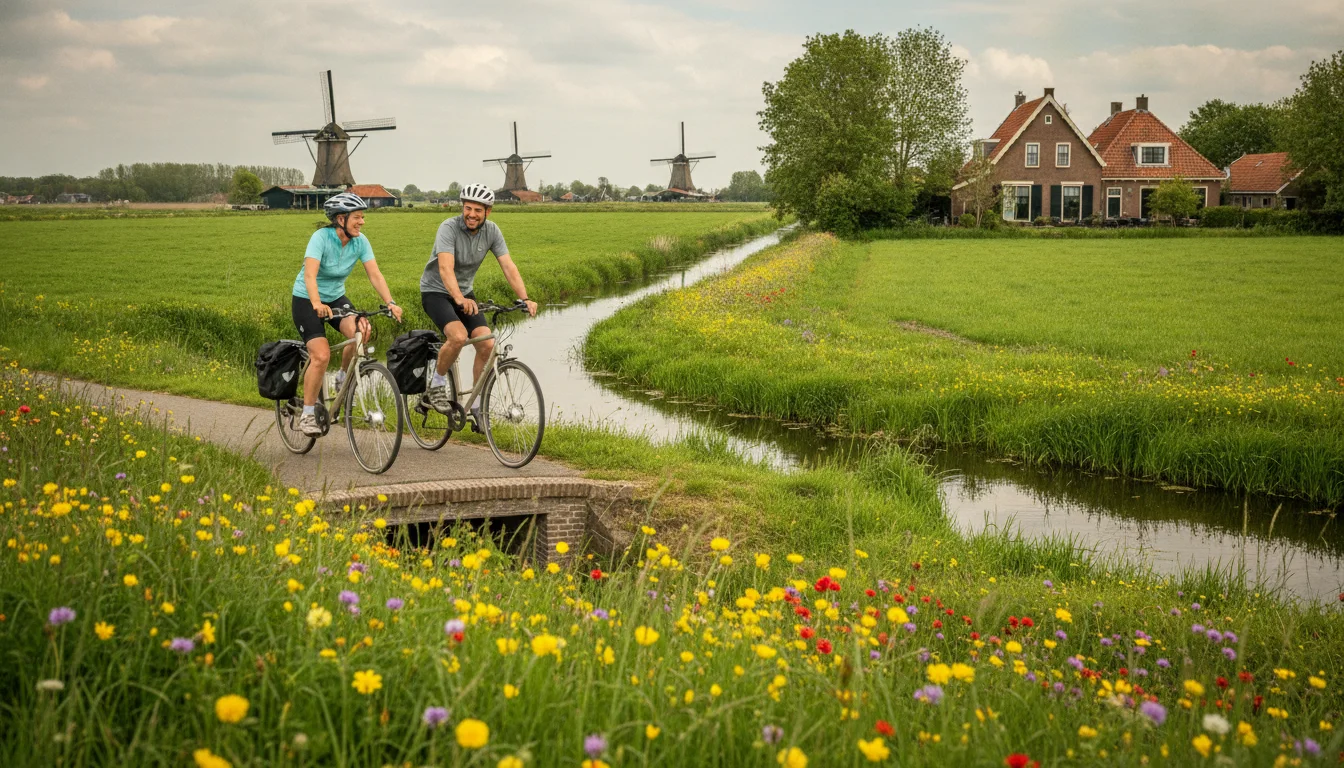
June in the Netherlands is nothing short of magical. As the spring chill fully recedes, the country transforms into a vibrant, sun-drenched playground. The days are at their longest—stretching past 10:00 PM—and the famous Dutch countryside is painted in deep greens, dotted with blooming wildflowers, and crisscrossed by sparkling canals. For expats, language learners, and those preparing for their integration exams, there is no better way to experience this beautiful season than by adopting the ultimate Dutch lifestyle choice: climbing onto a stalen ros (steel steed) and heading out on a summer cycling tour.
Cycling in the Netherlands is not just a mode of transport; it is a cultural cornerstone, a social activity, and a window into the Dutch soul. Exploring the countryside by bike in June offers a unique double benefit. Not only do you get to witness breathtaking landscapes, historic windmills, and picturesque villages, but you also gain a golden opportunity to practice your Dutch in real-world settings. From ordering a cold drink on a sunny terrace to asking a local farmer for directions, a bike tour is the perfect active learning classroom.
In this comprehensive guide, we will take you through the very best Dutch cycling routes for June, break down the essential cycling vocabulary you need to sound like a native, and show you how to blend your outdoor adventures with natural language learning.
While the Dutch ride their bikes year-round—rain, wind, or shine—June is universally considered the sweet spot for long-distance cycling tours. Here is why this month stands out:
Before you set off, it is important to understand how the Dutch have engineered the world's most sophisticated cycling network. You do not need to constantly stare at Google Maps to find your way. Instead, the Netherlands uses an incredibly logical, numbered system called the fietsknooppuntennetwerk (cycling node network).
Developed to make cycle tourism seamless, this system divides the entire country into numbered intersections (nodes). At each node, you will find a large panel map showing the surrounding network, along with directional signs guiding you to the next closest numbers. You can plan your route in advance by writing down a sequence of numbers (e.g., 12 -> 14 -> 55 -> 02), tape the list to your handlebars, and simply follow the green-and-white signs on the road. You can learn more about the history and design of this world-renowned number junction bicycle route network to appreciate the engineering behind your ride.
Whether you want to ride along sandy coastal dunes, wind through ancient forests, or explore historic villages, the Netherlands has a route for you. Here are four highly recommended tours for a sunny June day:
Distance: ~35 km | Starting Point: Amsterdam Central Station (take the free ferry to Amsterdam-Noord)
If you live in or near the capital, this route is the perfect escape from the bustling city. Once you cross the IJ river, you will find yourself in "Waterland"—a low-lying wet polder landscape characterized by historic wooden houses, quiet canals, and vast open fields. You will pass through charming villages like Durgerdam, Ransdorp, and the historic peninsula of Marken. In June, the dikes are covered in lush grass and wildflowers, making it an idyllic setting for a leisurely ride.
Distance: 30 - 50 km (variable) | Starting Point: Otterlo or Hoenderloo
For a completely different landscape, head to Gelderland to explore the Hoge Veluwe. This national park features a stunning mix of dense woodlands, vast heather fields, and active sand dunes. The park famously provides free white bicycles (witte fietsen) at its entrances, but bringing your own bike lets you explore the surrounding villages as well. June is a fantastic time to spot local wildlife, including red deer and wild boars, early in the morning or late in the evening.
Distance: ~40 km | Starting Point: Weesp or Utrecht
This route takes you along the winding Vecht River, which was favored by wealthy Amsterdam merchants in the 17th century as a location for their grand summer estates (buitenplaatsen). You will ride past majestic castles, manicured gardens, and historic drawbridges. Stop in the picture-perfect town of Breukelen (the namesake of Brooklyn, New York) for a coffee and a slice of Dutch apple pie on a riverfront terrace.
Distance: ~45 km | Starting Point: Middelburg or Burgh-Haamstede
For those who love the sea air, Zeeland offers dramatic coastal cycling. This route takes you along wide, paved paths built directly into the sea dikes and sandy dunes. You will experience the sheer scale of the Delta Works—the massive storm surge barriers that protect the low-lying province from the North Sea. Be prepared, however: Zeeland is famous for its wind, so you might get a taste of the legendary Dutch tegenwind (headwind)!
To truly immerse yourself in the Dutch cycling culture, you need to know the lingo. The Dutch language has dozens of highly specific words related to bikes and riding. Learning these will not only help you navigate but will also make for great conversation starters with locals.
Here are some of the most common and useful cycling terms:
To confidently order your food at pitstops or ask a local for directions when you get lost, you can practice your pronunciation using StroopTaal's pronunciation feedback before you set off. Mastering the subtle differences in words like fietspad and knooppunt will make you sound instantly more native.
No Dutch summer cycling tour is complete without participating in the beloved national pastime of een terrasje pakken (grabbing a seat on an outdoor terrace). After cycling for a couple of hours, look for a local café, pub, or tea garden (theetuin). Finding a sunny spot on a terrace is the ultimate reward for your physical effort.
This is also a prime opportunity to practice your spoken Dutch in a low-stakes, friendly environment. Try using these simple phrases when ordering:
Don't be afraid to make mistakes! The Dutch highly appreciate expats making an effort to speak the language, especially outside of the major tourist hubs. A warm smile and a polite "Dank u wel" go a long way.
While physical preparation is key for a long bike ride, linguistic preparation is just as valuable if you want to make the most of your journey through the countryside. Preparing your vocabulary and grammar for these real-world encounters is easy when you have a structured, intelligent approach. Learn how to tailor your prep with a personalized Dutch learning plan that targets your specific conversational goals.
With the StroopTaal app, you can practice highly relevant, real-life conversation scenarios before you ever hit the road. The app features interactive dialogue games that simulate ordering food at a country café, asking for directions near a canal, or buying a train ticket for your bike. By building your vocabulary with spaced repetition and mastering Dutch articles (de vs. het) through engaging games, you will build the confidence needed to leave your English safety net behind and fully connect with the local culture.
To ensure your cycling tour is safe, comfortable, and thoroughly enjoyable, keep these practical tips in mind:
There is no better way to appreciate the unique beauty, geography, and culture of the Netherlands than from the saddle of a bicycle in June. By exploring the country's vast network of red-paved paths, you will discover hidden gems far beyond the typical tourist trails, all while building active, real-world Dutch language skills.
So, dust off your bike, plan your first knooppunten route, and download the StroopTaal app to start practicing your Dutch conversation skills today. Your journey toward fluent Dutch and unforgettable summer adventures starts with a single pedal stroke. Veel succes en veel plezier op de fiets!
Share this article:
Embracing the Sun: The Surprising World of Dutch Beach Culture When you think of the Netherlands, your mind likely drifts to historic canals, fields...
Read moreEmbracing the Dutch Summer: Your Guide to June 2026 Festivals When June arrives in the Netherlands, the entire country undergoes a magical...
Read moreWhen spring arrives in the Netherlands, the minds of most expats and tourists immediately drift to endless fields of vibrant tulips, historic...
Read more