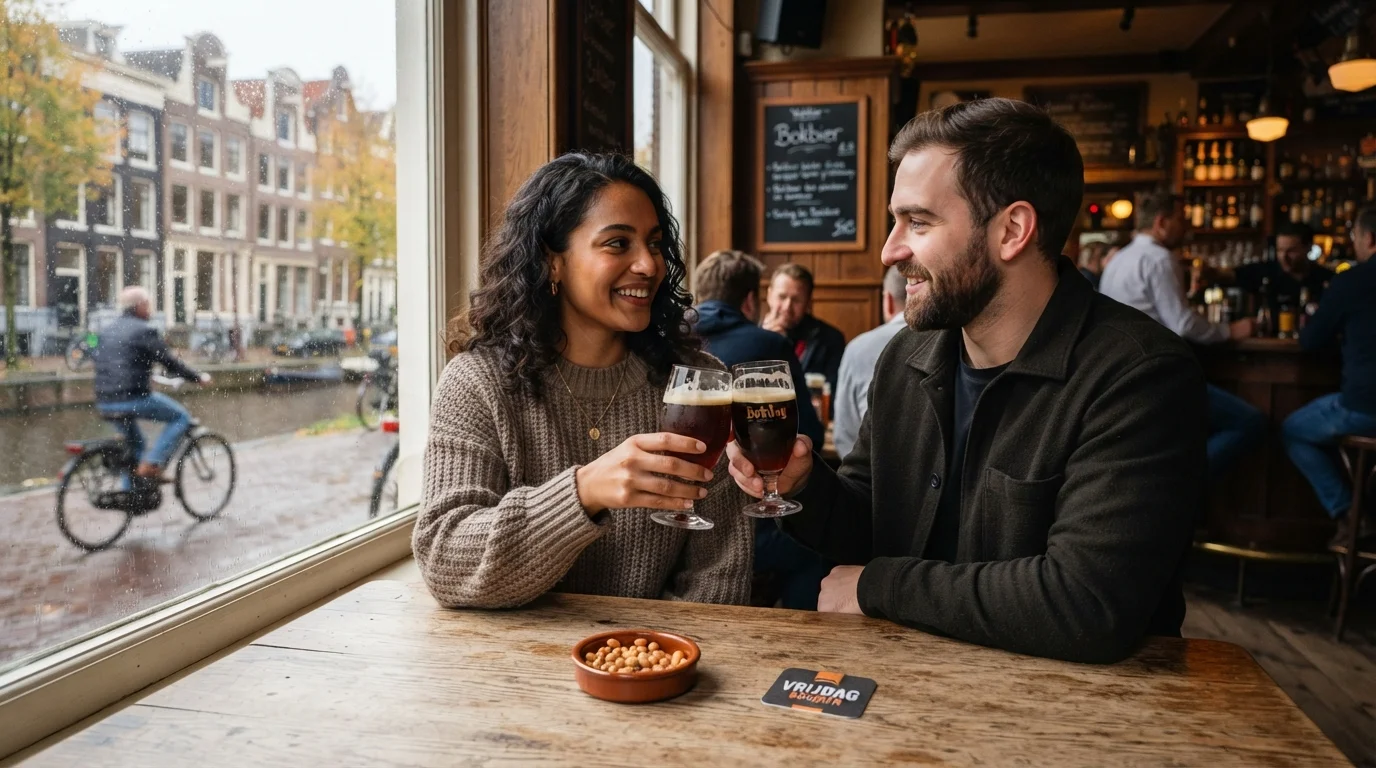
The Story Behind 'Bokbier': Exploring Dutch Autumn Beer Traditions in October
As October arrives in the Netherlands, the countryside transforms into a mosaic of amber and crimson, the wind off the North Sea takes on a crisp...
Read more
You have just arrived at the office on a Thursday morning when a colleague asks if you are joining the team for drinks on Friday afternoon. Or perhaps your Dutch neighbour invites you over for coffee this Saturday, but your schedule is already stretched thin. In many cultures, replying with a direct “no” feels blunt, uncomfortable, or outright rude. Many expats find themselves hesitating, mumbling vague excuses, or saying “maybe” just to avoid confrontation.
In the Netherlands, however, that hesitation often causes more confusion than clarity. Dutch social interactions run on an entirely different set of unwritten rules. Directness is not an insult; it is a sign of honesty and mutual respect. Learning how to navigate invitations without causing offense is an essential milestone in understanding everyday Dutch culture.
Whether you are settling into a new neighbourhood, working in a Dutch office, or preparing for the social elements covered in the free KNM practice test, mastering the art of the polite Dutch rejection will make your social life significantly smoother.
To decline an invitation effectively in the Netherlands, you must first understand the philosophy behind Dutch communication. In countries where high-context communication dominates, politeness often revolves around preserving face. People avoid negative answers, opting instead for indirect hints like “I will try my best” or “That might be difficult.”
Dutch communication, by contrast, is low-context and explicit. According to sociological perspectives on Dutch etiquette, clarity is considered a virtue. When you tell a Dutch host “Maybe, let’s see how I feel tomorrow,” they will likely take you literally, reserving a seat or purchasing groceries on your behalf. If you then do not show up, they will view it as irresponsible rather than polite.
In Dutch social culture, an unambiguous “no” delivered early is far more appreciated than a polite hesitation. It shows that you value the other person’s time and planning. If you say no clearly, your host can simply invite someone else or adjust their plans without lingering uncertainty.
One of the earliest shocks for newcomers in the Netherlands is the ubiquitous agenda (calendar). Whether paper-based or digital, the Dutch calendar is central to domestic and professional life. Weekends are frequently booked two to four weeks in advance for family visits, sports, household chores, and social gatherings.
Because calendars are so tightly managed, declining an event due to a prior commitment is universally accepted. You never need an elaborate tragedy or an emergency to justify your absence. Saying that your weekend is already full (mijn weekend zit al vol) is completely legitimate and never questioned as an excuse.
This planning culture also applies to events like the Friday afternoon office drink. While joining a Dutch borrel is a classic way to connect with colleagues, attendance is rarely mandatory. Knowing how to step away gracefully without alienating your team is part of normal workplace life.
Declining an invitation in Dutch does not require a lengthy speech. In fact, over-explaining often sounds dishonest to native speakers. A polite and natural refusal typically follows four simple steps:
Always begin by acknowledging the gesture. Being invited is still a compliment, and expressing gratitude softens the refusal immediately.
Avoid ambiguous words like misschien (maybe) or even kijken (let’s see) unless you genuinely intend to check your calendar and confirm within a few hours. State your inability to attend clearly.
Keep your reasoning concise. Dutch listeners prefer a short, credible reason over a complicated story that sounds fabricated.
Here is a critical nuance: do not suggest an alternative plan unless you actually want to meet up. In many English-speaking environments, saying “Let’s grab lunch soon instead!” is a throwaway courtesy. In the Netherlands, the other person will open their calendar on the spot and ask, “Sure, how about Tuesday the 12th at 13:00?”
If you genuinely want to stay in touch, suggest a concrete timeframe:
To help you put these principles into action, here are common situations and authentic ways to respond in spoken Dutch or over WhatsApp.
A Dutch acquaintance invites you to their birthday party on Sunday afternoon. You know the format: sitting in a circle, eating cake, and chatting. You already have plans or simply do not have the energy.
What to say:
“Gefeliciteerd alvast met je verjaardag! Wat leuk dat je me uitnodigt. Ik heb zondag helaas al iets anders staan, dus ik kan er niet bij zijn. Een hele fijne dag gewenst!”
(Happy birthday in advance! How nice of you to invite me. Unfortunately I already have something scheduled on Sunday, so I won’t be able to make it. Have a wonderful day!)
At 16:30 on Friday, a colleague walks by your desk: “Ga je mee een biertje drinken?” (Coming along for a beer?). You are tired and want to head straight home.
What to say:
“Gezellig, maar ik sla deze keer over! Ik ben best moe na deze week en ga lekker op tijd naar huis. Veel plezier vanavond!”
(Sounds cozy, but I’ll skip this time! I’m quite tired after this week and heading home early. Have fun tonight!)
Notice how easy and light this is. Using phrases like ik sla deze keer over (I’ll skip this time) is standard conversational Dutch and prevents any awkwardness. You can learn more about casual office banter in our guide to Dutch small talk.
A friend asks if you want to cook together on a Wednesday evening, but you have Dutch class or simply need an evening to recharge.
What to say:
“Wat een lief voorstel! Doordeweeks lukt het me alleen echt niet, ik heb een drukke werkweek. Zullen we over twee weken in het weekend een hapje eten?”
(What a sweet offer! During the week it just doesn’t work for me, I have a busy work week. Shall we grab a bite on a weekend in two weeks?)
Much of Dutch social life is coordinated via WhatsApp groups (de groepsapp). When an open invitation is posted in a group — such as an invite to a weekend picnic or a sports match — group etiquette can feel confusing.
If you are in a large group (more than 10 people) and the host asks “Who wants to join?”, you typically do not need to reply if your answer is no. Responding with 15 “no sorry” messages clutters the chat. Only people who can attend respond.
However, if it is a smaller group or if an organizer mentions you by name (or tags everyone asking for attendance numbers), a quick and polite acknowledgment is mandatory:
Reading Dutch phrases on a screen is one thing; feeling confident enough to say them out loud when a colleague turns to you is another. Hesitation often comes from not feeling comfortable with pronunciation or word order under social pressure.
This is where structured speaking practice makes a difference. In the StroopTaal app, learners build confidence through real-life scenarios. Using the AI conversation partner, Taalmaatje, you can speak Dutch out loud in everyday roleplays — including workplace interactions and social settings. Taalmaatje is software, not a human teacher, allowing you to practise declining invitations, setting boundaries, and answering conversational questions without fear of making social mistakes.
StroopTaal also features listening scenes that depict authentic situations like phone calls and counter conversations. You answer questions based on what you hear, save unfamiliar vocabulary directly to your review deck, and test your own speech with pronunciation scoring. Integrating these habits helps make conversational Dutch second nature.
The biggest hurdle expats face when saying “no” in the Netherlands is overcoming their own cultural guilt. In Dutch culture, your personal boundaries, energy levels, and existing plans are completely valid. Declining an invitation does not imply that you dislike the host or do not value their company.
To summarize Dutch declining etiquette:
Once you accept that Dutch directness is rooted in practicality and mutual respect, turning down invitations transforms from an awkward confrontation into a simple, healthy part of daily life.
Rules, fees and dates change. Check the current version on the official pages before you act.
Share this article:
As October arrives in the Netherlands, the countryside transforms into a mosaic of amber and crimson, the wind off the North Sea takes on a crisp...
Read moreIf you live or work in the Netherlands, you will inevitably notice a distinct rhythm to the month of October. The morning bicycle paths suddenly thin...
Read moreTo get a job in the Netherlands, you must secure the legal right to work (such as an EU passport or a Highly Skilled Migrant sponsorship), adapt your...
Read more