Dutch Social Etiquette: Decline Invitations Politely
You have just arrived at the office on a Thursday morning when a colleague asks if you are joining the team for drinks on Friday afternoon. Or...
Read more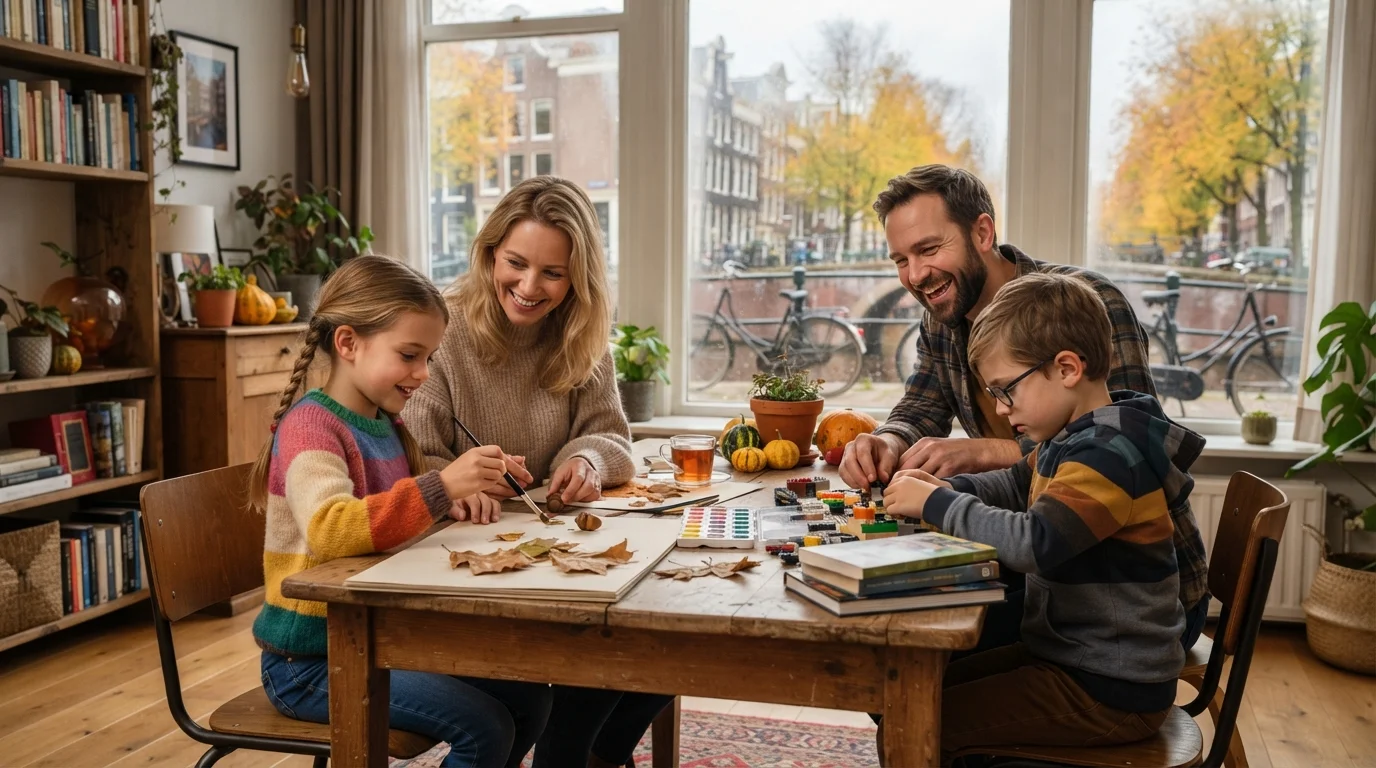
If you live or work in the Netherlands, you will inevitably notice a distinct rhythm to the month of October. The morning bicycle paths suddenly thin out, colleagues mark themselves unavailable in office calendars, and holiday parks nestled in the forests of Gelderland and Drenthe fill to capacity. The reason is the herfstvakantie—the Dutch autumn break.
For parents, expats, and anyone preparing for civic integration, understanding how the Dutch spend this week off provides a fascinating window into the country's culture. From brisk woodland strolls to coastal retreats and cozy indoor afternoons, the autumn holiday is a cherished tradition centered on family life, nature, and the concept of gezelligheid. In this guide, we explore the origins and structure of the herfstvakantie, how Dutch households make the most of it, and the seasonal Dutch vocabulary you need to discuss autumn plans with confidence.
The herfstvakantie is an annual one-week school holiday occurring in mid-to-late October. Across primary (basisonderwijs) and secondary (voortgezet onderwijs) schools in the Netherlands, children and teachers get a much-needed pause after the busy back-to-school period that starts in late August or early September.
Unlike public holidays such as King's Day or Christmas, the herfstvakantie is not a statutory public holiday for working adults. However, many working parents book annual leave (vakantiedagen or verlof) during this week to spend quality time with their children, while universities and higher vocational colleges (hbo) often schedule reading weeks or lighter timetables around the same period.
If you notice that some schools close a week earlier than others, you are witnessing the Dutch policy of vakantiespreiding (holiday staggering). The Dutch government divides the country into three administrative holiday regions:
The central government, through Rijksoverheid, sets advisory dates for the herfstvakantie each year. The three regions rotate their schedules so that not all Dutch families take to the highways and vacation resorts at the exact same moment. This staggering reduces severe traffic jams (files) on major motorways and balances visitor numbers across national recreational venues.
Understanding the structure of the school year and family life is also a core part of learning Dutch society. If you are preparing for your integration exams, testing your knowledge with a free KNM practice test is an excellent way to see how everyday civic traditions connect with the exam curriculum.
The Dutch have a famous saying regarding the temperamental North Sea climate: "Slecht weer bestaat niet, alleen slechte kleding" (Bad weather does not exist, only bad clothing). True to form, Dutch families do not let overcast skies or scattered showers keep them indoors during the herfstvakantie. Outdoor activities are central to the holiday experience.
Top of the list for nearly every Dutch family is a boswandeling (woodland walk). Autumn brings vibrant foliage to national parks such as the Nationaal Park De Hoge Veluwe, the Utrechtse Heuvelrug, and the ancient forests of Drenthe.
During these walks, parents and young children head off along marked footpaths to spot paddenstoelen (mushrooms and fungi)—most famously the iconic red-and-white fly agaric (vliegenzwam), which features heavily in Dutch children's songs. Children collect kastanjes (chestnuts), eikels (acorns), and colorful fallen leaves to bring home for seasonal crafting (knutselen).
Another quintessentially Dutch pastime is uitwaaien. The word has no direct single-word equivalent in English; it literally translates to "out-blowing" and describes the act of walking briskly into the wind to clear your mind, breathe fresh air, and feel invigorated.
During the October break, the beaches of Zeeland, Zuid-Holland, and the Wadden Islands (such as Texel and Terschelling) attract thousands of families dressed in windbreakers and waterproof boots. After enduring brisk gusts along the surf, families retreat to a cozy beach pavilion (strandtent) with large panoramic windows to warm up.
If you ask Dutch school children where they went during the herfstvakantie, a very common answer is a holiday park. Bungalow parks—managed by companies like Landal GreenParks, Center Parcs, and Roompot—are an institutional part of Dutch leisure culture.
These self-catering bungalow villages are designed around nature and convenience. Typically situated inside pine forests or beside coastal dunes, they feature car-free residential lanes where children can safely ride bikes, alongside extensive indoor facilities like subtropical swimming pools (subtropische zwemparadijzen), indoor play areas, and bowling alleys. For parents, staying in a holiday park offers an easy, low-stress escape without needing to navigate long-haul travel.
Because Dutch autumn days can occasionally bring steady downpours, families always keep indoor options in reserve. The October holiday coincides with a surge in cultural and home-centered activities that epitomize the concept of gezelligheid.
The Netherlands possesses one of the highest densities of museums in the world, and many Dutch households hold an annual Museumkaart. During the herfstvakantie, major museums organize special workshops, treasure hunts (speurtochten), and interactive exhibits geared specifically toward youth.
Popular destinations during the break include:
When wind and rain rattle the windowpanes, Dutch home life shifts into cozy mode. Families gather around the kitchen table to play classic board games (gezelschapsspellen) such as Kolonisten van Catan, Kwartet, or Rummikub.
Baking is another favorite holiday pastime. October is the height of the Dutch apple harvest, making homemade appeltaart (Dutch apple pie loaded with cinnamon, raisins, and a latticed crust) an absolute staple. Learning the customs behind seasonal food and comfort can transform your appreciation of the colder months; you can explore this atmosphere deeper in our guide on understanding Dutch gezelligheid in autumn.
Autumn cuisine in the Netherlands is hearty, warm, and comforting. After a cold walk in the woods or across the dunes, people look forward to warming meals that celebrate seasonal produce:
If you want to talk about autumn plans with your Dutch neighbors, colleagues, or in-laws, having the right seasonal phrases makes conversations far more natural. Here are the most useful terms to know:
If you work for a Dutch employer, the herfstvakantie brings its own workplace etiquette. Unlike in some countries where taking vacation during the school semester is unusual, Dutch corporate culture is heavily accommodating of family life.
Employees with school-aged children typically request their holiday hours months in advance. Colleagues without children frequently step in to cover shifts or handle urgent client inquiries during the three rotation weeks. It is common practice to wish colleagues an enjoyable break ("Fijne vakantie!") and ask upon their return: "Heb je een leuke herfstvakantie gehad?" (Did you have a nice autumn holiday?).
Being able to follow these everyday office conversations and participate naturally is a key milestone for language learners. If you want to build confidence understanding workplace small talk, explore our practical tips on how to understand Dutch in real situations.
Experiencing seasonal traditions like the herfstvakantie shows how closely language is tied to daily Dutch life. Rather than memorizing abstract grammar rules in isolation, language learning becomes far more memorable when you learn the exact words, phrases, and scenarios people use around you every day.
This is where StroopTaal can support your learning journey. Available for iPhone, iPad (iOS 18+), Android phones and tablets, and Apple Watch, StroopTaal focuses strictly on the Dutch used in the Netherlands for daily life, work, and exams, guiding you step-by-step from beginner level (A0) up to C1.
Here is how StroopTaal helps you prepare for real-world interactions throughout the seasons:
The herfstvakantie is more than just a date on the school calendar. It encapsulates the Dutch philosophy of balance: stepping away from screens and desks, bundling up against the autumn chill, enjoying the natural landscapes of the country, and warming up indoors in the company of loved ones.
Whether you choose to lace up your boots for a long walk through the Veluwe, rent a bike to ride against the coastal wind, or simply settle into a cozy armchair with a mug of hot chocomel and your Dutch flashcards, take time to experience the season just as the locals do.
Rules, fees and dates change. Check the current version on the official pages before you act.
Share this article:
You have just arrived at the office on a Thursday morning when a colleague asks if you are joining the team for drinks on Friday afternoon. Or...
Read moreTo get a job in the Netherlands, you must secure the legal right to work (such as an EU passport or a Highly Skilled Migrant sponsorship), adapt your...
Read moreCompany registration in the Netherlands requires choosing a legal structure (such as an eenmanszaak or a BV), picking a compliant trade name,...
Read more