English-Speaking Doctors in the Netherlands: A 2026 Guide
Finding Your Footing: Navigating Dutch Healthcare as an Expat Moving to the Netherlands is an exciting adventure filled with stroopwafels, scenic...
Read more
This article was drafted by AI and edited by a person before it was published.
AI can get things wrong. For anything official, check the source it points to.
AI-generated image
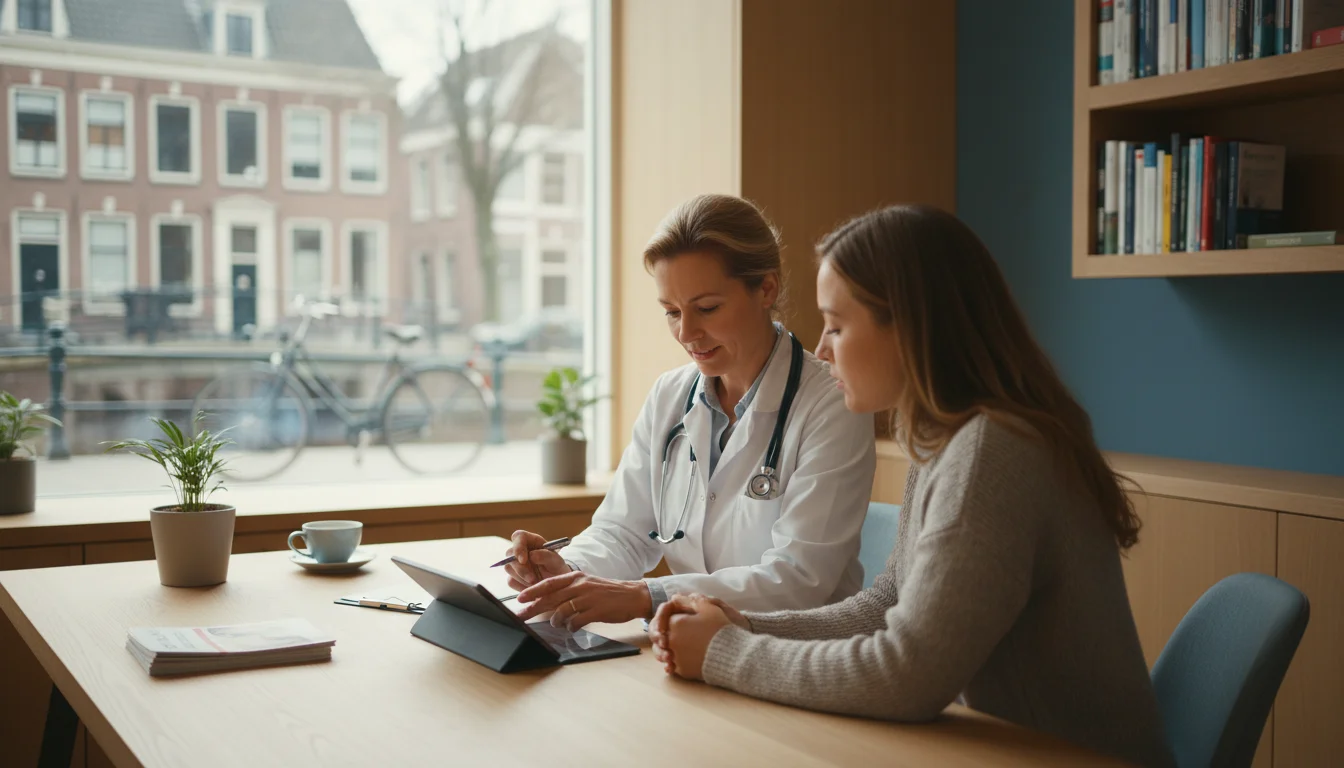
Moving to the Netherlands is an incredible adventure, filled with stroopwafels, picturesque canals, and mastering the art of cycling in the rain. But what happens when you catch more than just the travel bug? Navigating a new healthcare system can feel intimidating, especially when you’re not feeling your best. The Dutch system is efficient and high-quality, but it has its own unique structure, revolving almost entirely around one central figure: the huisarts.
The huisarts, or General Practitioner (GP), is your gateway to nearly all medical care in the Netherlands. Feeling lost? Don't worry. This comprehensive guide will walk you through everything you need to know, from understanding the system and finding a doctor to making that crucial first appointment. We’ll even cover the key Dutch phrases you’ll need to feel confident and prepared.
If you come from a country where you can book an appointment directly with a specialist, the Dutch system might require a mental shift. Here, the huisarts acts as a 'gatekeeper'. For any non-emergency health concerns—from the flu to a mysterious rash or mental health support—your first stop is always your registered GP.
Why this system? It's designed to be efficient and prevent specialist hospitals from being overwhelmed. Your huisarts can handle a wide range of issues and has a complete overview of your medical history. If they determine you need specialized care, they will provide you with a verwijzing (referral) to see a specialist in a hospital.
This makes one thing crystal clear: one of the very first administrative tasks you should tackle after arriving in the Netherlands is registering with a local huisarts. You cannot simply walk into any clinic; you must be officially registered with a specific practice (huisartsenpraktijk).
Before you can even think about making an appointment, you need to register. This process is called inschrijven. Here’s how to get it done.
GP practices will require a few key documents to register you. Make sure you have these ready:
Most GP practices only accept patients living within their specific catchment area, usually defined by a postal code (postcode). So, you'll need to find one near your home.
When you find a potential practice, check their website to see if they are accepting new patients. Look for the phrase 'open voor nieuwe patiënten' (open for new patients). If they are full, you might see 'gesloten voor nieuwe patiënten'.
Once you've found a practice, the process is straightforward. You'll typically need to fill out an inschrijfformulier (registration form) either online or in person. You'll provide your personal details, BSN, and insurance information. Some practices may request a brief introductory meeting (kennismakingsgesprek) to get to know you and your medical history. This is a great opportunity to ask any questions you might have. Settling into a new place involves many such steps, from healthcare to learning the ropes of expat life in your new city.
You're registered! Now, the time has come when you actually need to see the doctor. The most common way to make an appointment is by phone, which can be a nerve-wracking experience if your Dutch isn't yet fluent.
When you call, you will almost always speak to the doktersassistent(e) (doctor's assistant). They are trained medical professionals who perform a crucial role in triage—assessing the urgency of your situation. They will ask you for your name, date of birth, and the reason for your call (de reden van uw afspraak).
Be prepared to briefly and clearly explain your symptoms (klachten). This isn't being nosy; it's to determine how quickly you need to be seen, whether a phone consultation is sufficient, or if you need a standard or longer appointment. Don't be shy—they've heard it all before!
While most assistants in major cities speak English, trying a few Dutch phrases is always appreciated and excellent practice. Here are some key sentences:
Feeling nervous about making the call? This is where practicing real-life scenarios can be a game-changer. The StroopTaal app offers interactive AI conversation practice, allowing you to simulate booking an appointment. You can practice these exact phrases and get comfortable with the flow of the conversation before you pick up the phone.
You've made it! Now, what will the actual consultation be like?
Dutch doctors are known for their direct, pragmatic, and no-nonsense approach. They tend to be cautious with prescriptions, especially for antibiotics, and may favor an 'aankijken' (wait and see) approach for minor ailments. This isn't a lack of care; it's a medical philosophy focused on letting the body heal itself when possible and avoiding over-medication.
To make the most of your 10-minute slot, preparation is key:
At the end of your appointment, one of several things might happen:
Remember that the healthcare system is broad. While your huisarts is your main contact, arranging dental care in the Netherlands is a completely separate process you'll also need to manage.
Knowing a few key terms can make your visit much smoother. Here’s a quick reference guide:
Mastering the pronunciation of these words can significantly boost your confidence. With the StroopTaal app's pronunciation trainer, you can get a score and tips on what to improve, so you can work on being understood clearly when it matters most.
Navigating the Dutch healthcare system for the first time can seem like a complex process, but it's very logical once you understand the central role of the huisarts. By following these steps—getting your documents in order, finding and registering with a local practice, and preparing for your appointment—you can handle any health concern with confidence.
Remember, practice makes perfect, not just with the language but with the system itself. Each interaction will make the next one easier. And for the language part, you're not alone.
Ready to build the confidence to handle any real-life situation in Dutch? Download the StroopTaal app today and start practicing with our AI-powered conversation tools, interactive dialogues, and personalized learning plans. Your journey to fluency starts here!
Share this article:
Finding Your Footing: Navigating Dutch Healthcare as an Expat Moving to the Netherlands is an exciting adventure filled with stroopwafels, scenic...
Read moreWelcome to Dutch Banking: More Than Just a Bank Account You’ve done it. You’ve navigated the bureaucracy, secured your BSN (Burgerservicenummer),...
Read moreThe Dutch Digital Nomad Dream: Is It Possible? Picture this: you're sipping a koffie verkeerd in a cozy Amsterdam café, your laptop open, working on...
Read more