Mastering the OV-Chipkaart: Your Guide to Dutch Transport
If you have just arrived in the Netherlands, you have likely noticed a distinct sound echoing through train stations and bus terminals: a sharp,...
Read more
This article was drafted by AI and edited by a person before it was published.
AI can get things wrong. For anything official, check the source it points to.
AI-generated image
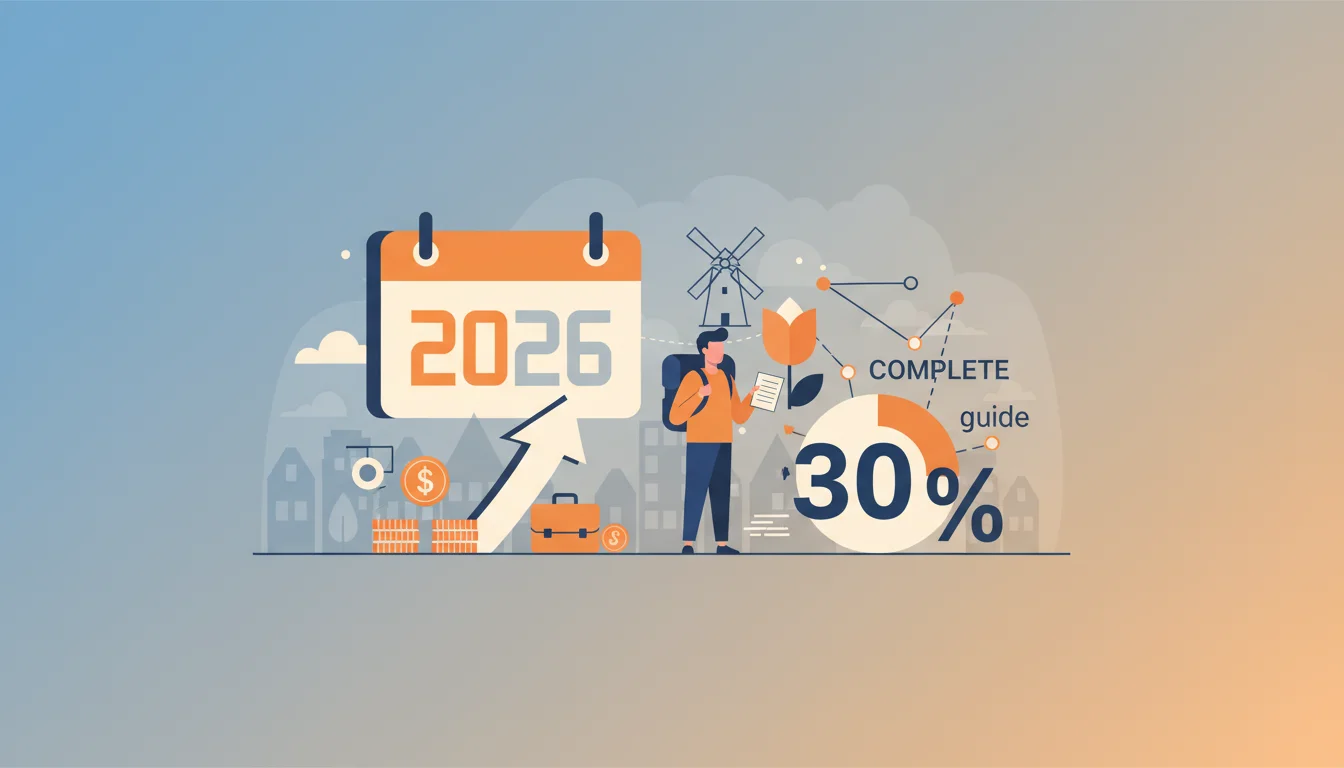
Moving to the Netherlands is an exciting adventure filled with canals, bicycles, and—inevitably—bureaucracy. For highly skilled migrants, one of the most attractive aspects of relocating to the Low Countries has long been the 30% ruling. This tax advantage is designed to compensate expats for the extra costs associated with moving abroad, known as "extraterritorial costs."
However, the Dutch political landscape has shifted significantly in recent years, leading to changes in how this benefit is applied. As we approach 2026, many expats are confused about where they stand. Will you get the full 30%? Does the "30/20/10" reduction apply to you? And how does this affect your long-term plans for settling in the Netherlands?
In this comprehensive guide, we will break down what the 30% ruling looks like in 2026, the eligibility criteria, and why investing in your Dutch language skills is the best investment you can make alongside your tax benefits.
In essence, the 30% ruling allows employers to offer highly skilled migrants a tax-free allowance of (up to) 30% of their gross salary. This is not a gift from the government, but rather a reimbursement for expenses like:
Instead of itemizing every receipt, the tax authorities allow this flat percentage to be deducted tax-free, leaving you with a significantly higher net income.
If you are looking at the ruling in 2026, context is key. In 2024, the government introduced a reduction scheme known as the 30/20/10 rule. Under this legislation, the benefit was scaled down over a period of 60 months (5 years):
However, following significant pushback from the business community and concerns about the Dutch business climate, the government proposed amendments in the 2025 Tax Plan. The proposal aims to scrap the 30/20/10 scheme in favor of a constant flat rate—likely 27%—starting in 2027.
2026 is effectively a transition year. Depending on when you arrived and which transitional laws apply to your specific case:
Note: Tax laws change frequently. Always consult with a specialized tax advisor to confirm your specific calculation for the 2026 fiscal year.
To qualify for the ruling in 2026, you must meet strict requirements. The tax authorities (Belastingdienst) want to ensure the benefit goes to those with specific expertise that is scarce in the Dutch labor market.
You must meet a specific taxable salary criterion. These amounts are indexed annually. While the exact 2026 figures will be released late in 2025, you can expect them to be slightly higher than the 2024/2025 standards due to inflation. Generally, you are looking at:
You must have lived more than 150 kilometers (as the crow flies) from the Dutch border for at least 16 out of the 24 months prior to your first working day in the Netherlands. This is to prove you were truly "recruited from abroad." Unfortunately, this excludes most people moving from Belgium or the German border regions.
While the 30% ruling is a fantastic financial boost, it is temporary. It lasts for a maximum of five years. Once that period ends, your net income will drop significantly as you begin paying full tax on your gross salary. This "income cliff" catches many expats off guard.
The best way to secure your long-term future in the Netherlands—and potentially increase your salary to offset the loss of the tax ruling—is to integrate and learn the language. Speaking Dutch opens doors to management positions, local companies, and social circles that remain closed to English-only speakers.
Learning Dutch doesn't have to be a chore involving dusty textbooks. StroopTaal is designed specifically for professionals who need efficient, practical learning. Whether you are aiming to enroll in a Dutch university to secure permanent residency or just want to chat with colleagues during the borrel (drinks), our AI-powered personalized learning plans adapt to your level.
With StroopTaal, you can:
If you are planning your move or are already here under the ruling, keep these tips in mind:
The 30% ruling in 2026 remains a powerful incentive for highly skilled migrants, despite the regulatory changes and the shift toward a potential flat rate or the 30/20/10 reduction. It provides a financial cushion that makes the expensive move to the Netherlands feasible.
But the true key to a successful life in the Netherlands isn't just a tax break—it's becoming part of the culture. By combining smart financial planning with dedicated language learning, you ensure that your life in the Netherlands continues to thrive long after the tax benefits expire.
Ready to secure your future in the Netherlands? Download StroopTaal today to start your personalized Dutch learning journey and master the language of your new home.
Share this article:
If you have just arrived in the Netherlands, you have likely noticed a distinct sound echoing through train stations and bus terminals: a sharp,...
Read moreMoving to the Netherlands is an exhilarating adventure filled with canals, stroopwafels, and cycling. However, amidst the excitement of your...
Read moreIf you are planning to move to the Netherlands or are looking to relocate within the capital, you have likely heard the stories. The Amsterdam...
Read more