
Ace the KNM Exam: Your Guide to Dutch Society Knowledge
So, You're Taking the Dutch Integration Exam... Moving to the Netherlands is an adventure filled with stroopwafels, beautiful canals, and... exams....
Read more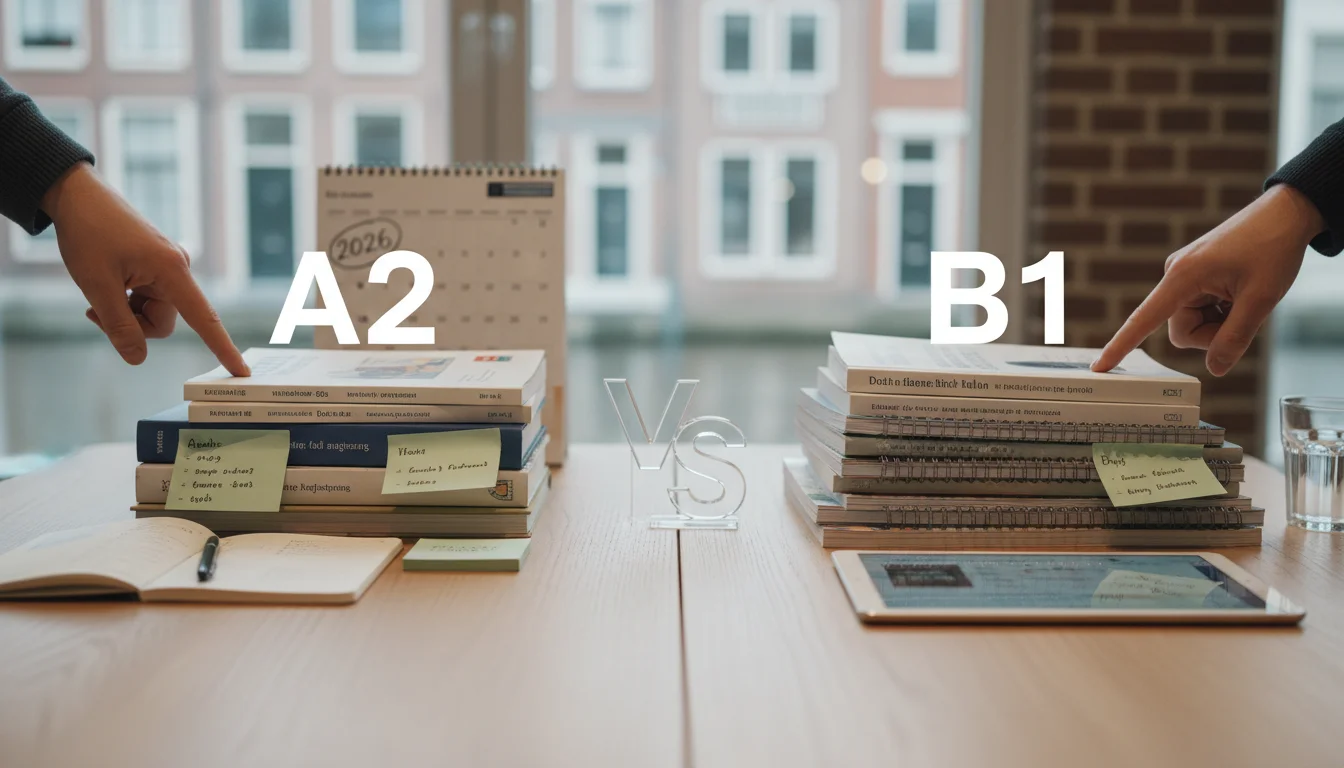
You've been living in the Netherlands, you've mastered the art of cycling in the rain, and you can order a 'koffie verkeerd' without breaking a sweat. Now, the next big step looms: the inburgeringsexamen, or Dutch integration exam. But as you start your research, a crucial question emerges: should you aim for the A2 or the B1 level? The difference might seem like just one letter, but in reality, it represents a significant leap in language proficiency, expectations, and real-world application.
As of 2026, the Dutch government's emphasis is increasingly on the B1 level as the standard for successful integration. This shift can feel daunting, leaving many learners wondering what exactly this step up entails. Are we talking about a small jump or a giant leap? This comprehensive guide will break down the key differences between the A2 and B1 Dutch integration exams, giving you a clear roadmap for what to expect and how to prepare for success.
Before we dive into the A2 versus B1 debate, let's quickly recap what the Dutch integration exam is. It's a mandatory series of tests for most non-EU/EEA nationals who wish to live in the Netherlands long-term, apply for permanent residency, or seek Dutch citizenship. The goal is to demonstrate that you have sufficient knowledge of the Dutch language and society to participate independently.
The exam typically consists of several components:
The primary distinction we'll focus on is the language level required for the four language components. For the most up-to-date and official information, it's always best to consult the Dutch Immigration and Naturalisation Service (IND).
The A2 and B1 levels are defined by the Common European Framework of Reference for Languages (CEFR), a global standard for gauging language ability. Understanding their definitions is the first step to grasping the exam differences.
Think of A2 as 'Survival Dutch'. At this level, you can handle simple, direct exchanges of information on familiar topics. You can:
Your language use is concrete and focused on the here and now. You can get by, but conversations lack depth and nuance.
B1 is a major milestone. It's where you transition from a 'basic user' to an 'independent user'. This is 'Functional Dutch'. At this level, you can:
The leap is clear: B1 requires you to express opinions, connect ideas, and handle unexpected situations. You're not just surviving; you're participating. As you progress, understanding the building blocks is key; mapping out your Dutch grammar milestones from A1 to B1 can provide a structured path for this journey.
How do these theoretical differences translate to the actual exam questions? Let's break it down section by section.
Making the leap from A2 to B1 requires a conscious shift in your learning strategy. It's no longer just about memorizing words; it's about learning to use the language flexibly and independently.
Start thinking in terms of explanations and opinions. When you learn a new word, don't just learn its meaning. Try to use it in a sentence that explains why you feel a certain way. Instead of just saying "I like cheese," practice saying "I like cheese because it tastes salty and it's delicious on bread."
B1 is the level of conjunctions. Actively practice connecting your ideas using words like omdat (because), dus (so), hoewel (although), terwijl (while), and nadat (after). This is one of the clearest markers of B1 proficiency. For instance, mastering the difference in temporal clauses with time adverbs like 'toen' and 'dan' is a classic B1 challenge.
Switch from learner-specific materials to real-world content. Watch the NOS Jeugdjournaal (a news program for children with clearer language), listen to Dutch podcasts on topics you enjoy, and try reading articles on websites like NU.nl. Don't worry if you don't understand everything; focus on grasping the main ideas.
The speaking gap is often the hardest to close. You need to activate your passive knowledge. Find a language tandem partner or use tools designed for safe, effective practice. The AI-powered conversation practice in the StroopTaal app is perfect for this. You can practice discussing opinions and handling everyday scenarios with an AI tutor who provides instant feedback on your pronunciation and grammar, helping you build confidence without pressure.
The move from the A2 to the B1 Dutch integration exam is a significant but achievable step. It marks the transition from being a tourist in the language to becoming a resident. While A2 equips you to handle basic needs, B1 empowers you to express your personality, engage in meaningful conversations, and truly participate in Dutch society.
Understanding these key differences is the first step in creating a targeted study plan. Focus on building a rich vocabulary, mastering complex sentence structures, and consistently practicing your ability to express and justify your opinions. With dedication and the right tools, you can confidently bridge the gap and ace your inburgeringsexamen in 2026.
Ready to start your journey to B1? Download the StroopTaal app today for a personalized learning plan that adapts to your pace, helping you master the grammar, vocabulary, and confidence needed for exam success.
Share this article:
So, You're Taking the Dutch Integration Exam... Moving to the Netherlands is an adventure filled with stroopwafels, beautiful canals, and... exams....
Read moreNavigating the Financial Path to Dutch Integration in 2026 Embarking on the Dutch inburgering journey is a significant step towards building a life...
Read moreYour Ultimate Guide to Acing the ONA Interview in 2026 For many people navigating the Dutch integration process, one component looms larger and more...
Read more