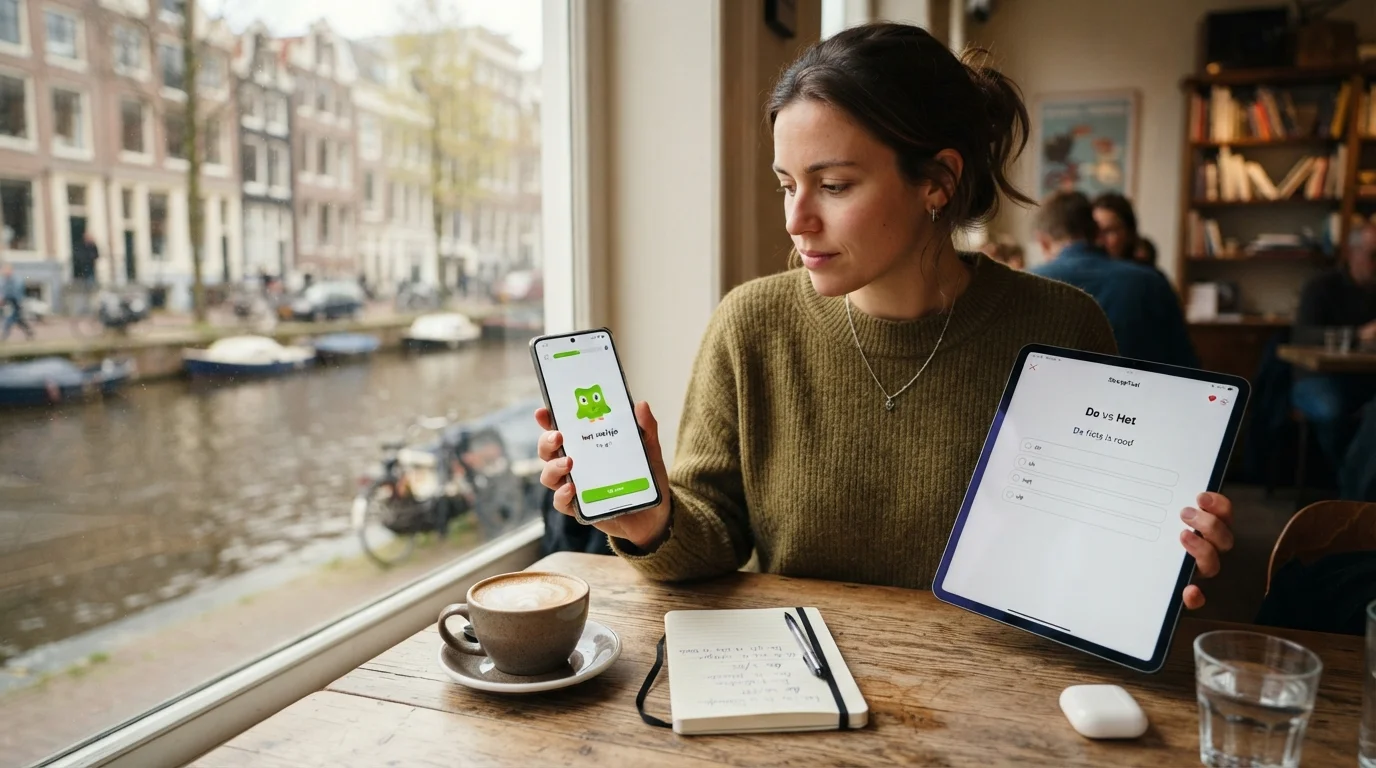
How StroopTaal Uses Spaced Repetition to Lock in Dutch Vocabulary
The Dutch Vocabulary Mountain: Why Traditional Memorization Fails Have you ever spent hours staring at a list of Dutch vocabulary, committing words...
Read more
For years, expats, high-skilled migrants, and partners moving to the Netherlands aimed for the A2 level of Dutch language proficiency to pass their civic integration exams (Inburgeringsexamen). However, 2026 marks a definitive era where the Dutch government actively enforces the B1 level requirement for integration, as outlined on the official Immigration and Naturalisation Service (IND) portal. Moving from A2 to B1 is not just a minor step; it represents the transition from basic survival Dutch to independent, professional communication.
At the B1 level, you are expected to understand the main points of clear standard input on familiar matters regularly encountered in work, school, and leisure. You can deal with most situations likely to arise while traveling in an area where the language is spoken, and you can produce simple connected text on topics that are personal or of interest. Because the stakes are higher, relying solely on basic vocabulary drills is no longer enough. You need tools that focus on building real-world fluency beyond basic game mechanics.
When you are preparing for the B1 exam, your learning needs change drastically. Beginners need to know how to order a coffee or count to ten; intermediate learners need to debate local politics, write formal emails to their landlord, and understand rapid spoken Dutch. Here is what your choice of app must offer in 2026:
To help you navigate the crowded edtech market, we have reviewed and curated the best Dutch learning apps specifically suited for intermediate (B1) preparation this year.
StroopTaal covers the intermediate levels as part of its lesson path from A0 to C1. Recognizing that the jump from A2 to B1 is where most learners hit a wall, StroopTaal uses an advanced AI engine to tailor the learning journey. Instead of a one-size-fits-all path, the app provides personalized learning plans driven by AI that adapt to your specific weaknesses, whether that is listening comprehension or subordinate clauses.
What makes StroopTaal exceptionally good for B1 preparation is its suite of interactive features. Its real-life Dutch conversation practice with AI acts as a judgment-free, 24/7 speaking partner. You can practice discussing work projects, negotiating rental contracts, or talking to a doctor—everyday situations from life in the Netherlands. Combined with its instant pronunciation training and article mastery games (solving the eternal de vs. het dilemma), it offers a comprehensive toolkit for serious integration candidates.
Babbel remains a solid contender for learners who prefer a traditional, classroom-style curriculum delivered digitally. Its Dutch course is highly structured and does a fantastic job of explaining the 'why' behind complex grammar rules. For B1 prep, Babbel offers dedicated modules on business Dutch and writing skills. While it lacks the fluid, conversational spontaneity of AI-driven platforms, its clear-cut explanations of the past perfect tense and conditional sentences are highly valuable for building a solid grammatical foundation.
If you already have a decent grasp of grammar but struggle to find the right words during conversations, Clozemaster is an excellent supplementary tool. It uses cloze tests (fill-in-the-blank sentences) to teach vocabulary in context. For B1 preparation, you can filter sentences to target the most common 5,000 to 10,000 Dutch words. It forces your brain to recognize patterns and collocations, helping you transition away from translating word-for-word from English to thinking directly in Dutch.
Busuu combines structured lessons with a unique social network of native speakers. When you complete a writing or speaking exercise at the B1 level, you can submit it to the community. A native Dutch speaker will then review your input and offer corrections. This peer-to-peer feedback loop is incredibly helpful for understanding colloquial nuances, though response times can vary, and it lacks the instant turnaround of a dedicated AI-powered Dutch language tutor for conversational practice.
Simply downloading an app is not enough; you need a strategic approach to bridge the gap to B1. Here is a proven weekly study blueprint you can implement using your chosen digital tools:
Dedicate the first part of your daily study session to active output. Use StroopTaal’s interactive dialogue games to speak aloud. Focus heavily on your pronunciation and try to answer the AI prompts using full, complex sentences rather than one-word answers. This trains your brain to retrieve Dutch vocabulary under pressure.
Do not run away from grammar. Spend three sessions a week deeply analyzing sentence mechanics. Practice converting active sentences into passive ones and master the rules of relative pronouns (die, dat, wat). Write down five sentences a day using these structures and run them through an app to check for word-order errors.
Supplement your app learning with authentic Dutch media. Listen to Dutch podcasts (such as Een Beetje Nederlands) or watch public broadcast news on NPO Start with Dutch subtitles turned on. Try to identify the grammar structures and vocabulary words you recently learned in your apps.
Many learners experience a sense of stagnation once they reach the late A2/early B1 phase. You can communicate basic needs, so the urgency to learn more wanes, yet you still feel lost in native-speed conversations. This is the intermediate plateau.
To break through, you must shift your focus from passive recognition to active production. Stop just reading flashcards; start writing short essays, summarizing news articles in Dutch, or recording yourself speaking for two minutes on a random topic. Apps with robust speech-to-text feedback loops are invaluable here, as they highlight exactly where your syntax or pronunciation falters, allowing you to make precise, incremental improvements daily.
Reaching the B1 level in Dutch is an empowering milestone. It transforms your life in the Netherlands from that of an outside observer to an active participant in local culture, workplaces, and communities. In 2026, you do not have to rely on expensive, rigid evening classes to get there. By combining structured study habits with cutting-edge tools like StroopTaal, you can build a personalized, flexible, and highly effective path to B1 fluency.
Ready to fast-track your journey to Dutch fluency and ace your integration exams? Download StroopTaal today and experience the future of personalized, AI-driven language learning.
Share this article:
The Dutch Vocabulary Mountain: Why Traditional Memorization Fails Have you ever spent hours staring at a list of Dutch vocabulary, committing words...
Read moreThe Ultimate Dutch Frustration: De vs. Het Ask any expat, language student, or integration exam candidate what they find most frustrating about...
Read morePicture this: you have a 300-day streak on your favorite language app. You can match the picture of the apple with the word "appel" in milliseconds....
Read more