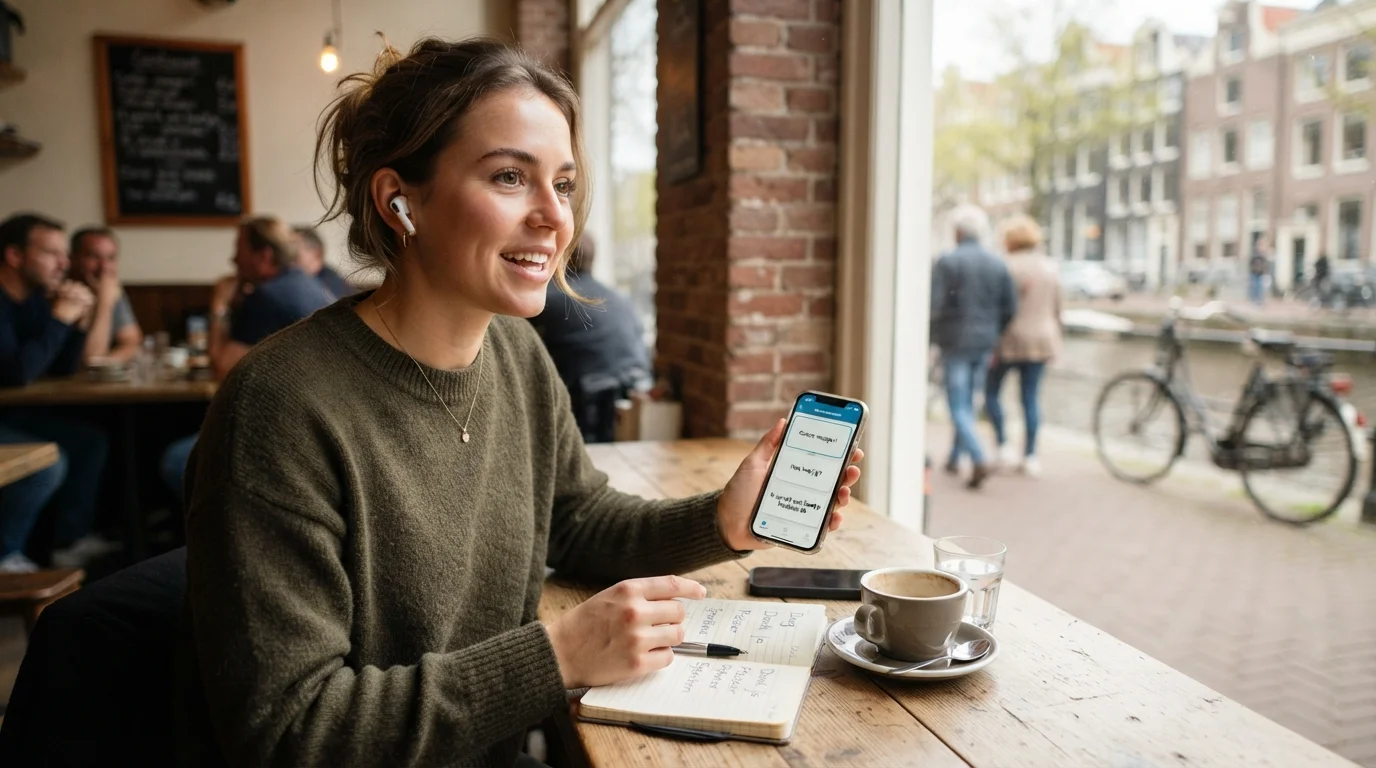
Why Daily Micro-Learning is Key to Conversational Dutch
If you have lived in the Netherlands for any amount of time, you are likely familiar with the expat paradox: you genuinely want to speak Dutch, but...
Read more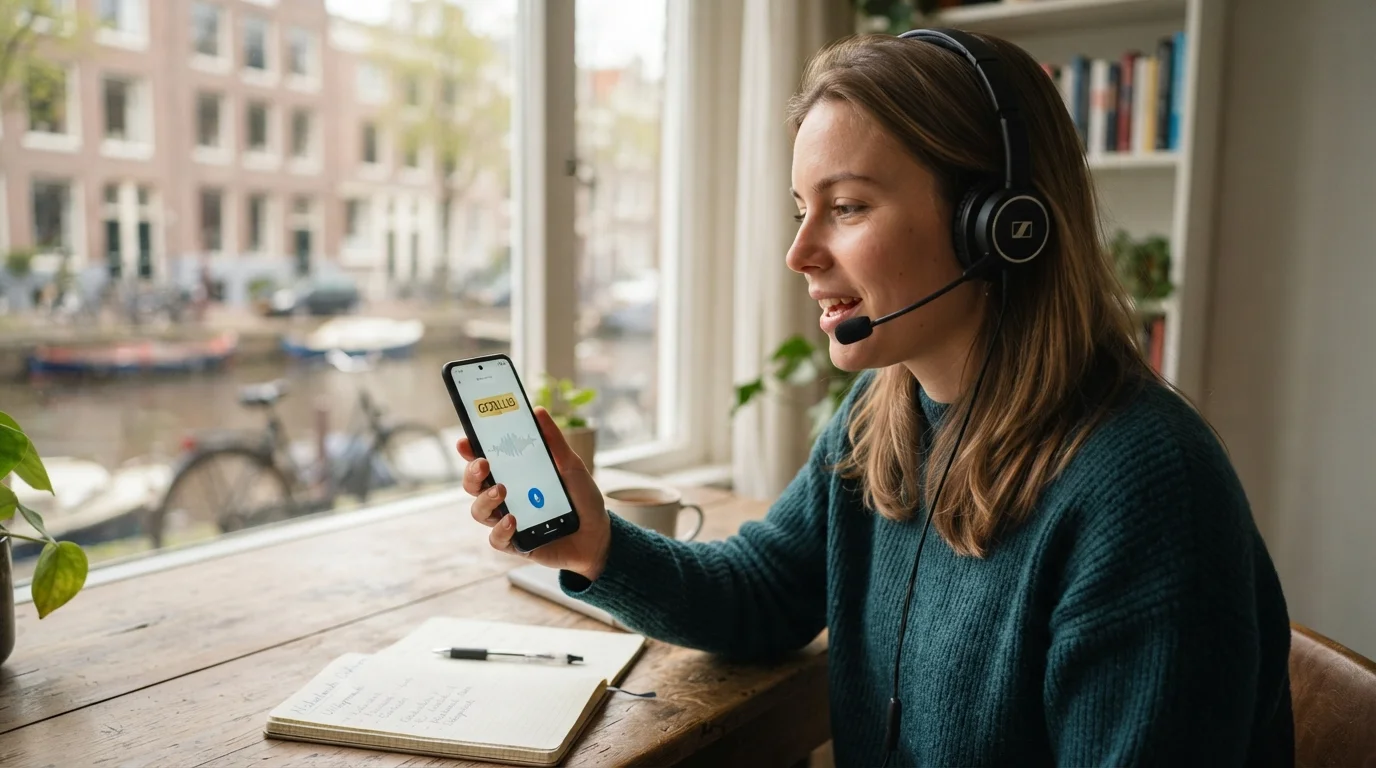
If you have ever stepped into a bakery in Amsterdam, carefully rehearsed ordering in Dutch, only to have the clerk immediately reply in fluent English, you are not alone. This classic rite of passage happens to almost every expat in the Netherlands. Dutch natives are notoriously quick to switch languages the moment they detect a hesitation or a slight mispronunciation.
Dutch phonetics can feel like a minefield. Between the guttural g sound, tricky diphthongs like ui and eu, and subtle differences between long and short vowels (such as man versus maan), getting your mouth around the sounds requires genuine muscle memory. Fortunately, modern technology has made it easier than ever to build speech confidence in the comfort of your own living room.
Whether you are striving for social fluency or preparing for your civic integration exams, exploring whether you can become fluent in Dutch using only apps often starts with choosing tools that specifically target spoken output. In this guide, we break down the top five free and freemium apps that help you refine your pronunciation and speak Dutch with genuine confidence.
Before diving into the tools, it helps to understand why Dutch speech requires targeted practice:
While many legacy apps focus solely on multiple-choice tap games, StroopTaal is specifically built around interactive Dutch speaking practice and personalized feedback. Designed with expats, international professionals, and integration students in mind, StroopTaal bridges the gap between passive study and real-world conversation.
Key Features for Speaking:
Verdict: A modern, AI-powered option for practicing realistic Dutch speech without the anxiety of immediate judgment.
When you encounter a new Dutch word and have no idea how it sounds in a regional accent, Forvo is the ultimate free crowd-sourced dictionary. It is not a conversational tutor, but rather an auditory reference containing thousands of recordings spoken by authentic native speakers from the Netherlands and Flanders (Belgium).
Key Features:
Verdict: An indispensable, completely free companion app to verify accurate native pronunciation before you commit bad habits to memory.
While not a structured language-learning course, using free mobile voice-to-text engines is one of the most practical, unbiased speech assessments available. By setting your keyboard or Google Translate input language to Dutch (Nederlands), you can speak entire sentences aloud to test whether an objective algorithm understands you.
How to Practice:
Verdict: A free, instant diagnostic tool that strips away polite human guessing and tests cold phonetic clarity.
If you want human interaction without the financial burden of private tutoring, language exchange platforms like Tandem and HelloTalk connect you with Dutch speakers who want to practice your native language in return.
Speaking Highlights:
Verdict: Ideal for intermediate learners who have mastered basic vocabulary and want real social interaction for zero cost.
Although Duolingo is primarily known for translation exercises, its free tier includes standard voice recognition challenges that prompt beginners to read simple phrases aloud. While its acoustic model is more forgiving than specialized speech software, it helps total beginners overcome the initial barrier of vocalizing Dutch words.
Key Features:
Verdict: Good for absolute beginners (A0-A1) who need a simple push to start speaking aloud, though you will quickly outgrow its simplified pronunciation engine.
If you are pursuing permanent residency or citizenship in the Netherlands, passing the civic integration exam (Inburgeringsexamen) is mandatory. The spoken section (Spreken) tests your ability to answer prompt questions on screen within strict time limits. For official timelines and requirements, refer to the Dutch integration guidelines on Government.nl.
Modern learners increasingly use AI-powered language apps to fast-track their Dutch to B1 level, particularly because computerized speaking tests reward clear diction, proper grammar placement (such as the correct verb order in subclauses), and consistent cadence.
Fluency is not built by quietly reading grammar tables in isolation; it is forged by exercising your vocal cords every single day. By combining free tools like Forvo for phonetic reference and Google dictation for quick diagnostics with interactive speaking platforms like StroopTaal, you can overcome conversational anxiety and hold your own in Dutch conversations.
Do not wait until you feel "ready" to speak. Pick one of these apps, dedicate 10 minutes a day to vocal practice, and the next time someone tries to switch to English, surprise them with your natural, confident Dutch!
Share this article:
If you have lived in the Netherlands for any amount of time, you are likely familiar with the expat paradox: you genuinely want to speak Dutch, but...
Read moreIf you have ever stood at a bakery counter in Amsterdam wondering whether to ask for het brood or de brood, you are not alone. For almost every expat...
Read moreIf you have ever spent an evening staring at Dutch vocabulary flashcards wondering why a table is de tafel but a house is het huis, you are in good...
Read more