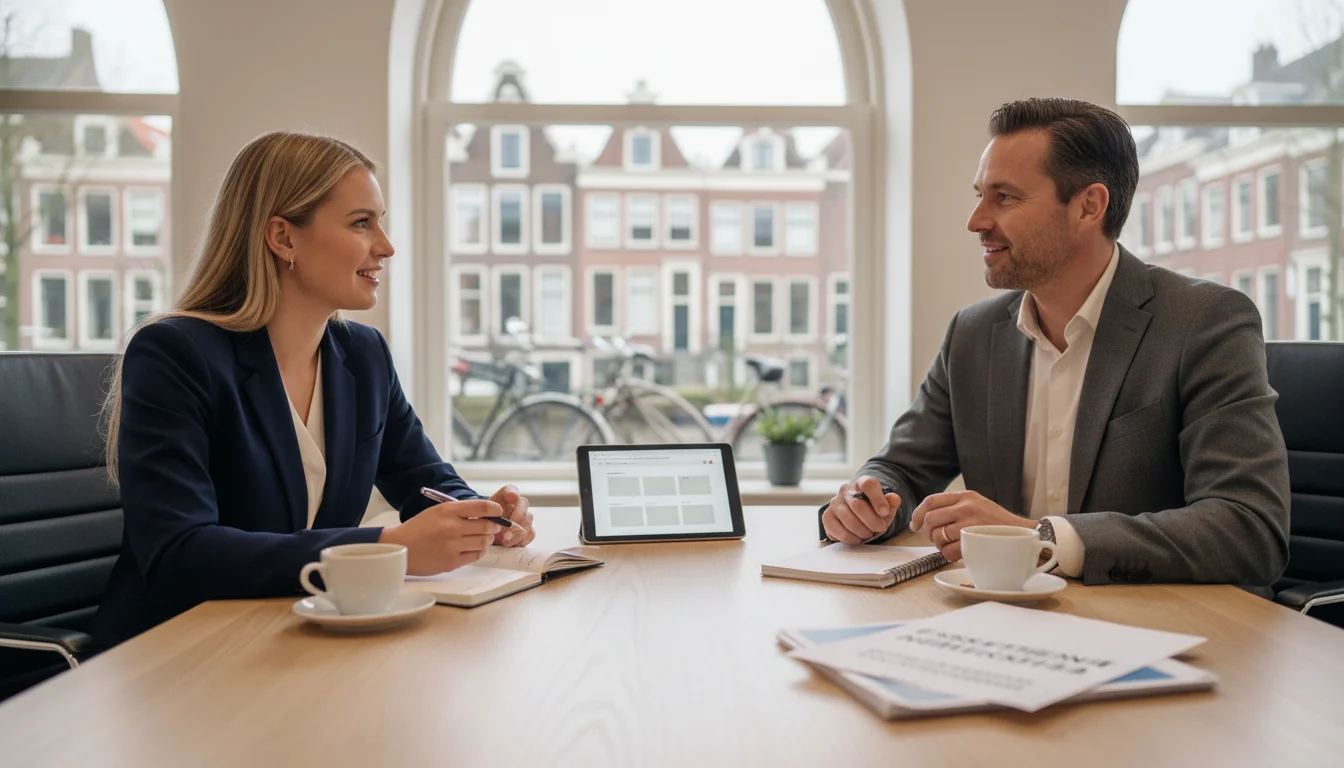
Essential Dutch Phrases for Job Interviews: Make a Good Impression
Conquering the Dutch Job Interview: Why Language Matters Walking into a job interview is always a nerve-wracking experience. But when you are doing...
Read more
Imagine a professional landscape where leaving the office at 5:00 PM is not just accepted, but actively encouraged. Picture a corporate culture where working part-time does not stall your career progression, and where weekends are treated as sacred, uninterrupted periods of rest. Welcome to the Netherlands, a country that consistently ranks at the top of global work-life balance indexes.
For expats, international graduates, and newcomers, adjusting to this unique environment can be both liberating and baffling. At the heart of this cultural phenomenon is the famous Dutch 36-hour workweek. Far from being a sign of low productivity, this compressed or shortened schedule is a deliberate structural choice designed to maximize efficiency, reduce burnout, and foster personal well-being. But how does it actually work in practice? And more importantly, how can you, as an international, adapt to and thrive within this system?
In this comprehensive guide, we will unpack the mechanics of the 36-hour workweek, explore the deep-seated cultural philosophies that underpin it, and provide actionable tips on how to navigate your career while safeguarding your personal life. Along the way, we will also look at how mastering the local language and corporate etiquette can help you truly integrate into this progressive professional landscape.
In many parts of the world, a standard full-time workweek is strictly defined as 40 hours, often stretching far beyond that with unrecorded overtime. In the Netherlands, however, the definition of "full-time" is much more flexible. Depending on the collective labor agreement (known in Dutch as a Collectieve Arbeidsovereenkomst or CAO), a full-time position can range anywhere from 36 to 40 hours per week.
The 36-hour workweek is particularly common in government sectors, financial institutions, and large Dutch corporations. It is typically structured in one of three ways:
According to official data from the Dutch Government, this flexibility is protected by law. The Dutch Working Hours Act (Arbeidstijdenwet) sets clear limits on maximum working hours and guarantees minimum rest periods, ensuring that employees are never exploited. This structural flexibility allows workers to tailor their professional commitments around their personal lives, rather than the other way around.
To truly understand the 36-hour workweek, one must understand the Dutch mindset. There is a deep-seated cultural belief that life is not meant to be spent entirely at a desk. The Dutch work to live; they do not live to work. This philosophy is reflected in several key cultural concepts:
The Netherlands has the highest rate of part-time employment in the European Union. It is incredibly common for both men and women to work 32, 28, or even 24 hours a week. This is closely tied to family life and the concept of the papadag (daddy day) or mamadag (mommy day)—designated weekdays where one parent stays home to look after the children, reducing the reliance on external childcare and fostering stronger family bonds.
Because working hours are limited, the Dutch place a premium on efficiency. Meetings are expected to be structured, goal-oriented, and concise. There is very little room for performative presenteeism; staying late at the office is not viewed as dedication, but rather as a sign of poor time management. To understand how the Dutch manage their collaborative tasks so efficiently, it is highly beneficial to read about Dutch business culture and the 'overleg' meeting style, which explains the consensus-driven approach that keeps projects moving forward without requiring long hours.
The concept of gezelligheid (coziness, social connection, and warmth) is central to Dutch life. After-work hours are dedicated to sports clubs (sportverenigingen), volunteering, hobbies, and spending time with family and friends. This separation between work and personal life is heavily guarded. Sending work-related emails or making business calls after 6:00 PM is generally frowned upon and considered highly unprofessional.
For internationals looking to enter this balanced job market, the transition requires a shift in strategy. When searching for a job, you will often see vacancies advertised with a salary range based on a "36-hour contract" or a "40-hour contract." Understanding these terms is crucial when calculating your potential take-home pay and negotiating your employment terms.
If you are a recent graduate trying to break into this market, you should start by researching how to position yourself. A great starting point is our guide on finding your first job in the Netherlands, which outlines the specific expectations of Dutch recruiters.
During the recruitment process, do not be afraid to discuss working hours. In many cultures, asking for a 36-hour week or expressing a desire for part-time work during an interview might make you look uncommitted. In the Netherlands, it is seen as a normal, mature discussion about boundaries and lifestyle preferences. To prepare for these crucial conversations, check out our practical tips on how to negotiate your salary in the Netherlands, which will help you navigate both compensation and contract hours with confidence.
Transitioning to a shorter workweek sounds ideal, but it can actually be challenging if you are accustomed to a high-pressure, long-hours environment. Here are several practical strategies to help you thrive:
The Dutch are famous for their directness (directheid). In the workplace, this means you are expected to speak up if your workload is too high. If you are contracted for 36 hours but find yourself working 45 to keep up, you must schedule a meeting with your manager to address the bottleneck. Saying "I don't have the capacity for this project within my contracted hours" is respected, not penalized.
Turn off work notifications on your phone outside of your contracted hours. If you work a four-day week, make sure your calendar clearly marks your day off as "busy" or "out of office." When you are off, truly disconnect. Your Dutch colleagues will respect your boundaries, but only if you enforce them yourself.
Expats are often surprised by how far in advance the Dutch plan their social calendars. It is not uncommon to schedule a casual dinner with a friend three or four weeks in advance. While this may feel rigid at first, it is actually a tool for work-life balance. By scheduling your personal commitments early, you ensure that your free time is protected and prioritized.
While the Netherlands has an incredibly high proficiency in English, the true social and cultural life of an office often happens in Dutch. Participating in the lunch walk (lunchwandelen) or joining the Friday afternoon drinks (vrijdagmiddagborrel, or vrijmibo) is infinitely easier and more rewarding if you can understand the casual banter of your colleagues.
This is where StroopTaal can transform your expat experience. By using StroopTaal's AI-powered personalized learning plans and real-life Dutch conversation practice, you can quickly build the confidence to speak Dutch in professional and social settings. The app's interactive dialogue games simulate real office scenarios, helping you master both the vocabulary and the cultural nuances of the Dutch workplace without feeling overwhelmed.
The Dutch work-life balance is not just a cultural preference; it is heavily backed by robust legal protections. Under the Dutch Flexible Working Act (Wet flexibel werken), employees have the legal right to request a change in their working hours (either an increase or decrease) and even a change in their work location (such as working from home), provided they have been employed with the company for at least six months.
Furthermore, the law dictates that part-time employees cannot be treated less favorably than their full-time counterparts. This means that if you choose to work a 32-hour or 36-hour week, you are entitled to the exact same hourly wage, pro-rata holiday allowance, and career opportunities as someone working 40 hours. This legal equality prevents the "part-time penalty" seen in many other economies, making a balanced lifestyle financially viable and professionally secure.
Thriving in a 36-hour workweek requires more than just leaving the office early; it requires a mindset shift. It asks you to value your time, protect your boundaries, and redefine what success looks like. By embracing the Dutch approach to work and life, you can enjoy a fulfilling, high-impact career while still having the time and energy to explore your passions, connect with your community, and truly enjoy your life in the Netherlands.
If you want to fully unlock the benefits of living and working in the Netherlands, learning the language is your greatest asset. Whether you are preparing for your integration exams, looking to ace your next job interview, or simply wanting to connect with your colleagues during the vrijmibo, StroopTaal is here to help. With targeted grammar lessons from A0 to C1, pronunciation training, and specialized cultural lessons, StroopTaal provides everything you need to feel at home in the Dutch workplace. Download StroopTaal today and start your journey toward true integration!
Share this article:
Conquering the Dutch Job Interview: Why Language Matters Walking into a job interview is always a nerve-wracking experience. But when you are doing...
Read moreIntroduction: The Dutch Dream for International Graduates Graduating from a Dutch university is a monumental achievement. Whether you spent your...
Read moreIs the Dutch 30% Ruling Still Available? Your Guide to the 2024-2026 Changes Moving to the Netherlands for a fantastic career opportunity? You've...
Read more