Dutch School System Explained: Basisschool vs Middelbare School
Navigating the Dutch School System: Your Complete Guide Moving to the Netherlands with your family is an exciting adventure, but it comes with a long...
Read more
This article was drafted by AI and edited by a person before it was published.
AI can get things wrong. For anything official, check the source it points to.
AI-generated image
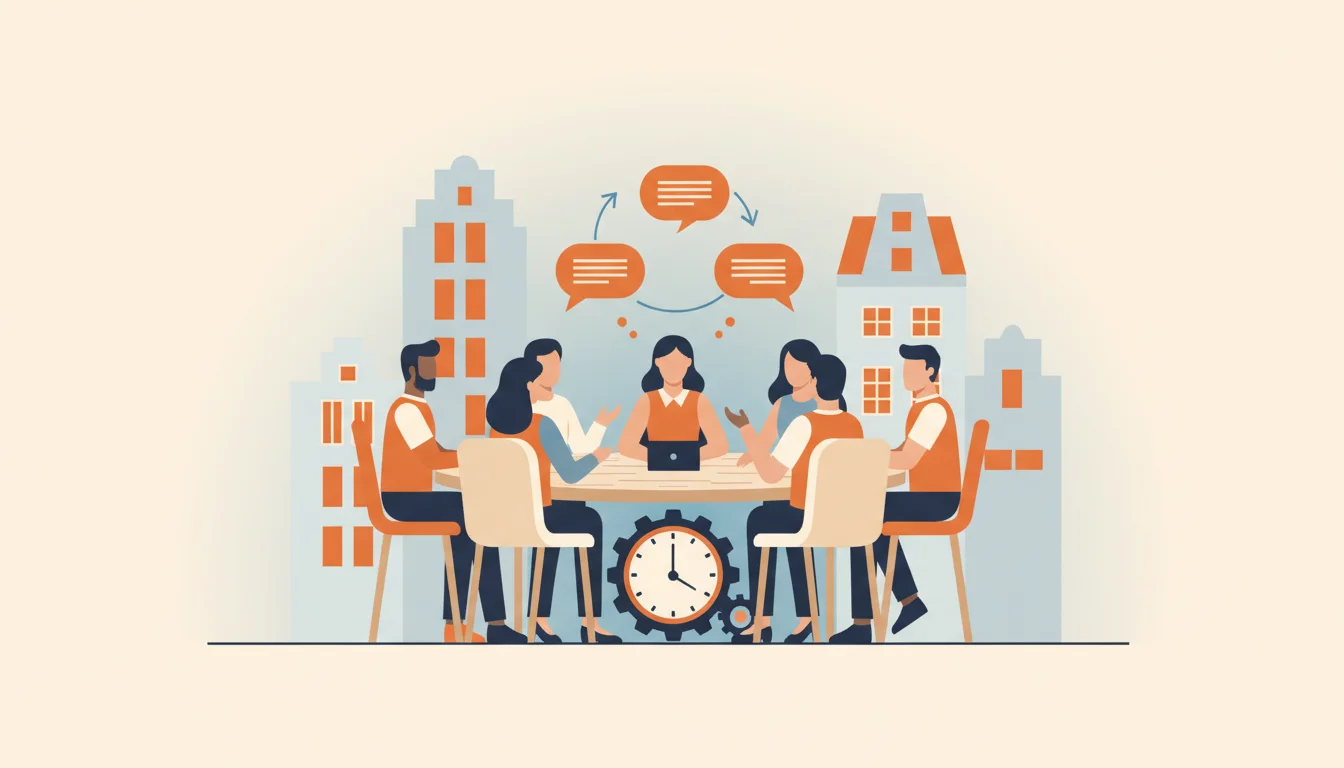
Picture this: It is your first month working in the Netherlands. You have been invited to a strategy meeting—or as the Dutch call it, an overleg. Coming from a corporate culture where the boss speaks and the employees take notes, you sit quietly, waiting for the department head to hand down the final decision. Instead, you witness an intern passionately arguing with the CEO about the color scheme of a new marketing campaign. The CEO listens intently, the meeting goes over time by twenty minutes, and eventually, a compromise is reached that incorporates everyone's feedback.
Welcome to the Dutch overleg.
For expats, international students, and professionals integrating into the Netherlands, the local business culture can be one of the most jarring adjustments. It is a landscape defined by flat hierarchies, blunt honesty, and an insatiable desire for consensus. Understanding how to navigate the overleg is not just a matter of corporate etiquette; it is an essential survival skill for your career in the Low Countries. In this comprehensive guide, we will break down the mechanics, the history, and the unwritten rules of the Dutch meeting style, equipping you with the cultural knowledge and vocabulary you need to thrive.
In the simplest terms, an overleg translates to a consultation or a meeting. However, translating the word does not capture its cultural weight. In Dutch business culture, an overleg is a sacred institution. It is the designated space where opinions are aired, problems are dissected, and consensus is painstakingly built.
While an English speaker might use the word "meeting" to describe everything from a quick five-minute catch-up to a formal presentation, the Dutch categorize their gatherings more specifically. A vergadering is typically a formal meeting with strict minutes and a chair, while an overleg is more collaborative, focused on discussion, problem-solving, and alignment. It is the engine room of the Dutch corporate machine.
To truly understand why the Dutch meet the way they do, you have to look at the landscape. The Netherlands is a country where roughly a third of the land lies below sea level. For centuries, keeping the water at bay required intense cooperation among citizens, regardless of their social standing. A wealthy merchant and a poor farmer had to work together to build and maintain the dikes, because if the dike broke, everyone drowned.
This historical necessity birthed the Polder model, a consensus-based approach to decision-making that prioritizes cooperation and compromise over top-down authority. In the 20th century, this model was formalized in Dutch politics and economics, most notably during the 1982 Wassenaar Agreement, where unions, employers, and the government worked together to stabilize the economy.
Today, the spirit of the Polder model lives on in every Dutch office. The underlying belief is that decisions are better, more robust, and more easily implemented when everyone involved has had a chance to voice their opinion. It may take longer to reach a conclusion, but once a decision is made, the entire team is on board.
If you want to succeed in a Dutch professional environment, you need to master the three core pillars that define the overleg. Let us explore each of them in detail.
The Dutch have a famous proverb: "Doe maar normaal, dan doe je al gek genoeg" (Just act normal, that's crazy enough). This cultural aversion to standing out or acting superior translates directly into the workplace. Dutch companies are famous for their flat organizational structures.
In an overleg, hierarchy is left at the door. Your title does not grant you a monopoly on good ideas, nor does it shield you from criticism. Managers view themselves as facilitators rather than dictators. If you are invited to a meeting, it is expected that you will contribute. Sitting silently in the corner is often viewed not as respectful, but as a lack of engagement or competence.
Perhaps the most famous—and to some, infamous—trait of the Dutch is their directness. In an overleg, communication is straightforward, unambiguous, and highly pragmatic. The Dutch value transparency and efficiency over saving face or protecting egos.
If a colleague thinks your idea is flawed, they will tell you so directly, often without the "compliment sandwich" (layering criticism between two compliments) common in Anglo-American cultures. This can feel incredibly jarring to newcomers, who might interpret this bluntness as rudeness or personal animosity. It is crucial to understand that this directness is almost always strictly professional. They are criticizing the idea, not the person. Learning to separate your ego from your work is essential.
This direct approach isn't just for daily tasks; it's exactly the same mindset you need when asking for a raise in a Dutch company. Being clear, factual, and direct about your value is the only way to get results.
The ultimate goal of the overleg is to create draagvlak, which translates roughly to "support" or "backing." The Dutch want to ensure that everyone is aligned before moving forward. This means that meetings can sometimes feel circular or overly lengthy, as every objection is heard and discussed until a compromise is found.
While this can be frustrating for expats used to quick, executive decision-making, it has a massive upside: once a decision is finally made, execution is usually swift and seamless, because the time for complaining and resisting has already passed.
Beyond the broad cultural pillars, there are several unwritten logistical rules you must follow to be taken seriously in a Dutch meeting.
If an agenda or a reading packet is sent out before the meeting, it is expected that you have read it thoroughly. The Dutch do not use meeting time to get up to speed; they use it to debate and decide. If you show up unprepared, it is considered highly disrespectful of your colleagues' time.
Time is money, and the Dutch are famously pragmatic. If an overleg is scheduled for 10:00 AM, it starts at 10:00 AM. Arriving five minutes late without a very good excuse (and a prior text message) is a major faux pas. If you want to dive deeper into the logistical side, understanding the Dutch meeting culture regarding agendas and punctuality is highly recommended for anyone entering the workforce.
You are expected to participate, but your contributions should be logical, fact-based, and concise. Emotional appeals or overly dramatic presentations tend to fall flat in the Netherlands. Bring data, bring examples, and state your case clearly.
While many Dutch companies operate in English, throwing in a few Dutch phrases shows respect for the culture and helps you integrate faster. Here are some essential phrases for your next overleg:
Navigating these conversations and nailing the pronunciation can be daunting for non-native speakers. That's where StroopTaal comes in. Our app features real-life Dutch conversation practice with AI, allowing you to simulate a high-pressure overleg in a safe environment before you step into the real boardroom. Plus, with our pronunciation training with instant feedback, you can work on making your "Daar ben ik het niet mee eens" sound confident and professional.
Because of the direct nature of Dutch communication, disagreements are common and highly visible. If you are presenting a proposal, expect it to be picked apart. The key is to not become defensive.
When a Dutch colleague challenges your idea, they are essentially stress-testing it. They want to see if it holds up under scrutiny. Respond with facts, clarify your reasoning, and be open to conceding points if their logic is sound. If you handle pushback gracefully, you will earn immense respect. According to Dutch employment practices, fostering an open dialogue is a cornerstone of a healthy work environment.
One of the most fascinating aspects of Dutch business culture is the ability to compartmentalize. You can spend two hours in a heated overleg, fiercely debating a project with a colleague, and at 5:00 PM, that same colleague will cheerfully hand you a beer.
This is because the Dutch separate the professional from the personal beautifully. The intensity of the meeting room rarely bleeds into social interactions. After a long week of intense overleggen, the Dutch love to decompress. This is where mastering the borrel becomes just as important as the meetings themselves. The Friday afternoon drinks (vrijmibo) are where the flat hierarchy becomes a social reality, and bonds are formed over bitterballen and beer.
If you are preparing for your first major Dutch meeting, here is a quick checklist to ensure success:
To truly excel, you need to understand the nuances of Dutch life. StroopTaal’s cultural lessons about life and customs, together with lessons that teach the Dutch of daily life and work, help you prepare for the integration exams and real-world corporate life simultaneously.
The Dutch overleg might seem intimidating at first, with its blunt feedback, exhaustive debates, and lack of clear hierarchy. But once you understand the rhythm of it, it is a highly empowering environment. It is a system that values your brain over your job title, and prioritizes collective success over individual ego.
By preparing thoroughly, speaking your mind clearly, and embracing the pursuit of consensus, you will not just survive in the Dutch business world—you will thrive.
Ready to master the language of Dutch business? With StroopTaal's AI-powered personalized learning plans and vocabulary building with spaced repetition, you can build up the Dutch you need to take part in the overleg. Download StroopTaal today and take the first step toward fluency!
Share this article:
Navigating the Dutch School System: Your Complete Guide Moving to the Netherlands with your family is an exciting adventure, but it comes with a long...
Read moreIntroduction: Navigating the Dutch Job Market Congratulations! You have successfully navigated the interview process, impressed the hiring managers,...
Read moreIntroduction: The Safety Net in the Low Countries Moving to the Netherlands is an exciting adventure filled with bicycles, stroopwafels, and...
Read more