How to Pass the Dutch Listening Exam with Daily Podcasts
Mastering the Dutch Luisteren Exam Through Auditory Immersion The Dutch listening exam (Luisteren) can feel incredibly daunting. You sit in a quiet...
Read more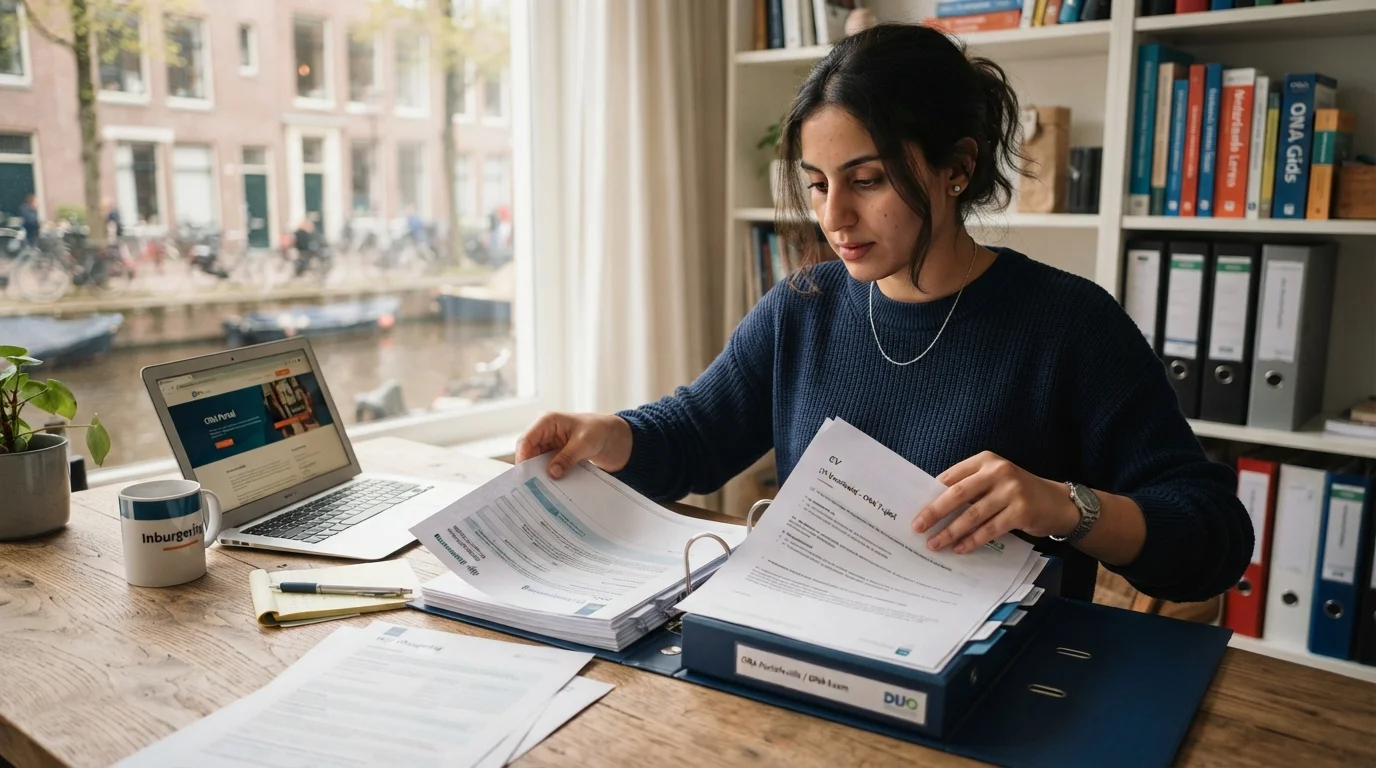
For many expats, highly skilled migrants, and non-EU citizens making the Netherlands their home, the civic integration process (inburgering) is a major milestone. While exams like Reading, Writing, Listening, and Speaking assess your direct linguistic capabilities, there is one component designed specifically to bridge the gap between learning Dutch and landing a job: the Oriëntatie op de Nederlandse Arbeidsmarkt (ONA) exam.
The ONA exam is not about memorizing historical dates or grammar rules; it is a practical assessment of your readiness to enter the Dutch workforce. The core of this exam is the ONA Portfolio, a collection of eight detailed worksheets called resultaatkaarten (result cards). In this comprehensive guide, we will break down exactly how to build a flawless portfolio, navigate the submission process, and prepare for the final interview with confidence.
The ONA exam is mandatory for most individuals undergoing civic integration under the 2013 and 2021 integration laws. Its primary objective is to ensure you understand how the Dutch labor market works, what jobs fit your profile, and how to successfully apply for work in the Netherlands. You must demonstrate that you have researched realistic career paths, understand the qualifications required, and know how to network with Dutch employers.
However, not everyone is required to complete the full ONA portfolio and interview. Depending on your employment history in the Netherlands, your educational background, or when you started your integration path, you might qualify for an exemption. Before spending weeks drafting your portfolio, it is highly recommended to check how to request an exemption from the integration exam to see if your current employment status exempts you from this requirement.
If you do not qualify for an exemption, don't worry. Preparing your portfolio is a structured, highly logical process that actually provides incredibly useful insights into building a career in the Netherlands.
Your ONA portfolio consists of eight distinct worksheets. Each card focuses on a specific aspect of your career orientation and job search strategy. To pass, you must fill out these cards in Dutch, demonstrating a realistic understanding of your chosen profession. Let's look at each card in detail:
In this first card, you must identify two specific professions you would like to pursue in the Netherlands. These cannot be vague concepts; they must be actual job titles recognized in the Dutch market (e.g., Software Developer, Klantenservicemedewerker, or Verpleegkundige). You need to explain why these jobs interest you and how they align with your background.
DUO (Dienst Uitvoering Onderwijs) wants to see that you understand the day-to-day reality of your chosen professions. On this card, you will describe typical working hours, the work environment (office, outdoors, remote), physical demands, and the average salary expectations. You must prove that your expectations match the reality of the Dutch labor market.
Here, you will list your personal strengths and traits that make you suitable for the jobs you chose. You need to use professional Dutch vocabulary to describe yourself. Words like flexibel (flexible), stressbestendig (stress-resistant), nauwkeurig (accurate), and leergierig (eager to learn) are highly valued in Dutch workplace culture.
What diplomas, certifications, or licenses do you need to practice your chosen profession in the Netherlands? For some fields, like healthcare or law, you must have your foreign diplomas formally evaluated by the Internationale Diplomawaardering (IDW). On this card, you will outline these requirements and state whether you already possess them or how you plan to acquire them.
While traits are about who you are, competencies are about what you can do. You must describe specific skills you possess (e.g., project management, coding languages, customer service) and provide concrete examples of how you have demonstrated these skills in your past work or academic life.
Networking is crucial in the Dutch job market; a significant percentage of jobs here are filled through informal networks and platforms like LinkedIn. On this card, you must list professional organizations, online networks, job fairs, or industry-specific events relevant to your target field. You should also describe an actual networking action you have taken or plan to take.
This card requires you to show how and where you search for jobs. You must find and attach two real, current job vacancies (vacatures) that match your profile. You will need to explain why these vacancies are a good match and detail the steps you would take to apply for them.
Landing a job is only half the battle; keeping it is the other. On this final card, you will demonstrate your understanding of Dutch workplace culture, rights, and responsibilities. You will answer questions about how to handle conflicts with colleagues, how to negotiate work-life balance, and what is expected of you during a probationary period (proeftijd).
Creating a successful portfolio requires a strategic approach. Follow these steps to ensure your submission is accepted without delays:
As the Dutch integration standards evolve, staying updated on the required language levels is essential. For instance, understanding the Inburgering B1 transition is vital if you are navigating the newer integration pathways, as higher language expectations directly impact how you draft your professional portfolio and interact during your assessments.
Once you have meticulously filled out all eight cards and gathered your supporting documents (such as your CV, cover letter, and the two job vacancies), it is time to submit your portfolio to DUO.
The submission process is fully digital. You will need to log into your personal portal using your DigiD. If you are unfamiliar with the portal layout or how to navigate the registration steps, check out our guide on registering for your exams via Mijn Inburgering.
After uploading your documents, you will need to pay the exam fee. DUO will then review your portfolio. This review process can take up to 6 weeks. If your portfolio is rejected, DUO will provide feedback indicating which cards need revision. If it is approved, you will be invited to the final stage: the ONA interview (eindgesprek).
The final hurdle of the ONA exam is a 40-minute face-to-face interview with two DUO assessors. The purpose of this interview is simple: to verify that you wrote the portfolio yourself and that you truly understand the contents of your submission.
During the interview, the assessors will ask you questions directly based on your cards. They might ask you to elaborate on why you chose a specific career, how you plan to network, or what you would do if you encountered a conflict at work. The entire conversation is conducted in Dutch.
Preparing for this interview can be stressful, especially if you aren't used to speaking Dutch in a formal, professional setting. This is where the StroopTaal app can be a game-changer. With its real-life Dutch conversation practice powered by AI and instant pronunciation feedback, StroopTaal allows you to simulate professional discussions, practice answering career-related questions, and build the speaking confidence you need to impress the DUO assessors.
Many candidates face delays in their integration process due to easily avoidable mistakes in their ONA portfolio. Keep these common pitfalls in mind:
The ONA portfolio and interview might seem like daunting administrative hurdles, but they are designed to set you up for long-term professional success in the Netherlands. By systematically addressing each of the eight result cards, aligning your career goals with the realities of the Dutch job market, and practicing your spoken Dutch, you will navigate this process smoothly.
Ready to master your Dutch and ace your ONA interview? Download the StroopTaal app today to access personalized learning plans, build your professional vocabulary, and practice realistic Dutch conversations with our advanced AI tutor. Let's make your Dutch integration journey a complete success!
Share this article:
Mastering the Dutch Luisteren Exam Through Auditory Immersion The Dutch listening exam (Luisteren) can feel incredibly daunting. You sit in a quiet...
Read moreMoving to the Netherlands is an exciting adventure filled with biking along historic canals, tasting delicious stroopwafels, and adapting to a...
Read moreTurn Dead Commute Time into Dutch Exam Success Whether you are wedged into a seat on a crowded NS train heading into Amsterdam, waiting for a tram in...
Read more