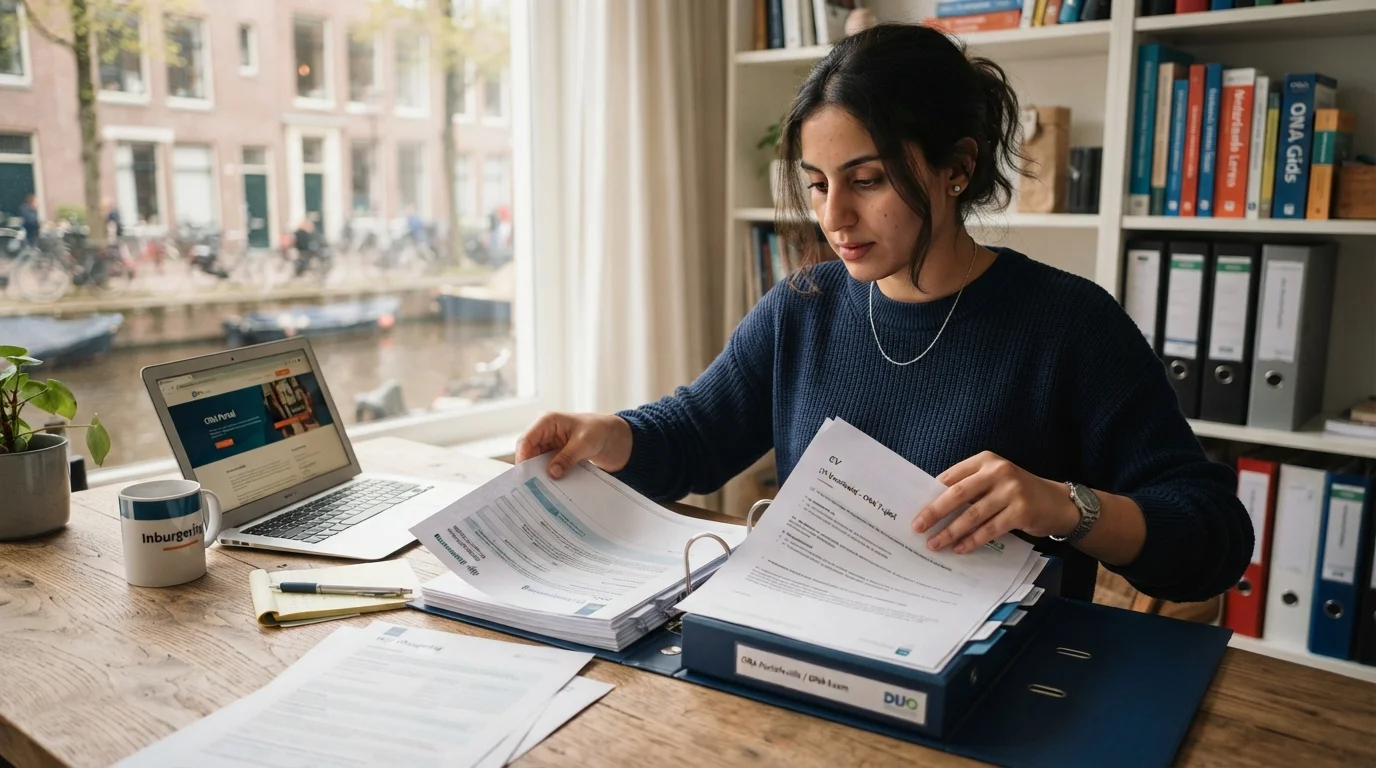
The Ultimate Guide to the Inburgering Portfolio for the ONA Exam
Introduction: Demystifying the ONA Exam For many expats, highly skilled migrants, and non-EU citizens making the Netherlands their home, the civic...
Read more
This article was drafted by AI and edited by a person before it was published.
AI can get things wrong. For anything official, check the source it points to.
AI-generated image
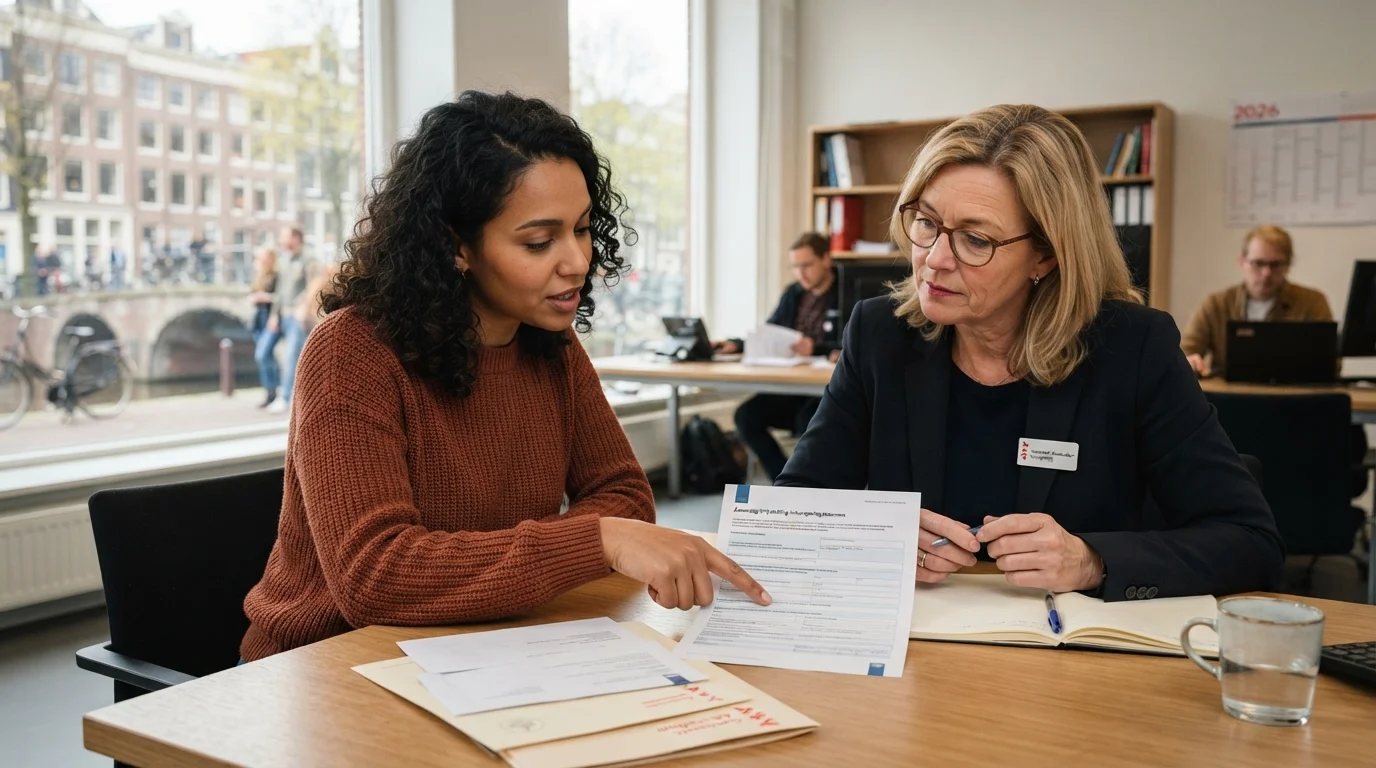
Moving to the Netherlands is an exciting adventure filled with biking along historic canals, tasting delicious stroopwafels, and adapting to a vibrant, multicultural society. However, if you plan to stay long-term, apply for permanent residency, or become a Dutch citizen, you will inevitably face the Inburgeringsexamen (the Dutch Civic Integration Exam). Under the strict integration framework, navigating this requirement can feel daunting.
But did you know that not everyone is required to take these exams? Depending on your educational background, nationality, health, or personal circumstances, you might qualify for an exemption (vrijstelling) or a waiver (ontheffing). As we navigate the complex landscape of the 2026 integration rules, staying informed is critical. In this comprehensive guide, we will break down exactly how to request an exemption from the Dutch integration exam, who qualifies, and the precise steps you need to take with the Dutch education executive agency, DUO (Dienst Uitvoering Onderwijs).
Before diving into the application process, it is vital to understand the legal distinction between an exemption (vrijstelling) and a waiver (ontheffing). Though often used interchangeably in casual conversation, DUO and the Immigration and Naturalisation Service (IND) treat them very differently.
Understanding which category you fall into is the first step toward successfully bypassing the exams. If you find that you do not qualify for either, you will need to prepare to sit the exams. To understand how the exam standards are shifting, read our comprehensive guide on The Inburgering B1 Transition: July 2026 Dutch Exam Guide.
The 2026 rules align strictly with the Wet inburgering 2021 (Wi2021) framework, which emphasizes high-level language acquisition. However, several pathways allow for a full or partial exemption from the integration exams.
If you have studied in the Netherlands and completed a program taught entirely in the Dutch language, you are highly likely to be exempt. Qualifying diplomas include:
It is important to note that if your university degree was taught entirely in English, it does not qualify you for an exemption, even if the university was located in the Netherlands.
If you received your education in Dutch outside of the Netherlands, you might still qualify. This applies to diplomas obtained in:
To use these diplomas, you must have them officially evaluated by the Informatiecentrum Diplomawaardering (IDW) before submitting your request to DUO.
Citizens of European Union (EU) countries, European Economic Area (EEA) countries, and Switzerland are automatically exempt from the compulsory integration requirement (inburgeringsplicht) under European freedom of movement laws. However, if you are an EU citizen wishing to naturalize and obtain a Dutch passport, you will still need to prove your language proficiency unless you qualify through educational diplomas.
If you do not have a qualifying diploma but face circumstances that make passing the exams impossible, you can apply for a waiver (ontheffing). The Dutch government has established strict criteria for these cases.
If a long-term physical, mental, or cognitive disability prevents you from learning Dutch or sitting the exams, you can request a medical waiver. This is not a simple process; you cannot merely submit a note from your family doctor (huisarts).
You must undergo an official medical assessment conducted by an independent medical advisor designated by DUO (often through ARGUS or another independent medical assessment agency). The medical expert will evaluate your cognitive abilities, memory retention, sensory impairments, or psychological conditions to determine if learning a new language is realistic for you.
If you do not have a medical condition but have tried incredibly hard to pass the exams without success, you may qualify for a waiver based on "demonstrated effort." Under the 2026 guidelines, this requires meeting highly specific conditions:
This waiver is considered a last resort. DUO will thoroughly audit your class attendance, course participation, and exam history before granting it. If you are preparing to register for these attempts, you can learn more about the process in our guide on How to Register for the Inburgering Exam via Mijn Inburgering.
If you believe you qualify for an exemption or waiver, you must formally apply through DUO. Do not assume your exemption is active until you receive written confirmation. Follow these steps:
Before logging into DUO, compile all necessary documentation. This may include:
Access the official integration portal using your DigiD. Navigate to the "Exemption" (Vrijstelling) or "Waiver" (Ontheffing) section. If you do not have a DigiD yet, you will need to apply for one first, as it is the secure key to all Dutch government services.
Fill out the online application form and upload your scanned documents. Ensure that all scans are clear, high-resolution, and complete. For medical waivers, there may be an assessment fee that you must pay upfront, which is only refunded under specific conditions.
DUO typically takes between 8 to 12 weeks to process exemption and waiver requests. During this time, they may contact you or your educational institution to verify the authenticity of your documents. Once a decision is made, you will receive an official letter in your Mijn Inburgering inbox and via physical mail.
If DUO denies your request for an exemption or waiver, do not despair. You have two primary paths forward:
First, you can lodge a formal objection (bezwaar) within six weeks of the decision date. This is advisable if you believe DUO overlooked critical evidence or made an administrative error. You must write a detailed objection letter explaining your case and providing any missing documentation.
Second, if the denial stands, you must prepare to take the exams. While this can feel overwhelming, modern learning tools make the process smoother than ever. Using an app like StroopTaal can completely transform your preparation. StroopTaal offers an AI-powered personalized learning plan, real-life Dutch conversation practice with AI, and targeted vocabulary building with spaced repetition. These features help you focus on what you still need to practice, saving you time and stress.
To optimize your study routine, check out how you can Master Inburgering Vocabulary on Your Commute with StroopTaal, turning idle travel time into active exam preparation.
The Dutch government has progressively tightened integration standards to ensure that newcomers can actively participate in the labor market and broader society. In 2026, the transition to the B1 language level is fully realized for most integration pathways. This shift means:
Securing an exemption from the Dutch integration exam can save you months of studying and hundreds of euros in exam fees. If you have a Dutch-taught diploma, make sure to submit it to DUO as soon as possible to formalize your exemption. If you suffer from a medical condition, start the process of gathering medical evidence early, as independent assessments can take several months.
If you must take the exams, embrace the challenge! Learning Dutch is the ultimate key to unlocking a deeper, richer life in the Netherlands. Download StroopTaal today to access interactive dialogue games, pronunciation training with instant feedback, and comprehensive grammar lessons from A0 to C1 level. With the right strategy and consistent practice, you will navigate your integration journey with absolute confidence.
Share this article:
Introduction: Demystifying the ONA Exam For many expats, highly skilled migrants, and non-EU citizens making the Netherlands their home, the civic...
Read moreTurn Dead Commute Time into Dutch Exam Success Whether you are wedged into a seat on a crowded NS train heading into Amsterdam, waiting for a tram in...
Read moreIf you are an expat, highly skilled migrant, or international resident living in the Netherlands, you have likely heard whispers—or perhaps loud...
Read more