How to Study in Amsterdam: The Complete 2026 Guide
To study in Amsterdam, you must secure admission through Studielink or an accredited institution, line up housing well before arrival, apply for a...
Read more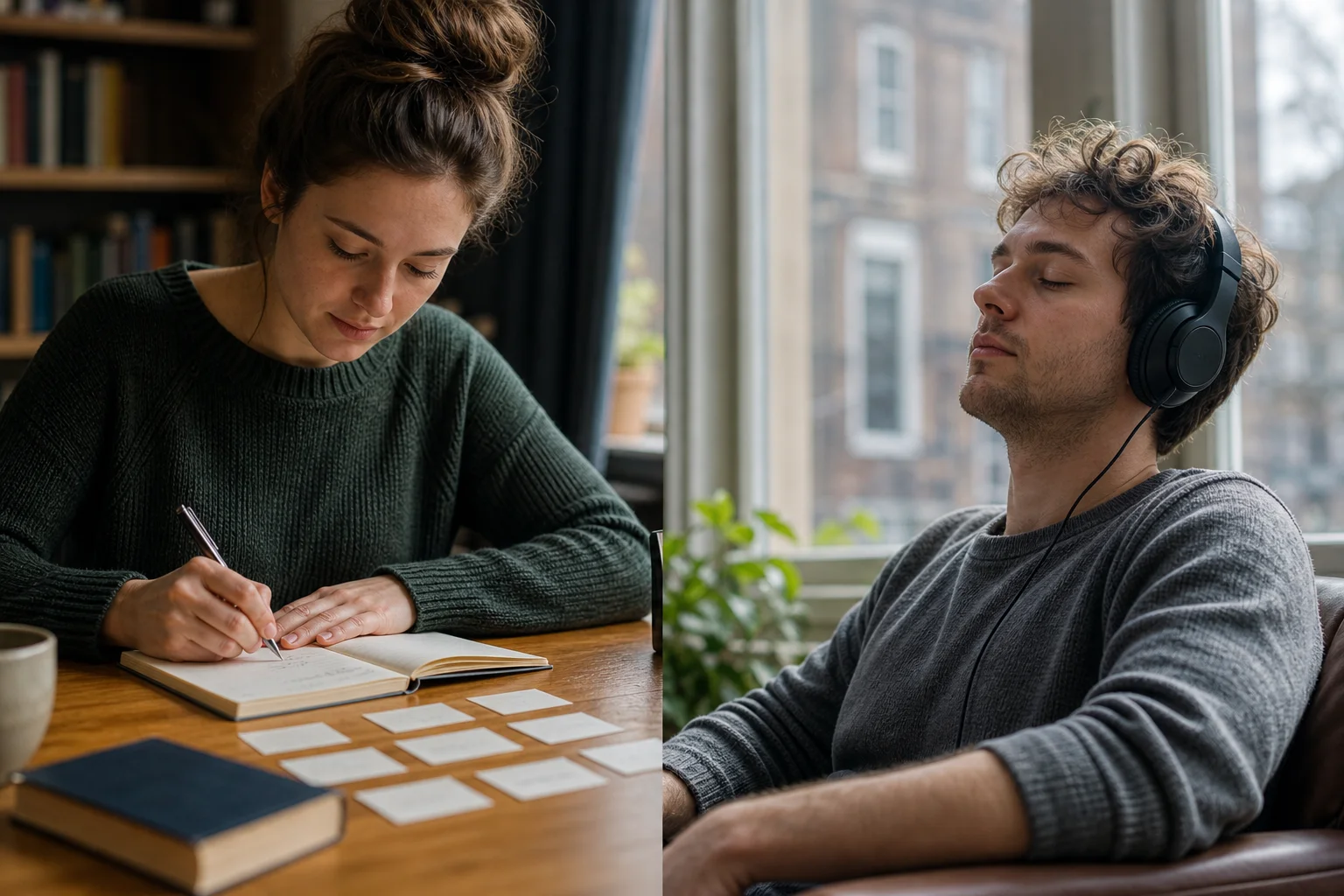
When you start learning Dutch, one of the first decisions you face is how to spend your study time. Should you pop in your earbuds and repeat phrases during your morning walk, or should you sit down and actively construct sentences, conjugate verbs, and build an active vocabulary bank? This dilemma often comes down to comparing two distinct learning styles: the audio-prompt approach popularized by Pimsleur and the interactive, multimodal approach used by modern language platforms like StroopTaal.
Both methods aim to get you communicating in Dutch, but they approach the brain's language processing mechanisms from completely opposite angles. Understanding how each method works—and where its limitations lie—can save you months of frustration, whether you are trying to order a koffie verkeerd without hesitation or preparing for Dutch civic integration exams.
Pimsleur is built around a method developed in the 1960s by linguist Dr. Paul Pimsleur. Its core philosophy relies on auditory learning and graduated interval recall. Instead of reading transcripts or analyzing grammar rules on a screen, you listen to recorded audio lessons, usually 30 minutes long.
In a typical Pimsleur session, an English narrator introduces a scenario. Native Dutch speakers exchange a brief dialogue, and the narrator breaks it down phrase by phrase. You are asked questions such as: "How do you say: I would like to drink something?" You have a brief pause of a few seconds to speak your answer aloud in Dutch before a native speaker provides the correct phrasing for confirmation.
While audio conditioning helps early phonetic imitation, it has notable blind spots. First, spoken Dutch contains many vowel sounds and diphthongs (such as ui, eu, ij, and long vs. short vowels) that can easily be misheard or mispronounced without visual reinforcement and targeted phonetic feedback. Second, passive or semi-active audio drills rarely build the deep grammatical foundation needed for Dutch sentence structure, where word order changes drastically between main clauses and subordinate clauses (the infamous V2 rule and verb-final structures).
To understand why audio listening alone can leave learners stuck at an elementary plateau, it helps to examine the difference between recognition vocabulary (passive) and production vocabulary (active).
When you hear a phrase repeatedly in an audio lesson, your brain builds an acoustic memory. You can easily recognize the phrase when it is prompted. However, active production in daily life requires something much more demanding: your brain must retrieve the root words from memory, assign the correct gender (de or het), conjugate the verbs for tense and person, and assemble the sentence according to Dutch syntax rules—all within a fraction of a second.
This is where active vocabulary training makes a difference. When you engage with interactive exercises—such as typing answers, unscrambling sentences, filling in blanks, and receiving immediate grammatical explanations—you force the brain to form stronger neural pathways. If you want to know how to practise speaking Dutch in the Netherlands, combining active vocabulary recall with speech output builds the muscle memory necessary for spontaneous conversation.
Let's look at how these two distinct philosophies play out across the practical skills needed to thrive in the Netherlands.
Pimsleur: Primarily an audio experience. While modern versions of Pimsleur include basic digital flashcards and brief transcripts, the engine of the course remains the 30-minute daily audio lesson. It assumes you will absorb grammar intuitively through imitation.
StroopTaal: An interactive, mobile-first app (available on iOS, Android, and Apple Watch with an active internet connection) that guides you along the Common European Framework of Reference (CEFR) from complete beginner (A0) all the way to C1. Lessons require you to choose and type answers, put words in order, fill gaps, listen, write down what you hear, and spot mistakes. Every answer comes with clear explanations of why it is right or wrong, supported by grammar tips, conjugation tables, and realistic daily dialogues.
Pimsleur: Speaking practice consists of pausing during the audio track and speaking into thin air. You compare what you said against the native speaker who answers a moment later. However, there is no real-time analysis to tell you if your vowel length was correct or if your pitch was off.
StroopTaal: Speaking is actively integrated. With StroopTaal's Premium tier, you can call Taalmaatje, an AI conversation partner (clearly identified as software before you begin), to speak Dutch out loud about everyday topics or specific role-play scenarios like visiting a doctor or interviewing for a job. Dedicated pronunciation practice scores what you say and highlights specific areas to adjust, giving you objective feedback before you step into real-world conversations.
Pimsleur: Vocabulary is introduced at a gradual pace (often 5 to 10 new words per 30-minute lesson). The vocabulary selection tends to skew toward travel, social introductions, and polite restaurant interactions. Once a word is introduced, you depend on future audio tracks to bring it back up.
StroopTaal: Vocabulary is backed by spaced repetition so that words and past mistakes return just as they begin to fade from memory. The dedicated Words tab includes a built-in dictionary, a word of the day, custom flashcards, word puzzles, and an article game to practice whether a noun takes de or het. In the Premium version, learners can photograph real-world Dutch text—such as an official letter, a street sign, or a restaurant menu—and save those words directly to their review queue.
Living in the Netherlands often involves formal requirements. The Dutch government requires many expats and newcomers to integrate via civic integration exams (inburgering) or the Staatsexamen NT2.
Under the Wet inburgering 2021, the five standard exam parts (Reading, Listening, Writing, Speaking, and KNM—Knowledge of Dutch Society) cost €50 each, totaling €250, with retakes costing the same per-part fee again. The Staatsexamen NT2 costs €50 per part (€200 for the full exam across four components). Audio-only programs like Pimsleur do not prepare you for the format of these exams: they offer no timed reading passages, no formal writing tasks, and no civic knowledge modules.
StroopTaal addresses this directly. Premium includes targeted exam practice for the Inburgering exam at A2 and B1 levels (including reading, writing, listening, speaking, and KNM) as well as the Staatsexamen NT2 at B1 (Programma I) and B2 (Programma II). You can practise each section independently with a timer, receive AI feedback on your writing and speaking responses, and track your readiness score across each specific skill. StroopTaal also provides free web tests without sign-up for quick self-assessment, such as the free A2 listening practice test.
Depending on your current level, schedule, and goals, you can choose the approach that best fits your daily reality:
If you have a 45-minute highway drive each morning and your sole immediate goal is to overcome the awkwardness of speaking Dutch out loud, an audio-prompt method like Pimsleur can help loosen your tongue and get you used to the cadence of the language. However, be aware that you will need to supplement it with reading and writing if you ever plan to read Dutch mail or pass an integration test.
If your goal is to build long-term independence in the Netherlands—reading municipal letters, writing professional emails, and passing the inburgering or NT2 exams—active vocabulary and structured grammar practice are non-negotiable. Using a dedicated app like StroopTaal allows you to work through progressive lessons, test your listening comprehension against realistic dialogues, practice spontaneous speaking with AI role-plays, and systematically build your vocabulary.
To learn more about how different language tools compare across the board, take a look at our breakdown of the best apps to learn Dutch as an expat.
Audio listening has its place in early ear training, but true language acquisition requires active engagement. To hold a conversation at the office or understand a letter from the Belastingdienst, you need to produce sentences yourself, understand why words change their order, and remember the right vocabulary when it matters.
Choose the tool that matches where you want to go. If you need hands-free audio drills, audio-prompt programs offer a starting point. But if you want a complete, guided path from beginner to advanced Dutch that trains reading, typing, listening, and speaking with immediate feedback, an active learning platform like StroopTaal provides the comprehensive toolset you need for daily life in the Netherlands.
Rules, fees and dates change. Check the current version on the official pages before you act.
Share this article:
To study in Amsterdam, you must secure admission through Studielink or an accredited institution, line up housing well before arrival, apply for a...
Read moreWhy Dutch Vowels Feel Like an Obstacle Course Ask anyone learning Dutch in the Netherlands what keeps them up at night, and they will rarely say word...
Read moreIf you have spent even a few days studying Dutch, you have undoubtedly run into the perpetual dilemma that haunts language learners across the...
Read more