Dutch Toeslagen Explained: Healthcare & Rent Allowance
Navigating Life in the Netherlands: Your Guide to ToeslagenMoving to the Netherlands is an exciting adventure, filled with stroopwafels, picturesque...
Read more
This article was drafted by AI and edited by a person before it was published.
AI can get things wrong. For anything official, check the source it points to.
AI-generated image
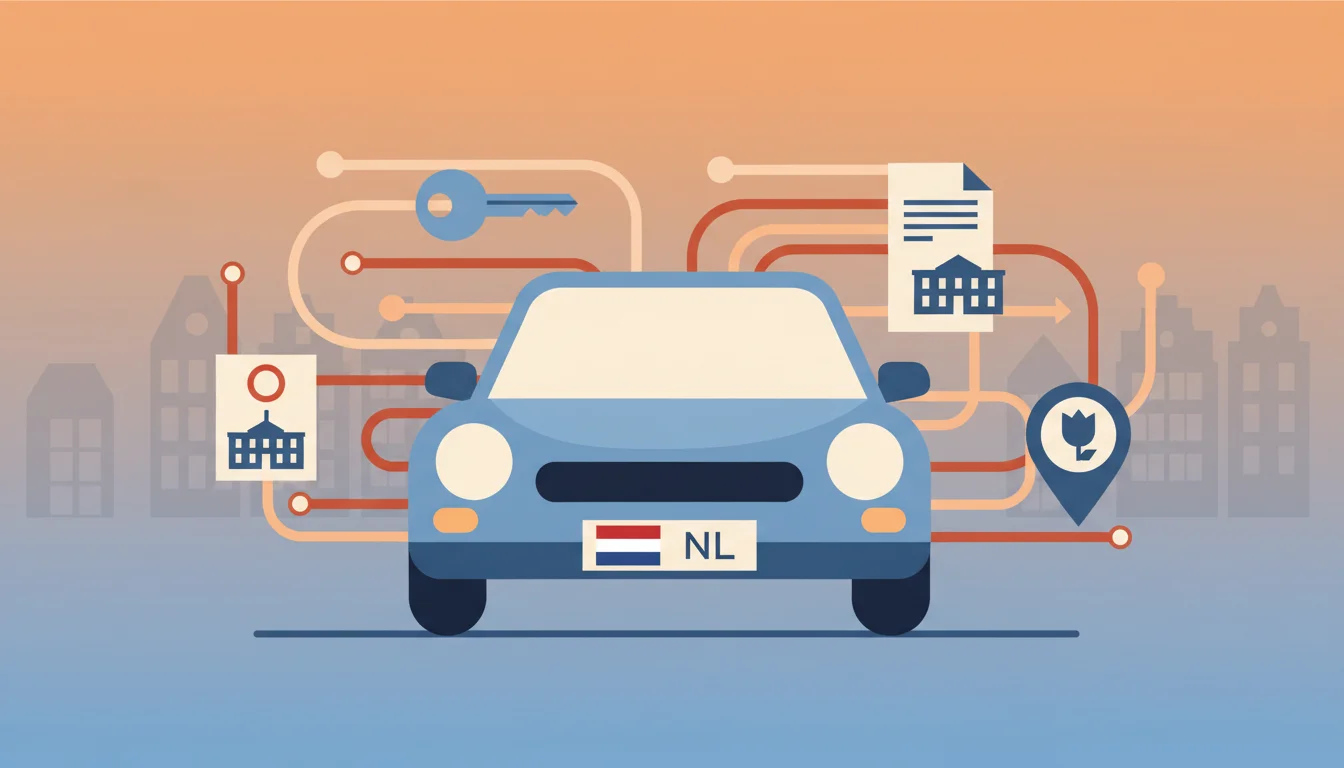
You've navigated the housing market, registered with the gemeente, and are now ready for the next big step: hitting the Dutch roads in your own car. The freedom to explore beyond the city limits, from the beaches of Zeeland to the forests of the Veluwe, is an exciting prospect. But before you can enjoy those scenic drives, there's a bit of famous Dutch bureaucracy to handle. The process of registering a car in the Netherlands, especially for expats, can seem daunting. What is the RDW? What on earth is BPM tax? Don't worry, we've got you covered.
This comprehensive guide will steer you through every step, whether you're importing your beloved vehicle from abroad or buying a new set of wheels locally. We'll demystify the acronyms and outline the process, so you can get your yellow license plates and get on the road with confidence.
Netherlands car registration requires validating your vehicle with the RDW (Netherlands Vehicle Authority), handling BPM tax obligations with the Belastingdienst, obtaining official yellow license plates, and securing valid Dutch car insurance. Every vehicle residing permanently on Dutch roads must complete this sequence to be legally driven.
Understanding the exact timeline keeps the process moving smoothly. Whether you arrive with a vehicle from another country or buy one upon arrival, following the standard registration workflow prevents unexpected fines and keeps your vehicle compliant with Dutch traffic laws.
Before you even think about booking an inspection or visiting a car dealership, you need to have a few key things in order. The Dutch system is efficient but strict, so preparation is everything.
Rejestracja samochodu w holandii bez zameldowania is generally not allowed for standard private vehicle registration because the RDW requires an official BSN and registration in the Dutch Personal Records Database (BRP). Without an official municipal address, private individuals cannot register a Dutch license plate (kenteken) under their name.
If you have recently moved to the Netherlands, ensure your municipal status is finalized first. You can check our detailed guide on how to report your address change to ensure your details are correctly reflected in the database before visiting the RDW.
One of the biggest decisions for an expat is whether to bring their car from their home country or to buy one here. Both options have their own procedures, costs, and benefits.
Bringing a familiar car can be comforting and potentially cost-effective, but it involves a specific process with the RDW (Rijksdienst voor het Wegverkeer), the Netherlands Vehicle Authority.
The process is relatively straightforward if your car is coming from another EU or EFTA country. The main hurdle is the BPM (Belasting van Personenauto's en Motorrijwielen), a one-time tax on passenger cars and motorcycles. However, there's great news for new residents: you may be eligible for a BPM exemption under the 'removal goods' (verhuisboedel) scheme. To qualify:
You must apply for this exemption with the Dutch Tax and Customs Administration (Belastingdienst) before you register the car with the RDW.
This process is more complex as it involves customs clearance. You'll need to file an import declaration. In addition to potential BPM, you will likely have to pay VAT (BTW) and import duties. The 'removal goods' exemption can also apply here, potentially saving you from these taxes if you meet the criteria.
Buying a car locally avoids the import hassle. You can buy from an official dealership (new or used) or a private seller.
Car registration in the Netherlands is mandatory for all residents driving imported or locally purchased vehicles on public Dutch roads. Driving an unregistered vehicle or failing to update vehicle registration within the required timeframe can lead to severe fines from the Central Fine Collection Agency (CJIB).
To streamline administrative steps, manage digital notifications, and track tax status, many residents utilize online government portals. If you need assistance setting up your digital identity for Dutch portals, see our guide on How to Set Up Your DigiD with SMS Verification.
You can get your car registered at an RDW inspection station (keuringsstation) for imported vehicles, or at an authorized PostNL location, Kentekenloket, or licensed car dealership for domestic ownership transfers. The correct location depends on whether the vehicle already carries a Dutch registration number.
Rejestracja samochodu w Holandii involves passing an RDW inspection, submitting a BPM tax declaration to the Belastingdienst, purchasing Dutch car insurance (WA-verzekering), and mounting approved Dutch license plates. Polish expats residing in the Netherlands must transfer their vehicle to Dutch plates if they live and work in the country permanently.
Navigating the paperwork requires clear document preparation, including your Polish registration certificate (dowód rejestracyjny), proof of residence, and identity documents. Completing the steps properly ensures full compliance with Dutch road tax (motorrijtuigenbelasting) and insurance regulations.
Jak zarejestrować auto z holandii requires exporting the Dutch vehicle through an RDW station to obtain an export certificate (uitvoerverklaring), temporary transit plates, and then completing registration with the vehicle authority in your destination country. This process applies when purchasing a vehicle in the Netherlands to bring back to Poland or another country.
Before leaving the Netherlands, visit an RDW desk or authorized export partner with the vehicle's registration card (kentekencard) and ID. You will surrender the Dutch plates, receive an export export document, and purchase temporary export insurance for the drive home.
Whether you import a car or buy one that needs to be registered for the first time, you'll need to visit an RDW inspection station (keuringsstation). Here's how it works:
Getting the kentekencard is a huge milestone, but you're not quite done yet. There are three final, crucial steps.
With your registration certificate in hand, you can go to a certified license plate manufacturer (you can find one with a quick search for 'RDW erkende kentekenplaatfabrikant'). You'll need to show your ID and your kentekencard. They will make the iconic yellow plates for you on the spot.
It is illegal to drive in the Netherlands without at least third-party liability insurance (WA-verzekering). You must insure the car from the moment it is registered in your name. You cannot get license plates without proof of insurance. Compare providers online to find the best deal for your situation. Other types of insurance include limited casco (WA+ Beperkt Casco) and all-risk (Allriskverzekering).
You don't need to apply for this separately. Once your car is registered, the Belastingdienst will automatically send you a bill for road tax. The amount depends on the car's weight, fuel type, and the province you live in. This is typically paid quarterly via direct debit (automatische incasso).
Navigating the various Dutch systems is a key part of settling in. Whether it's the RDW for your car or understanding how to talk to your local doctor, clear communication is essential. If you're preparing for these conversations, our guide on communicating effectively with your Dutch 'huisarts' offers valuable tips that apply to many official interactions.
Registering a car in the Netherlands involves a clear, step-by-step process that, while detailed, is entirely manageable. By preparing your documents, understanding the choice between importing and buying locally, and following the RDW and tax procedures, you'll be exploring the country in your own vehicle in no time.
These administrative tasks are also fantastic opportunities to practice your Dutch language skills in a real-world setting. From understanding the paperwork to speaking with officials, every step is a learning experience. To make sure you're ready for any conversation the road throws at you, why not get a head start?
Download the StroopTaal app today! Our AI-powered tools, including real-life conversation practice and personalized learning plans, will help you navigate Dutch bureaucracy with confidence and ease. Goede reis! (Have a good trip!)
Share this article:
Navigating Life in the Netherlands: Your Guide to ToeslagenMoving to the Netherlands is an exciting adventure, filled with stroopwafels, picturesque...
Read moreWelcome to the Netherlands! Now, Let's Talk About Your Energy Bill You’ve navigated the housing market, registered with the gemeente, and maybe...
Read moreDemystifying the Dutch Tax Return for Expats in 2026 Springtime in the Netherlands brings blooming tulips, longer days, unpredictable rain showers,...
Read more